Do Octopuses Have Ink?
Yes, most octopuses possess an ink sac located near the anus that produces a dark fluid. This substance is a mixture of melanin—the same pigment found in…
Do octopuses have ink?
Yes, most octopuses possess an ink sac located near the anus that produces a dark fluid. This substance is a mixture of melanin—the same pigment found in human hair and skin—and mucus produced by a gland in the funnel organ.12
When an octopus feels threatened, it forcibly ejects this ink through a funnel organ to create a visual screen that confuses predators and conceals its escape. In some species, the ink can even paralyze the sensory organs of an attacker. Beyond its role as a defense mechanism, octopus ink has been utilized by humans in traditional remedies, as a natural food coloring, and as a subject of research for potential medicinal compounds.12
How do octopuses change their skin color to blend in with their surroundings?
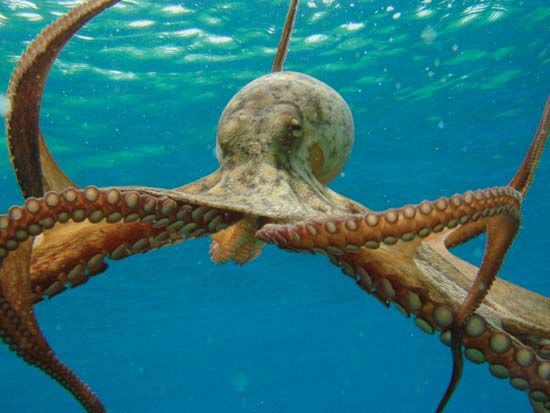
Octopuses are masters of camouflage, capable of changing their skin color and texture with remarkable speed to blend into their surroundings. This process is primarily driven by specialized structures in their skin:
- Chromatophores: These are pigment-bearing cells that contain colors such as brown, black, red, yellow, or orange. Each chromatophore is individually innervated by the brain, allowing the octopus to expand or contract these cells to expose or hide specific colors almost instantaneously—sometimes in as little as one-tenth of a second.34
- Iridocytes: These are reflecting cells in the skin that work alongside chromatophores to create complex visual patterns.3
- Skin Texture: Beyond color, octopuses can alter their physical appearance by erecting branched or spikelike papillae and curling their arms. By combining these textural changes with color shifts, they can effectively imitate objects like sand, coral, or seaweed to remain hidden from predators or prey.3
These rapid displays are mediated by the nervous system and are used for various behavioral purposes, including camouflage, defense, and hunting.23
What other defense mechanisms do octopuses use besides ink?
Beyond the use of ink, octopuses employ a variety of sophisticated defense mechanisms to survive in the wild:
- Camouflage and Color Change: Octopuses use specialized skin cells called chromatophores and reflecting cells known as iridocytes to change their color and pattern almost instantaneously. This allows them to blend into their surroundings, such as sand, coral, or seaweed, to avoid detection by predators.142
- Textural Alterations: They can physically change their skin texture by erecting branched or spikelike papillae and curling their arms, further enhancing their ability to mimic bottom-dwelling objects.14
- Jet Propulsion: When threatened, an octopus can escape rapidly by forcibly ejecting a jet of water from its funnel (siphon), allowing it to shoot backward away from danger.4
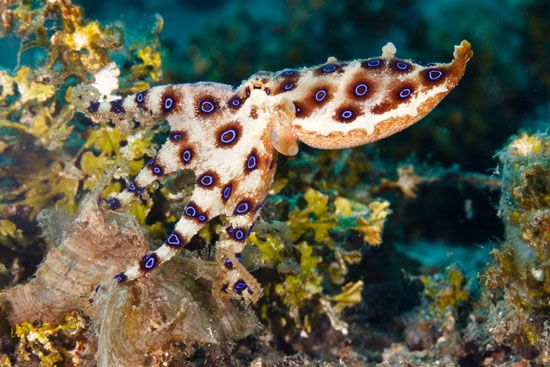
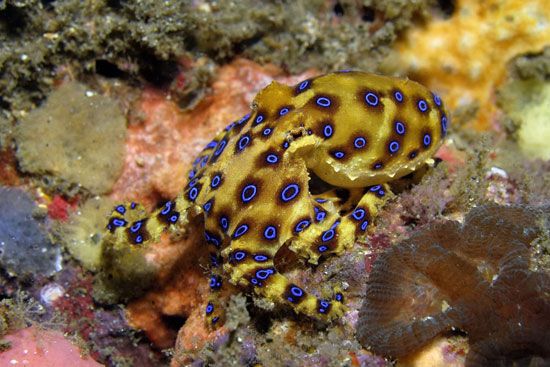
- Aposematism and Toxicity: Some species, such as the blue-ringed octopus, use aposematism—a warning display of vivid colors—to signal their lethal toxicity to potential attackers. These octopuses possess potent neurotoxins that can paralyze or kill predators.2
- Tool Use: Some species, like the veined octopus, have been observed using objects like coconut shells as portable shelters, providing a physical barrier against threats.14
Are there other cephalopods that use ink for protection?
Yes, many cephalopods utilize ink as a primary defense mechanism, though there are notable exceptions. Most cephalopods, including squids and cuttlefishes, possess an ink sac used to create a visual screen that confuses predators and conceals their escape.147
The method of deployment varies by species:
- Squids: When threatened, a squid ejects a spindle-shaped mass of ink that roughly matches its own size. This “dummy” target remains in the water while the squid rapidly changes its skin color to become nearly transparent and jets away to safety.4
- Octopuses: While most octopuses use ink to create a cloud that can temporarily paralyze a predator’s senses of sight and smell, it is important to note that the Nautilus and some species of octopus do not possess this ink-producing capability.4
- Other Cephalopods: Cuttlefishes also utilize ink for defense, often in combination with their advanced ability to camouflage themselves through chromatophores and textural changes.47
Sources
- Do octopuses have ink? — Encyclopædia Britannica
- octopus — Encyclopædia Britannica
- coloration - Short-term changes — Encyclopædia Britannica
- cephalopod - Behaviour — Encyclopædia Britannica
- Blue-ringed octopus — Encyclopædia Britannica
- cephalopod - Form and function — Encyclopædia Britannica
- mollusk - Features of defense — Encyclopædia Britannica
Published on · 3 min read