Dukla Pass
The Dukla Pass is a strategic mountain passage located in the Carpathian Mountains, specifically within the eastern Beskids. It sits directly on the border…
What is Dukla Pass?
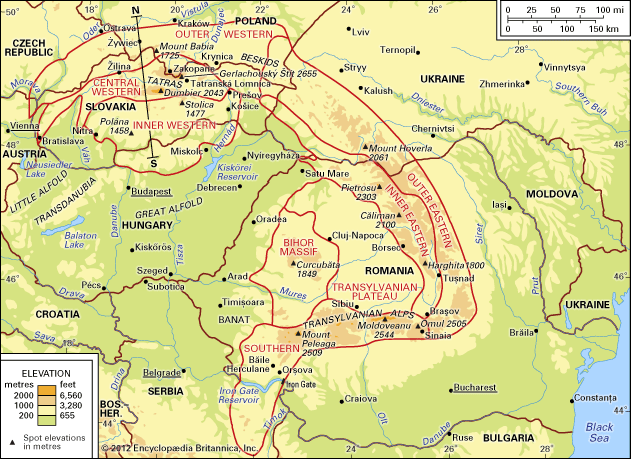
The Dukla Pass is a strategic mountain passage located in the Carpathian Mountains, specifically within the eastern Beskids. It sits directly on the border between Slovakia and Poland.
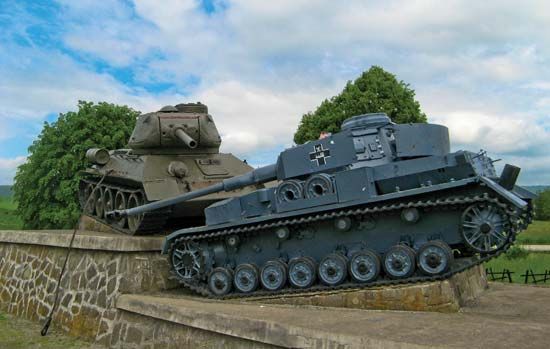
Historically, the pass has served as a significant military corridor. The Russian army utilized it to move southward into Hungary in 1849, and it was again used as a transit point during both World War I and World War II. Today, it remains a vital commercial route for the movement of traffic and goods between the two nations.
What role did the Carpathian Mountains play in World War II?
During World War II, the Carpathian Mountains served as a critical natural barrier on the Eastern Front. By the spring of 1944, as the Red Army advanced westward, the mountain range stood as the final significant geographical obstacle separating Soviet forces from the Hungarian Plain.1
The mountains were strategically significant in several ways:
- Military Transit: The Dukla Pass functioned as a vital corridor for military movement, having been utilized for troop transit during the conflict.2
- Defensive Obstacle: The range acted as a protective barrier for the Hungarian plains. In April 1944, German forces launched a counterstroke from southern Poland to halt Soviet pressure on the Tatar (Yablonitsky) Pass, successfully preventing an immediate breach of the mountain line at that location.1
- Strategic Positioning: Because the mountains were thickly wooded and rugged, they dictated the flow of military operations, forcing armies to focus on specific passes and transit routes to maintain momentum.31
Following the war, the geopolitical landscape of the region shifted, with parts of the Eastern Carpathians becoming integrated into the Soviet Union, which altered the strategic importance of the area’s transportation networks.4
How does geography influence military strategy?
Geography is a fundamental element of military strategy, as land warfare is shaped by the physical environment rather than occurring in a vacuum. The influence of terrain and geography on military operations can be categorized into several key areas:5
Tactical Significance of Terrain
Victory often depends on how effectively a commander utilizes the landscape. This includes occupying dominant ground, using natural cover, or forcing an enemy to fight on unsuitable terrain. Conversely, obstacles such as mountains, forests, swamps, or built-up areas can limit the effectiveness of specific military assets, such as tanks, which require broad, open plains to reach their full potential. When forced into restrictive terrain, tanks may be reduced to supporting infantry or become vulnerable to defensive fortifications like antitank ditches and mines.56
Logistics and Communications
Geography dictates the reach and sustainability of military forces. Armoured offensives, for instance, are limited by the distance they can travel from their supply bases, a challenge exacerbated by poor road systems or vast distances, as seen in the Soviet Union during World War II. Furthermore, the development of infrastructure—such as railways and roads—is a critical component of logistics; superior communication networks provide a decisive advantage in mobility and command.62
Strategic Barriers and Waterways
Large-scale geographic features, such as mountain ranges like the Carpathians, act as natural defensive barriers that can dictate the flow of operations by forcing armies to focus on specific passes. Similarly, water obstacles like rivers and marshes have historically determined the direction of military campaigns, often slowing the progress of advancing armies and serving as natural lines of defense.2
Geopolitical Context
Beyond the battlefield, geopolitics analyzes how large-scale geographic features and industrial capabilities interact to shape international power relationships. Historically, theories regarding sea power, land power, and air superiority have sought to explain how geography influences the survival and dominance of states within the global system.7
What are the major mountain ranges in Europe?
Europe features a diverse array of mountain ranges, primarily concentrated in the southern and central regions where Cenozoic-era tectonic activity created rugged, high-elevation landscapes.8
Major Mountain Ranges
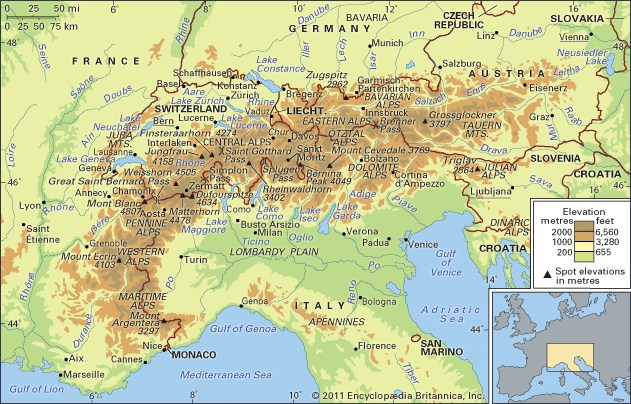
- The Alps: The most prominent mountain system in western Europe, stretching across France, Italy, Switzerland, Germany, Austria, Slovenia, Croatia, Bosnia and Herzegovina, Montenegro, Serbia, and Albania. It contains the continent’s highest point, Mont Blanc.98
- The Carpathians: An arc-shaped range extending through Central and Eastern Europe, including countries such as the Czech Republic, Slovakia, Hungary, and Romania. Its southern portion is known as the Transylvanian Alps.108
- The Pyrenees: A narrow range forming the natural border between Spain and France.108
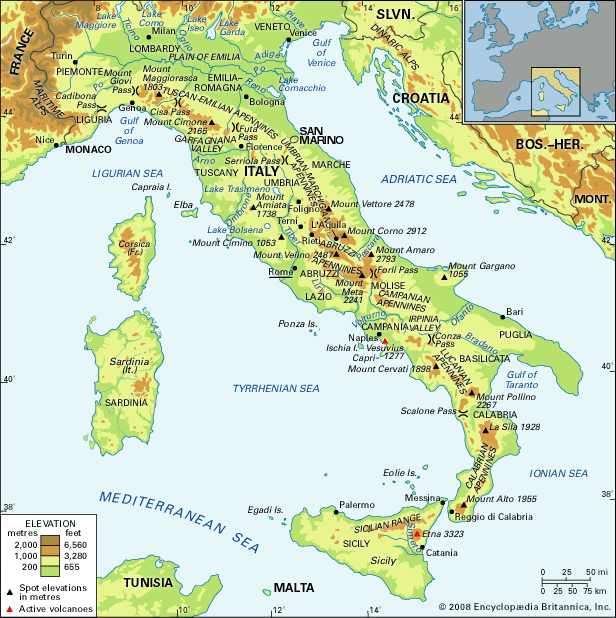
- The Apennines: Often described as the backbone of the Italian peninsula.108
- The Dinaric Alps: A significant range located in the Balkan region.108
- The Balkan Mountains: A major range situated in the Balkan Peninsula.8
- The Ural Mountains: A worn-down range formed during the Paleozoic era, serving as a traditional boundary between Europe and Asia.8
- The Pindus: Located in northern Greece.10
- The Sierra Nevada: A high-elevation range in Spain.8
In addition to these, Europe contains various uplifted massifs, such as the Massif Central in France and the Jura Mountains near the Swiss-French border, which are remnants of older geological periods.108
Sources
- Dukla Pass — Encyclopædia Britannica
- Eastern Front - Physical characteristics of the Eastern Front — Encyclopædia Britannica
- World War II - The Eastern Front, October 1943–April 1944 — Encyclopædia Britannica
- Carpathian Mountains - Transportation — Encyclopædia Britannica
- tactics - The importance of terrain — Encyclopædia Britannica
- tactics - Limitations of the tank — Encyclopædia Britannica
- geopolitics — Encyclopædia Britannica
- mountain - The western segment of the system — Encyclopædia Britannica
- Alps — Encyclopædia Britannica
- Europe - Elevations — Encyclopædia Britannica
- list of mountain ranges — Encyclopædia Britannica
Published on · 4 min read