Egadi Islands
The Egadi Islands are a small, mountainous archipelago located in the Mediterranean Sea off the western coast of Sicily, Italy. Covering a total area of 15…
What is Egadi Islands?
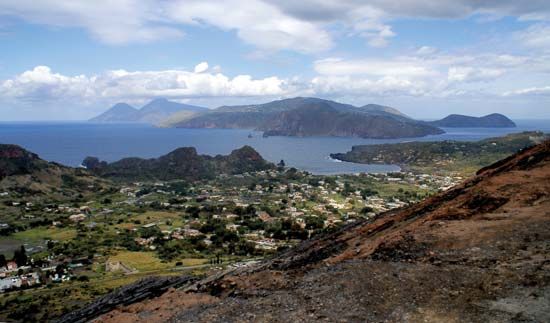
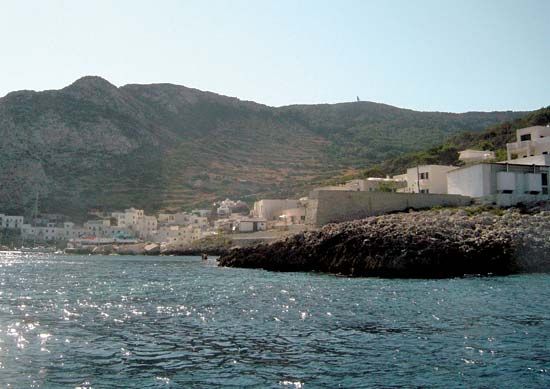
The Egadi Islands are a small, mountainous archipelago located in the Mediterranean Sea off the western coast of Sicily, Italy. Covering a total area of 15 square miles (39 square km), the group consists primarily of three islands: Favignana, Levanzo, and Marettimo.1
Historically, the islands are significant as the site of the Battle of the Aegates in 241 BCE, where the Roman fleet defeated the Carthaginian navy, effectively ending the First Punic War. The islands also hold archaeological importance, notably for the Paleolithic cave paintings found in the Genovese Grotto on Levanzo. Today, the local economy relies on tuna fisheries, and the islands are administered as part of the Favignana commune in the province of Trapani.1
What was the significance of the First Punic War?
The First Punic War (264–241 BCE) was a pivotal conflict between the Roman Republic and the Carthaginian empire that fundamentally altered the balance of power in the Mediterranean.2
Its primary significance lies in the following outcomes:
- Territorial Expansion: The war resulted in Rome gaining its first overseas provinces, as Carthage was forced to cede Sicily and the Lipari Islands to Roman control.23
- Naval Dominance: By building a massive fleet and eventually securing victory at the Egadi Islands, Rome established itself as a formidable naval power, ending Carthage’s undisputed command of the sea-lanes.23
- Geopolitical Shift: The conflict marked the beginning of the end for Carthaginian influence in the region and set the stage for the subsequent Punic Wars, which would eventually lead to the total destruction of Carthage.2
- Financial and Military Strain: The war forced both powers to innovate in naval warfare and endure immense financial burdens, with Carthage ultimately agreeing to pay a significant indemnity to Rome.23
What are Paleolithic cave paintings?
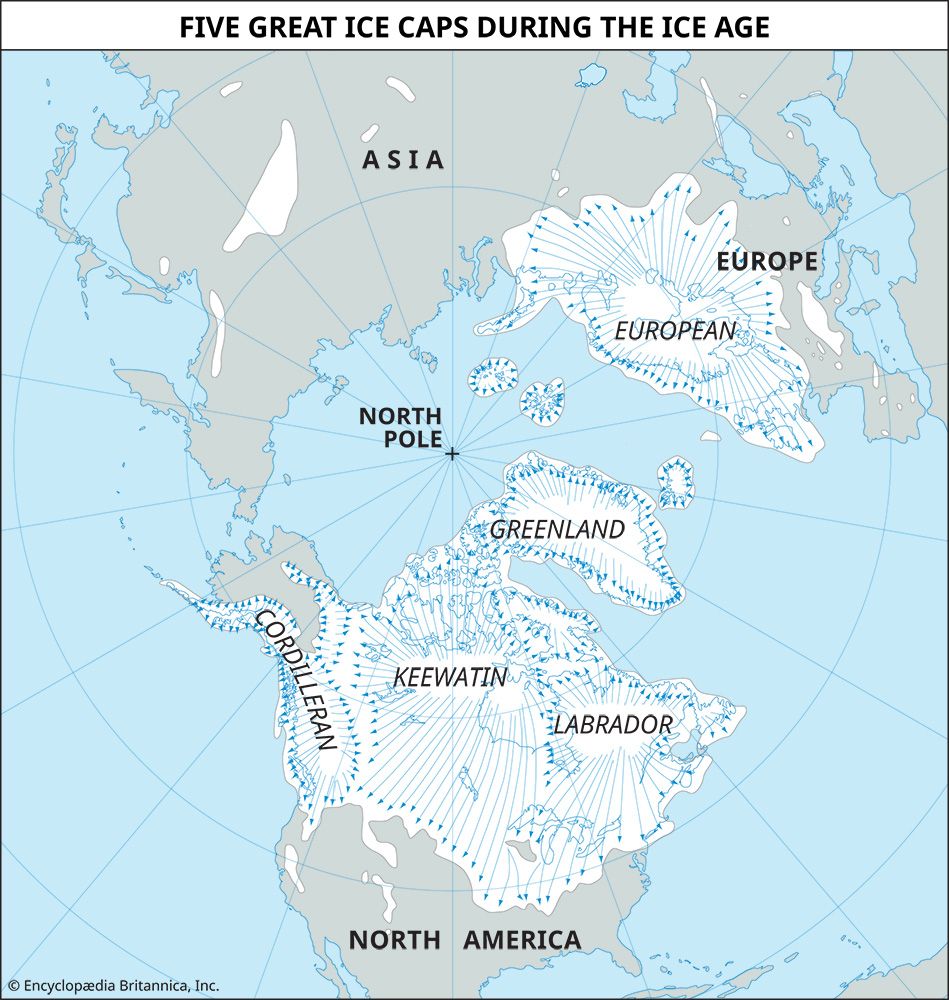
Paleolithic cave paintings are some of the earliest forms of rock art, created by modern humans (Homo sapiens) roughly between 40,000 and 14,000 years ago during the Ice Age.45
These works, found in approximately 400 decorated sites—most notably in France and Spain—consist of paintings and engravings executed in deep, dark caves. Key characteristics include:45
- Materials: Artists primarily used red pigments from iron oxides (hematite) and black pigments from charcoal or manganese dioxide.56
- Subject Matter: Animal figures dominate the imagery. Early periods often featured formidable, now-extinct species like mammoths, cave lions, and woolly rhinoceroses, while later periods frequently depicted horses and bison.56
- Technique: Creators often utilized the natural contours of rock surfaces to add three-dimensional depth and employed sophisticated methods like shading and “twisted perspective.”46
- Function: While the exact meaning remains unknown, experts suggest these sites served symbolic or religious purposes, potentially linked to shamanic practices.5
How do tuna fisheries work in the Mediterranean?
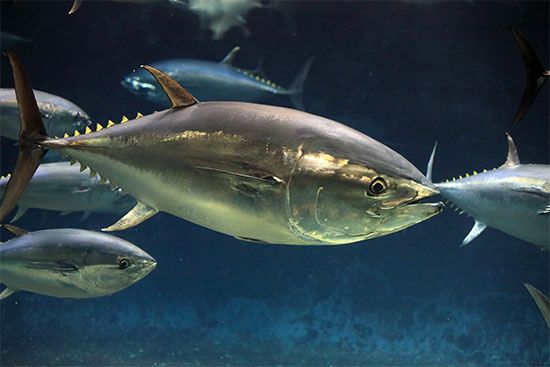
The bluefin tuna is a highly valued species that migrates into the Mediterranean from the Atlantic Ocean, dispersing toward the coasts of countries such as Spain, Morocco, Sardinia, Sicily, Algeria, Tunisia, and Libya. While the provided search results note that bluefin tuna, along with related species like bonitos and mackerels, are caught by nearly all Mediterranean countries, they do not provide specific details on the unique operational methods used for tuna fisheries within the Mediterranean basin itself.7
General industrial tuna fishing often utilizes pole-and-line fishing, where crews use live bait and water spraying to attract fish to the vessel, or automated hydraulic poles to haul them aboard. However, it is important to note that commercial fisheries in the Mediterranean face significant challenges, including overfishing and the use of equipment that can harm noncommercial species.87
We could dive deeper into the broader environmental impact of Mediterranean fishing practices or explore the biology of bluefin tuna migration.
Sources
- Egadi Islands — Encyclopædia Britannica
- First Punic War — Encyclopædia Britannica
- Punic Wars - First Punic War (264–241 bce ) — Encyclopædia Britannica
- Rock art - Cave painting in Europe — Encyclopædia Britannica
- Cave art — Encyclopædia Britannica
- Chauvet–Pont d’Arc — Encyclopædia Britannica
- Mediterranean Sea - Biological resources — Encyclopædia Britannica
- commercial fishing - Pole-and-line fishing — Encyclopædia Britannica
Published on · 3 min read