Ensign Wasp
An ensign wasp (family Evaniidae) is a group of solitary wasps recognized for their unique appearance and behavior. They are named for their small, oval…
What is ensign wasp?
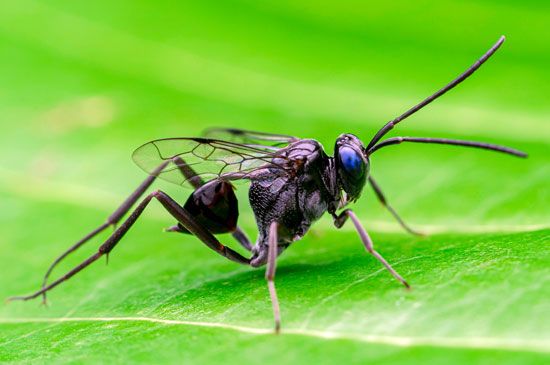
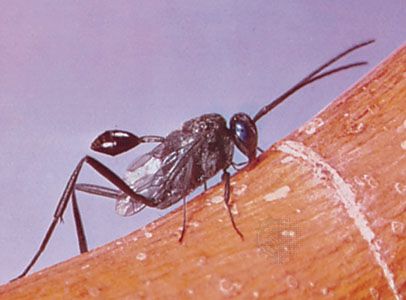
An ensign wasp (family Evaniidae) is a group of solitary wasps recognized for their unique appearance and behavior. They are named for their small, oval abdomen, which they hold high like a flag or ensign.12
These insects are typically black, spiderlike in appearance, and measure between 1 and 1.5 cm in length. They are considered beneficial to humans because they act as parasitoids of cockroaches. A female wasp deposits her eggs into a cockroach’s egg case (ootheca), where the developing larvae consume the cockroach eggs. After pupating within the egg case, the wasps emerge as adults, which feed on flower nectar.12
There are approximately 400 described species within this family, including the common North American Evania appendigaster.1
How do parasitoid wasps differ from typical parasites?
The primary distinction between a parasitoid and a typical parasite lies in the ultimate fate of the host. While a parasite typically benefits from its host without necessarily killing it, a parasitoid always kills its host as part of its developmental cycle.45
Key differences include:
- Host Survival: Parasites generally aim to keep their host alive to ensure a long-term source of nutrition. In contrast, a parasitoid larva feeds on or within a single host individual and consumes it until the host dies.45
- Developmental Strategy: Parasitoid females deposit eggs in or on a host. Upon hatching, the larvae feed on the host’s tissues and fluids. In many cases, the host continues to behave normally until the parasitoid larva has nearly completed its development.67
- Taxonomy: While parasitism is a broad ecological relationship found across many life forms, the term “parasitoid” is specifically applied to certain insects. Most parasitoids are wasps, though some flies, beetles, moths, and lacewings have also evolved this strategy.45
What are some other insects that help control household pests?
Many insects act as natural predators and help control populations of household and garden pests. By integrating these beneficial insects into your environment, you can reduce the need for chemical pesticides.
Beneficial Predatory Insects
- Ladybugs (Coccinellidae): Both the larvae and adults of most ladybug species are highly beneficial. They have voracious appetites for plant-sucking insects, such as aphids and scale insects, which can damage household plants and gardens.8
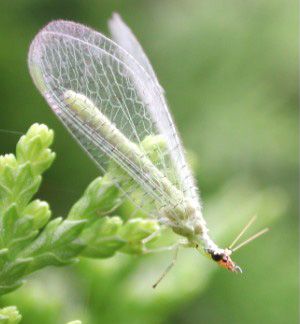
- Green Lacewings (Chrysopidae): Often called “aphid lions,” the larvae of green lacewings are effective predators. They use prominent mouthparts to capture and drain the body fluids of aphids and other soft-bodied insects.9
- Ground and Rove Beetles: Members of the families Carabidae and Staphylinidae are active predators that feed on caterpillars, insect eggs, and various immature insects, helping to keep their populations in check.8
- Predatory Heteroptera: Many true bugs are predatory. For example, certain stinkbugs (Pentatomidae) are known to consume hundreds of caterpillars during their lifetime, and some anthocorid bugs are highly effective at destroying mites.10
- Spiders: While technically arachnids, spiders are among the most important predators of insects. They are frequently utilized in agricultural settings to manage pest populations and naturally inhabit many homes where they hunt other insects.11
Modern pest management, often called integrated control, emphasizes protecting these natural predators by minimizing the use of broad-spectrum insecticides.1112
Why do cockroaches produce oothecae to protect their eggs?
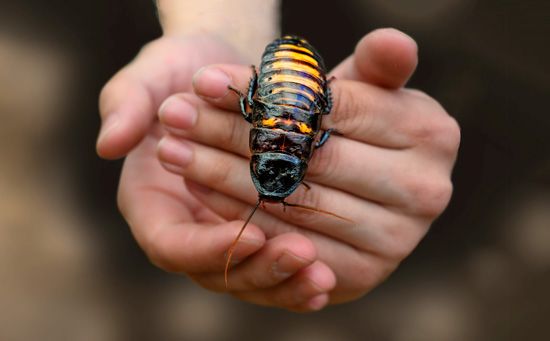
Most cockroach species produce egg cases, known as oothecae, as a protective strategy for their offspring. By encasing their eggs in these structured containers, females provide a secure environment that shields the developing embryos from environmental hazards and predators until they are ready to hatch.15
The ootheca serves several functional purposes:
- Protection: The case acts as a physical barrier, keeping the eggs together and safe from external threats.15
- Ventilation: In some species, the ootheca features a specialized keel or ridge with minute openings that function as a ventilation device, ensuring the developing eggs receive necessary airflow.15
- Strategic Placement: Females may either carry the ootheca externally, protruding from their bodies until hatching is imminent, or glue the cases into protected, hidden areas to further increase the survival rate of the nymphs.15
While most species utilize this method, it is worth noting that members of the family Blaberidae are viviparous, meaning they bear living young rather than producing egg cases.15
Sources
- ensign wasp — Encyclopædia Britannica
- ensign fly — Merriam-Webster
- Evaniidae — Merriam-Webster
- parasitoid — Encyclopædia Britannica
- Hymenoptera - Solitary forms — Encyclopædia Britannica
- braconid wasp — Encyclopædia Britannica
- parasitism — Encyclopædia Britannica
- Coleoptera - As predators — Encyclopædia Britannica
- cockroach - Diet and ecology — Encyclopædia Britannica
- heteropteran - Food habits — Encyclopædia Britannica
- spider - Importance — Encyclopædia Britannica
- green lacewing — Encyclopædia Britannica
- Pest — Encyclopædia Britannica
- wasp — Encyclopædia Britannica
- cockroach - Mating and reproduction — Encyclopædia Britannica
Published on · 3 min read