File Snake
The term "file snake" can refer to two distinct groups of nonvenomous snakes:
What is file snake?
The term “file snake” can refer to two distinct groups of nonvenomous snakes:
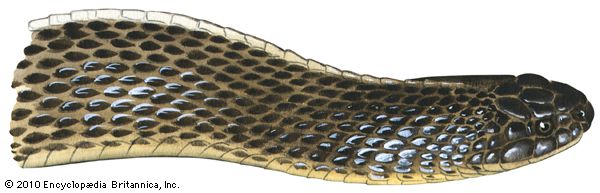
- African File Snakes: These are approximately 15 species of snakes in the genus Gonionotophis (formerly Mehelya) within the family Lamprophiidae. They are characterized by a triangular body cross-section and rough, keeled scales that give them the appearance of a three-cornered file. These nocturnal, ground-dwelling snakes typically grow to less than 1 meter in length and prey on frogs, lizards, and other snakes.1
- Arafura File Snake: This name is also commonly used for the elephant-trunk snake (Acrochordus arafurae), an unrelated aquatic species found in northern Australia and New Guinea. This snake belongs to the family Acrochordidae, which are known for their loose, filelike skin that helps them grip fish.12
It is important to note that while some snakes are colloquially called “poisonous,” this is technically incorrect; the term “poisonous” applies to organisms that are toxic when consumed, whereas snakes that inject toxins are classified as “venomous”.3
How do aquatic snakes breathe underwater?
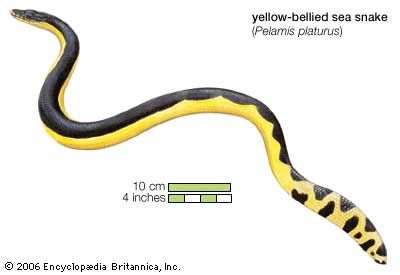
Aquatic snakes, particularly true sea snakes, have evolved specialized adaptations to remain submerged for extended periods, sometimes for eight hours or more. While most reptiles rely almost exclusively on their lungs for gas exchange, sea snakes are unique in their ability to supplement this process through cutaneous respiration, allowing them to breathe through their skin5.58
Key mechanisms for their underwater survival include:
- Cutaneous Respiration: Sea snakes can transport more than 90 percent of their waste carbon dioxide and approximately 33 percent of their required oxygen directly through their skin.5
- Specialized Vascularization: Research on the blue-banded sea snake has identified a highly vascularized area between the snout and the top of the head, which facilitates the direct transport of oxygen from the water to the snake’s brain.5
- Elongated Lungs: True sea snakes possess elongated lungs that extend the entire length of their bodies, providing a significant reservoir for air.5
- Valvular Nostrils: Located on the top of the snout, these nostrils can be tightly closed to prevent water from entering the respiratory system while the snake is submerged.5
What are the differences between venomous and nonvenomous snakes?
The primary distinction between venomous and nonvenomous snakes lies in their methods of subduing prey and the presence of specialized anatomical structures for delivering toxins.1011
Key Differences
- Venom Delivery Systems: Venomous snakes possess specialized salivary glands that produce potent toxins. To deliver this venom, they have evolved specialized teeth, such as the long, tubular fangs of viperids, the short, fixed fangs of elapids (like cobras), or grooved teeth found in rear-fanged species. Nonvenomous snakes lack these specialized glands and injection apparatuses.104
- Hunting Strategies: While venomous snakes use toxins to rapidly immobilize or kill prey, nonvenomous snakes often rely on other methods, such as constriction—where the snake coils around its prey to induce suffocation—or simply grasping and swallowing prey alive.104
- Terminology: It is a common misconception to label venomous snakes as “poisonous.” In biological terms, “poisonous” refers to organisms that are toxic when consumed, whereas “venomous” refers to animals that actively inject toxins through bites, stings, or spines.1211
Important Considerations
- Defensive Behavior: Most snakebites involving humans are defensive. Many venomous snakes are shy and will only strike as a last resort if they feel cornered or threatened.11
- “Dry” Bites: Because venom is a metabolically expensive resource, venomous snakes may deliver “dry” bites—strikes without injecting venom—when biting defensively rather than hunting.11
- Prevalence: Only a small percentage of the world’s snake species are venomous, and of those, only a fraction are capable of inflicting a lethal bite on humans.11
Why do some snakes have triangular body shapes?
The perception of a “triangular” body shape in snakes is often a result of their specific body form and defensive behaviors rather than a permanent anatomical structure. While some snakes are naturally thick-bodied, many species can alter their appearance to appear larger or more intimidating when threatened.1314
Factors Influencing Body Shape
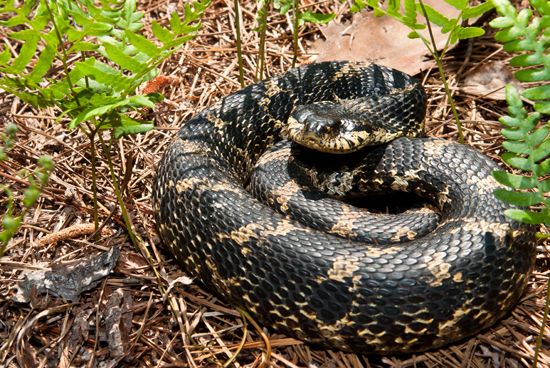
- Defensive Posturing: Many snakes, such as the hognose snake, can inflate their bodies or flatten their necks to change their silhouette when approached by a predator. This inflation is a common defensive tactic used to increase their apparent size.14
- Sedentary Lifestyle: Snakes that lead a sedentary life, such as many pit vipers, often have thicker, heavier bodies compared to more active, slender species. This “heaviness” is correlated with their hunting strategy; they utilize heat-sensitive loreal pits to wait for prey rather than actively searching for it.13
- Lateral Compression: Conversely, some snakes, particularly those that are arboreal, have bodies that are strongly compressed laterally. This shape provides greater rigidity, which is advantageous for moving between branches.13
While a triangular head shape is often associated with certain venomous snakes, it is important to note that body and head shape are not always reliable indicators of whether a snake is venomous or harmless.
Sources
- wart snake — Encyclopædia Britannica
- file snake — Merriam-Webster
- file snake — Encyclopædia Britannica
- snake - Snakes and humans — Encyclopædia Britannica
- sea snake — Encyclopædia Britannica
- acarid - External features — Encyclopædia Britannica
- acouchy — Encyclopædia Britannica
- Respiratory system - Reptiles — Encyclopædia Britannica
- reptile - Swimming — Encyclopædia Britannica
- snake - Specializations for securing food — Encyclopædia Britannica
- Venom — Encyclopædia Britannica
- snake - Skull and sense organs — Encyclopædia Britannica
- snake - Form and function — Encyclopædia Britannica
- reptile - Body form and posturing — Encyclopædia Britannica
Published on · 4 min read