Finch
The nesting habits of finches are generally straightforward. For most species, the female is responsible for constructing a cup-shaped nest, which is…
How do finches build their nests, and what materials do they use?
The nesting habits of finches are generally straightforward. For most species, the female is responsible for constructing a cup-shaped nest, which is typically built using a combination of twigs, grasses, and roots. These nests are commonly situated on the ground or within the protection of bushes.1
While these materials form the primary structure, passerine birds—the order to which finches belong—often utilize a wide variety of substances to build their nests, including mud, hair, feathers, strips of bark, plant fibers, and even spiderwebs to help bind or secure the structure. The construction process is often a collaborative effort during the rearing phase, as the male usually assists the female in raising the young once the eggs have been laid.21
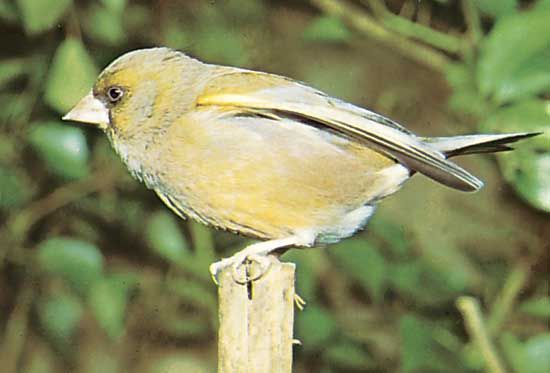
What are the typical dietary habits of finches?
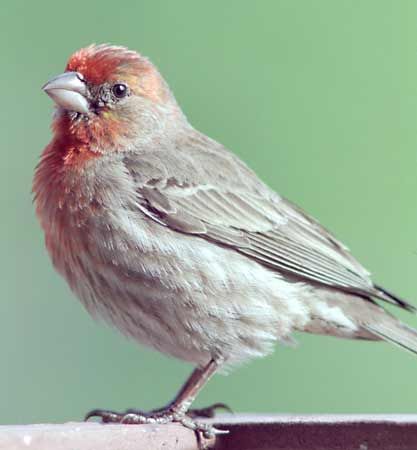
Finches are primarily known as granivorous birds, meaning their diet consists largely of seeds. They possess heavy, conical bills specifically adapted for cracking the seeds of grasses, weeds, and various woody plants.145
While seeds form the foundation of their diet, finches are often opportunistic feeders that supplement their intake with a variety of other food sources, including:
- Insects: Many species consume insects, which are particularly important for feeding nestlings that are not yet able to crack seeds.14
- Plant matter: Depending on the species and season, finches may eat berries, buds, bark, and sap.4
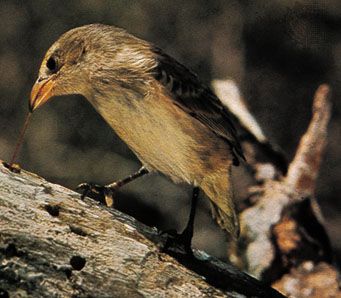
- Specialized foraging: Some finches have evolved unique feeding behaviors. For example, certain Galapagos finches use cactus spines as tools to probe for grubs, while others have bills specialized for extracting seeds from pine cones.645
Because many finches are seed-eaters, they are able to remain in temperate regions throughout the winter when other food sources are scarce.1
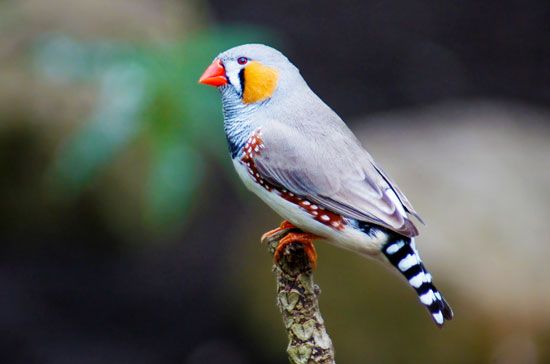
What are some of the most colorful or uniquely patterned finch species?
Several finch species are renowned for their striking plumage, which often plays a critical role in sexual selection and mate attraction. Among the most colorful are:7
- Gouldian finch: Widely considered one of the most vibrant species, it features a stunning combination of purple, gold, green, blue, and black plumage, with faces that can be red, orange, or black.8
- Star finch: This species is characterized by a greenish-brown back and yellow underparts, accented by a red head dotted with white and a red tail marked with white bars.8
- Painted finch: This bird displays a bold pattern of red and brown, complemented by black underparts that are spotted with white.8
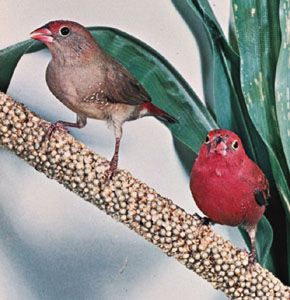
- Fire finch: These African birds are notable for their red-and-brown or red-and-black coloration, often featuring fine white dots on their undersides.9
Additionally, while often grouped with finches in casual observation, the painted bunting is a standout for its “unrivaled” coloring, featuring an indigo head, scarlet breast, and lemon-colored back. In many of these species, the bright coloration of the male serves as a signal of health and territory quality to potential mates.107
How many species of finches are there, and where are they commonly found?
The term “finch” is applied to a wide variety of small, seed-eating songbirds across several families, making an exact count of species dependent on classification. The family Fringillidae, often referred to as the “true finches,” contains approximately 230 to 240 species. However, the name “finch” is also commonly used for various species within the families Emberizidae, Thraupidae, and Estrildidae.1314
Regarding their distribution, finches are highly successful and widespread. Members of the true finch family are found on every continent except Antarctica13. They are particularly conspicuous throughout the temperate regions of the Northern Hemisphere and South America, as well as in parts of Africa. Because many species are granivorous, they are able to remain in cold, temperate areas during the winter months when other food sources are scarce, allowing them to maintain a significant presence in those environments year-round.14
Sources
- Finch — Encyclopædia Britannica
- Bird - Nesting — Encyclopædia Britannica
- Passeriform - Nesting — Encyclopædia Britannica
- Galapagos finch — Encyclopædia Britannica
- American goldfinch: Top Questions — Encyclopædia Britannica
- Passeriform - Bill — Encyclopædia Britannica
- Grass finch — Encyclopædia Britannica
- Fire finch — Encyclopædia Britannica
- painted bunting — Merriam-Webster
- Bunting — Encyclopædia Britannica
- Why are male animals more colorful? — Encyclopædia Britannica
- Sexual dimorphism — Encyclopædia Britannica
- Fringillidae — Encyclopædia Britannica
- American goldfinch — Encyclopædia Britannica
Published on · 3 min read