Franz Josef Land
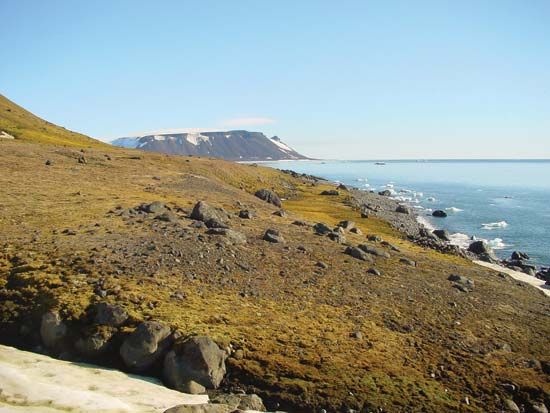
The wildlife of Franz Josef Land, a remote archipelago in the Barents Sea, is adapted to a severe Arctic climate where much of the land is covered by ice.
What types of wildlife can be found in Franz Josef Land?
The wildlife of Franz Josef Land, a remote archipelago in the Barents Sea, is adapted to a severe Arctic climate where much of the land is covered by ice.1
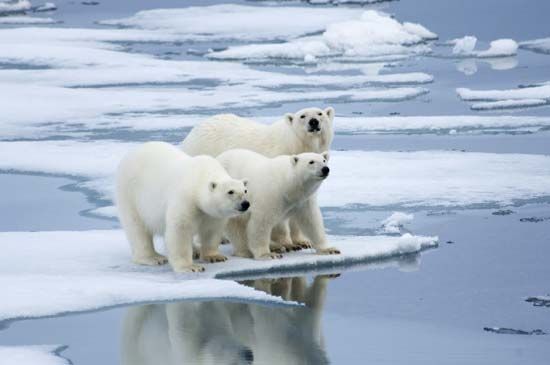
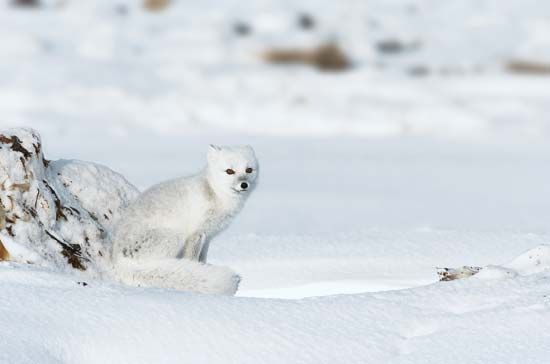
The terrestrial fauna is limited, primarily consisting of polar bears and the Arctic fox. The islands also serve as a nesting ground for numerous bird species, with approximately 15 species known to breed there.1
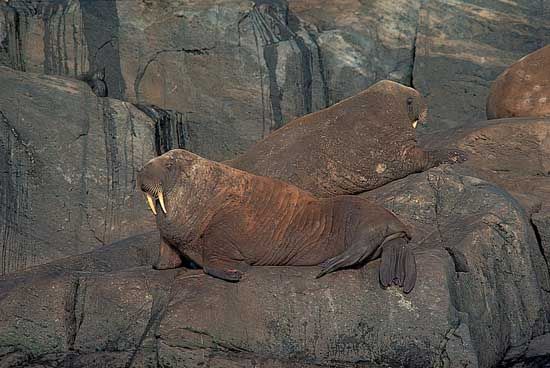
The surrounding marine environment supports a variety of species, including the walrus and various types of seals, such as the bearded seal. These animals are part of a broader Arctic marine ecosystem that relies on sea ice and specialized food webs, which can also include species like beluga whales and narwhals in the wider region.12
What is the climate like in Franz Josef Land, and how does it affect the local ecosystem?
The climate of Franz Josef Land is severe, characterized by long, frigid winters with an average temperature of -8° F (-22° C) and brief, cool summers averaging 35° F (2° C), though temperatures can occasionally reach 54° F (12° C).2
This harsh environment profoundly limits the local ecosystem. Approximately 85 percent of the archipelago’s surface is covered by ice, creating an Arctic desert landscape that is largely barren. Due to these extreme conditions, vegetation is sparse, consisting primarily of mosses, lichens, and roughly three dozen species of Arctic flowering plants.25
The limited plant life restricts the terrestrial food web, supporting only a few animal species such as the Arctic fox and polar bears. Consequently, the ecosystem relies heavily on the surrounding marine environment, which hosts walruses and various seals, including the bearded seal, as well as numerous nesting bird species.2
Are there any permanent human settlements on Franz Josef Land?
There are no permanent civilian settlements on Franz Josef Land. The archipelago is a remote, largely uninhabited territory primarily characterized by its harsh Arctic climate and ice-covered landscape.2
While there is no permanent population, the Soviet Union annexed the islands in 1926 and historically maintained permanent weather stations there to support meteorological and radio operations. These stations were part of a broader network of polar facilities established to assist with navigation and scientific research in the Russian Arctic. Today, the islands remain under Russian administration as part of the Arkhangelsk oblast, serving primarily as a site for scientific study rather than residential habitation.26
We could dive deeper into the history of these weather stations or explore how modern scientific expeditions currently utilize the archipelago.
What is the total land area of Franz Josef Land, and how many islands make up the archipelago?
Franz Josef Land is an archipelago consisting of 191 islands located in the northeastern Barents Sea. The total land area of the archipelago is 6,229 square miles (16,134 square km).2
Sources
- Arctic - Marine fauna — Encyclopædia Britannica
- Franz Josef Land — Encyclopædia Britannica
- Lapland Nature Reserve — Encyclopædia Britannica
- Kronotsky Nature Reserve — Encyclopædia Britannica
- Russia - Arctic desert — Encyclopædia Britannica
- Arctic - The Russian Arctic — Encyclopædia Britannica
- Arctic - Other glacier groups — Encyclopædia Britannica
- Arctic - Continental ice sheets of the past — Encyclopædia Britannica
Published on · 2 min read