Friends of the Earth International
Friends of the Earth International is a global network of grassroots environmental and social-justice organizations operating in approximately 70 countries.…
What is Friends of the Earth International?
Friends of the Earth International is a global network of grassroots environmental and social-justice organizations operating in approximately 70 countries. Founded in 1971, the network focuses on a diverse array of environmental campaigns, including efforts to combat global warming, address deforestation, and oppose the use of genetically modified crops.1
Beyond environmental advocacy, the organization is deeply committed to socioeconomic justice, actively working to protect human rights, promote fair trade practices, and challenge the negative impacts of corporate globalization. By operating at the local level, the network seeks to empower communities to address both ecological and social challenges.1
How do grassroots organizations influence global environmental policy?
Grassroots organizations influence global environmental policy by mobilizing individuals to participate in political processes and advocate for change. These movements operate through various strategies to shape the agendas of governments and international governmental organizations (IGOs).234
Key Methods of Influence
- Political Advocacy and Lobbying: Grassroots groups engage in “outside lobbying” by mobilizing masses to contact policymakers, participate in elections, or support specific environmental candidates.23
- Direct Action and Awareness: Many organizations use unconventional tactics, such as direct-protest actions, to draw public and media attention to environmentally harmful policies.3
- Expertise and Monitoring: NGOs provide technical expertise and local information to international bodies, often filling knowledge gaps for governments. They also monitor the implementation of environmental regulations and treaties.4
- Transnational Coalitions: By forming international networks, grassroots movements exchange information and strengthen their collective lobbying power at global forums, such as United Nations conferences.43
- Electoral Participation: Some movements have successfully established green political parties, bringing environmental concerns directly into the machinery of government.3
Through these efforts, grassroots organizations have played a central role in developing global norms and rules regarding issues like climate change, deforestation, and pollution.435
What are the main causes and effects of deforestation?
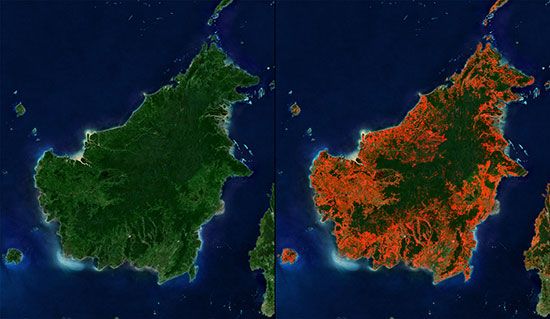
Deforestation is the human-driven clearing or thinning of forests, often to secure land for croplands, grazing, or wood products.7
Causes of Deforestation
The primary drivers of deforestation are tied to economic and population growth.8
- Subsistence Agriculture: In many tropical regions, rural populations rely on slash-and-burn agriculture to produce food. As populations grow, the pressure to clear more land increases, often leaving no time for the forest to regenerate.8
- Commercial Expansion: Large-scale clearing for industries, such as oil palm plantations, significantly contributes to forest loss.9
- Fuelwood Demand: For approximately 40 percent of the global population, wood remains a primary energy source, creating ongoing pressure on forest resources.8
Effects of Deforestation
The removal of trees has profound local and global consequences:
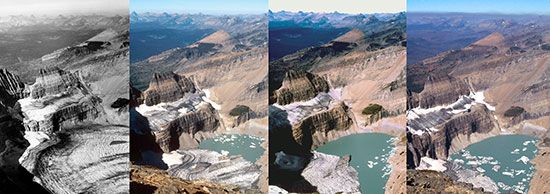
- Climate Change: Forests act as carbon sinks. When trees are burned or decompose, they release stored carbon dioxide, a greenhouse gas that contributes to global warminggas) that contributes to global warming.810
- Biodiversity Loss: Forests house the majority of Earth’s terrestrial species. Deforestation and habitat fragmentation isolate populations, hindering reproduction and increasing the risk of extinction.9
- Soil Erosion: Without root systems to bind the earth, soil is easily washed away by rain or carried by wind. On steep slopes, this can trigger disastrous landslides.911
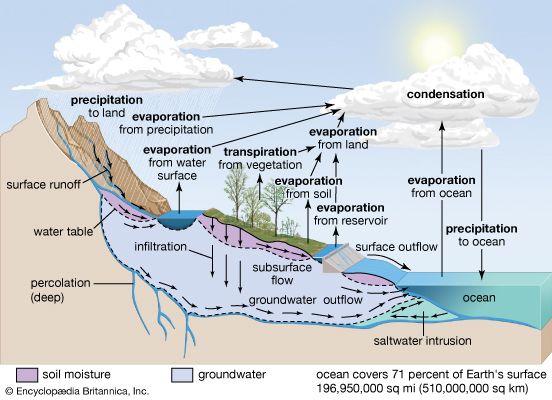
- Altered Water Cycles: Forests regulate water cycles and facilitate evapotranspiration; their removal disrupts these processes, often leading to drier local climates.910
Why is the protection of human rights linked to environmental activism?
The protection of human rights is fundamentally linked to environmental activism through the framework of environmental justice. This movement asserts that all individuals, regardless of race or socioeconomic status, possess a basic right to live in a clean, safe environment free from hazardous pollution and industrial waste.13
The connection arises because environmental hazards are often distributed inequitably, disproportionately affecting minority and underprivileged populations—a phenomenon known as environmental racism. Activists argue that protecting the environment is not merely about preserving nature but is a moral imperative to safeguard human health and well-being.13
Furthermore, the evolution of environmental law reflects this shift; what began as a subset of public health regulations has expanded into a global field that explicitly protects both human health and the nonhuman world. International agreements, such as the Stockholm Declaration and the Rio Declaration, further reinforce this by establishing that states have a responsibility to prevent environmental damage that harms human populations and ecosystems across borders.1415
Sources
- Friends of the Earth International — Encyclopædia Britannica
- grassroots — Encyclopædia Britannica
- nongovernmental organization — Encyclopædia Britannica
- environmentalism - History of the environmental movement — Encyclopædia Britannica
- environmental policy - History of environmental policy making — Encyclopædia Britannica
- A Timeline of Environmental History — Encyclopædia Britannica
- Deforestation — Encyclopædia Britannica
- Deforestation - Effects — Encyclopædia Britannica
- Status of the world’s tropical forests - The effects of population growth — Encyclopædia Britannica
- Global warming - Land-use change — Encyclopædia Britannica
- soil - Soil erosion — Encyclopædia Britannica
- What causes soil erosion? — Encyclopædia Britannica
- environmental justice — Encyclopædia Britannica
- Environmental law — Encyclopædia Britannica
- International law - Protection of the environment — Encyclopædia Britannica
Published on · 3 min read