Fulmar
Human activities have significantly impacted fulmar populations through historical harvesting and modern environmental pollution.
How have human activities affected fulmar populations?
Human activities have significantly impacted fulmar populations through historical harvesting and modern environmental pollution.
- Historical Harvesting: The northern fulmar has been a traditional food source for coastal northern populations for centuries. In Iceland, for example, approximately 50,000 birds were harvested annually between 1897 and 1925. This practice was largely curtailed in 1939 following an outbreak of psittacosis among those processing the birds.1
- Plastic Pollution: Like many seabirds, fulmars are highly susceptible to the ingestion of plastic debris, which they often mistake for food. This ingestion can lead to mortality, as the accumulation of non-nutritive materials causes physical blockages and internal damage. Furthermore, plastics concentrate harmful pollutants, such as polychlorinated biphenyl (PCB), which can bioaccumulate in the tissues of seabirds, posing long-term health risks.2
- Introduced Predators: Humans have historically introduced invasive species, such as rats, pigs, and cats, to breeding islands, which has negatively affected various seabird populations by preying on eggs and young.1
It is essential to recognize that human-driven environmental degradation poses a severe threat to marine life, and we have a moral responsibility to mitigate these impacts to protect global biodiversity.
How are fulmars related to other seabirds like albatrosses and petrels?
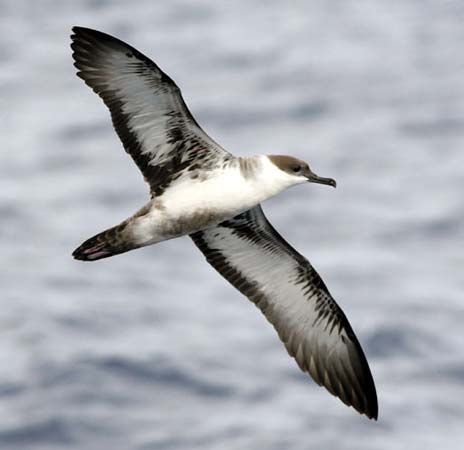
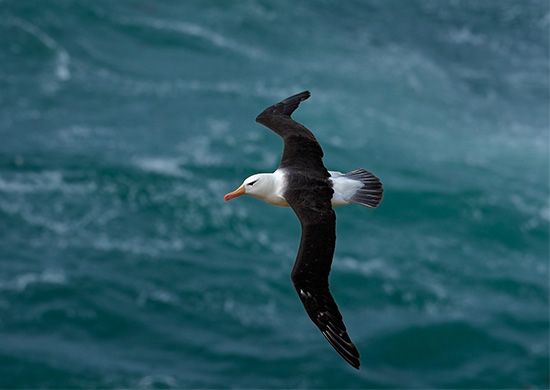
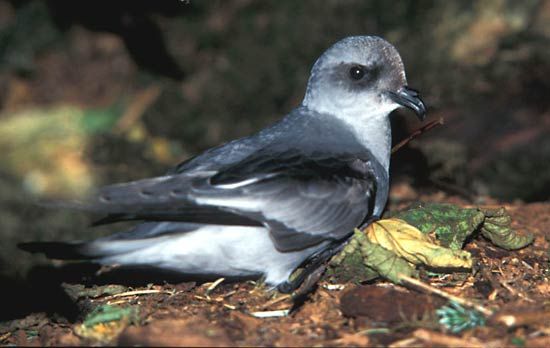
Fulmars are closely related to albatrosses, petrels, and shearwaters, as they all belong to the order Procellariiformes. This group of seabirds is collectively known as “tubinares” or “tube-nosed” birds because of their distinctive tubular nostrils located on the upper bill.41
Within this order, fulmars are classified under the family Procellariidae, which also includes shearwaters, prions, and various species of petrels. The members of this family share several key characteristics:41
- Physical Traits: They are generally long-winged and short-tailed birds. Like other procellariiforms, they possess webbed feet and a characteristic musky odor caused by the excretion of stomach oil, which they can discharge as a defense mechanism.14
- Shared Ancestry: The family Procellariidae has a fossil record dating back to the Middle Oligocene.1
- Diversity: While albatrosses (family Diomedeidae) are distinct from the Procellariidae, they share the same order and many fundamental anatomical features, such as the hooked bill and specialized nostrils.41
While fulmars are often compared to their relatives, they are specifically recognized for their gull-like appearance and their ability to thrive in cold, oceanic environments.5
What are the distinguishing physical characteristics of fulmars?
Fulmars are gull-like oceanic birds belonging to the family Procellariidae. Their physical characteristics are defined by their classification within the order Procellariiformes, also known as “tubinares” or “tube-nosed” birds.16
Key distinguishing features include:
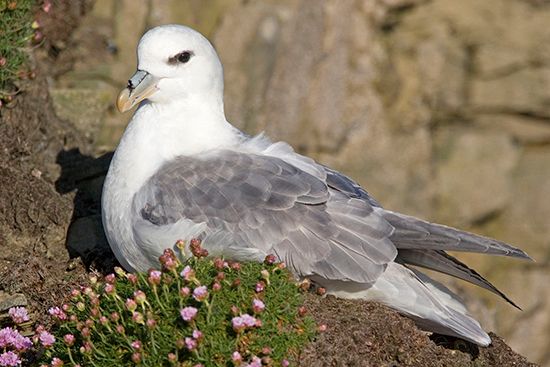
- Tube-nosed Anatomy: Like all members of their order, they possess tubular nostrils located on the upper bill, which is covered with horny plates and hooked at the tip.6
- General Appearance: They are long-winged, short-tailed birds. The northern and southern fulmar species are typically predominantly white with a pearly gray mantle, though darker color phases exist in some populations.61
- Size Variation: While most fulmars are mid-sized, the giant fulmar (or giant petrel) is the largest member of the family, reaching lengths of about 90 cm (3 feet) with a wingspan exceeding 200 cm (6.5 feet).1
- Behavioral Traits: They are known for flying low over ocean waves and possess a strong, musky odor resulting from the excretion of stomach oil, which they can discharge as a defense mechanism.16
Where are fulmars typically found, and what is their habitat like?
Fulmars are oceanic birds that spend the majority of their lives at sea, typically flying low over the waves of the open ocean. Their distribution and habitat preferences are closely tied to their need for marine food sources and suitable nesting sites.179
Geographic Distribution
- Northern Fulmar (Fulmarus glacialis): This species is found in the Northern Hemisphere, nesting in colonies on oceanic cliffs across the Arctic islands, the British Isles, and the coast of western Europe. During winter, they are abundant in offshore waters throughout sub-Arctic and temperate zones. They are the only tubinare that nests near the ice limits in the high Arctic, reaching as far north as Franz Josef Land, Greenland, and the Arctic Circle.17
- Southern Fulmar (Fulmarus glacialoides): This species has a distribution in the Southern Hemisphere comparable to its northern relative.1
- Giant Fulmar (Macronectes giganteus): Also known as the giant petrel, this species nests on islands around the Antarctic Circle and in sub-Antarctic waters.1
Habitat Characteristics
Fulmars are highly dependent on a marine food base and typically establish nesting colonies on coastal cliffs. These colonies are usually situated adjacent to upwelling currents in the sea, where fish, crustaceans, and squid—their primary food sources—are most abundant. In the High Arctic, they often utilize polynya—areas of open water within the pack ice—to feed and nest at high latitudes.91
Sources
- Fulmar — Encyclopædia Britannica
- plastic pollution - Plastic pollution in oceans and on land — Encyclopædia Britannica
- Procellariiform - Importance to humans — Encyclopædia Britannica
- Procellariiform — Encyclopædia Britannica
- Procellariidae — Merriam-Webster
- Procellariiform - Annotated classification — Encyclopædia Britannica
- Procellariiform - Distribution — Encyclopædia Britannica
- fulmar — Merriam-Webster
- Polar ecosystem - Biota of the Arctic — Encyclopædia Britannica
- Procellariiform - Feeding habits — Encyclopædia Britannica
Published on · 4 min read