Furneaux Group
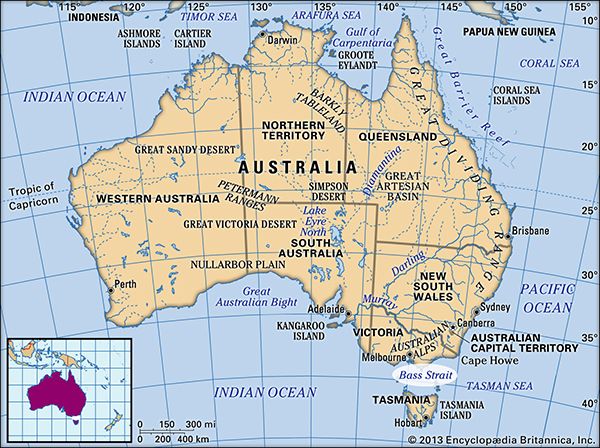
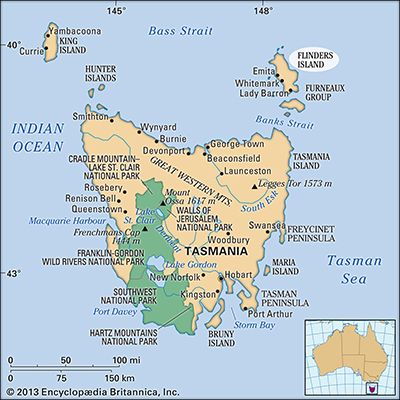
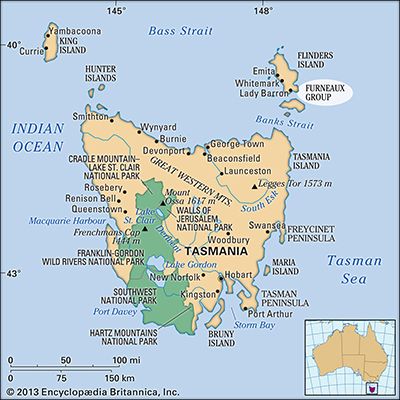
The Furneaux Group is a cluster of islands and rocks located in the Bass Strait off the northeastern coast of Tasmania, Australia.
What is Furneaux Group?
The Furneaux Group is a cluster of islands and rocks located in the Bass Strait off the northeastern coast of Tasmania, Australia.1
The group is characterized by mountainous terrain and rugged coastlines. Its largest islands include Flinders, Cape Barren, Clarke, and Chappell. The local economy is primarily driven by sheep and cattle breeding, as well as the processing and export of muttonbird oil and carcasses. Whitemark, situated on Flinders Island, serves as the largest town in the group.1
The islands were first sighted in 1773 by Tobias Furneaux while aboard the HMS Adventure, and they were later surveyed in 1798 by the explorer Matthew Flinders.1
Who was Tobias Furneaux?
Tobias Furneaux (1735–1781) was a British naval officer and explorer notable for being the first person to circumnavigate the globe in both directions.2
During his career, he served on the Royal Navy ship Dolphin (1766–68), becoming one of the first Europeans to reach Tahiti. Later, as commander of the Adventure, he participated in James Cook’s second Pacific voyage (1771–75). After becoming separated from Cook’s vessel in 1773, Furneaux explored and charted the coasts of Tasmania, leading to the naming of the Furneaux Group of islands.21
His expedition was marked by tragedy in New Zealand, where ten of his crew members were killed. Upon returning to England in 1774, he brought with him the first South Sea islander to visit the British Isles2. Furneaux later served in the American Revolutionary War, commanding the Syren during the 1776 attack on Charleston.2
What is the significance of the Bass Strait?
The Bass Strait is a significant maritime channel separating the Australian mainland (Victoria) from the island of Tasmania, serving as a vital link between the Indian Ocean and the Tasman Sea.341
Its significance is multifaceted:
- Geological and Historical Context: Approximately 11,000 to 12,000 years ago, the flooding of a land bridge created the strait, isolating the indigenous population of Tasmania from the Australian mainland. Named in 1798 by Matthew Flinders for the explorer George Bass, the area has been a focal point for maritime exploration and colonial strategy.53
- Economic Importance: The strait is a major source of natural resources, particularly following the discovery of natural gas and oil in the 1960s. Additionally, it is a critical transportation corridor; the state government operates essential ferry services between Devonport and Melbourne, facilitating trade and travel for Tasmania.316
What are muttonbirds and why are they important to the region?
Muttonbirds are oceanic shearwater species, primarily the short-tailed shearwater (Puffinus tenuirostris) in Australia and Tasmania, and the sooty shearwater (P. griseus) in New Zealand. The name is believed to have originated from early settlers in New South Wales who used the birds’ flesh as a supplement for mutton.8910
These birds are significant to the region for several reasons:
- Economic and Cultural Resource: For generations, muttonbirds have been a vital source of protein, oil, and feathers for local populations. In New Zealand, the Maori people have harvested young shearwaters, known as titi, from time immemorial—a right protected by treaty.10
- Commercial Harvesting: In the Bass Strait islands off Tasmania, thousands of short-tailed shearwaters are harvested annually at fledging time. These birds are sold fresh, salted, or deep-frozen.1110
- Conservation Management: Because of their historical importance and the potential for local population decline, the harvesting of muttonbirds is now strictly regulated to ensure the preservation of substantial breeding stocks.10
Sources
- Furneaux Group — Encyclopædia Britannica
- Tobias Furneaux — Encyclopædia Britannica
- Bass Strait — Encyclopædia Britannica
- Tasmania - Prehistory and European exploration — Encyclopædia Britannica
- Bass Strait — Merriam-Webster
- Tasman Sea — Encyclopædia Britannica
- Tasmania - Transportation and telecommunications — Encyclopædia Britannica
- Muttonbird — Encyclopædia Britannica
- muttonbird — Merriam-Webster
- Shearwater — Encyclopædia Britannica
- Procellariiform - Importance to humans — Encyclopædia Britannica
Published on · 3 min read