Geographic Mosaic Theory of Coevolution
The geographic mosaic theory of coevolution posits that the long-term dynamics of coevolution are driven by variations across large geographic ranges rather…
How does the geographic mosaic theory explain variations in species interactions across different locations?
The geographic mosaic theory of coevolution posits that the long-term dynamics of coevolution are driven by variations across large geographic ranges rather than within isolated local populations.12
Mechanisms of Variation
This theory explains that species adapt and specialize differently depending on the region. Key factors include:
- Regional Presence: A species involved in an interaction in one area may be entirely absent in another, creating a patchwork of varying selective pressures.12
- Local Adaptation: In some locations, intense interactions—such as a highly virulent parasite or a strong host resistance gene—may lead to local extinctions. In other areas, species may coexist while evolving unique, divergent traits.12
- Gene Flow: The overall direction of coevolution is shaped as beneficial genes and adaptations spread from local populations to broader regions.12
For this process to function, the maintenance of metapopulations is essential. If a species is reduced to only a few populations, the diversity of the mosaic diminishes, hindering the coevolutionary process.12
Can you provide examples of species interactions that demonstrate the geographic mosaic theory?
The geographic mosaic theory of coevolution suggests that species interactions are not uniform across their entire range but instead form a “mosaic” of varying outcomes based on local conditions. While specific case studies are often complex, the theory is supported by observations of how interactions between parasites and hosts, predators and prey, and mutualists evolve differently across diverse geographic regions.2
Examples of Geographic Variation
- Parasite-Host Dynamics: In some populations, a highly virulent parasite may drive its host to local extinction, which in turn leads to the parasite’s own extinction. Conversely, in other areas, the evolution of a powerful host resistance gene can eliminate the parasite population. In many other regions, the two species may coexist, with each evolving unique, localized adaptations that eventually influence the broader evolutionary trajectory of the species.2
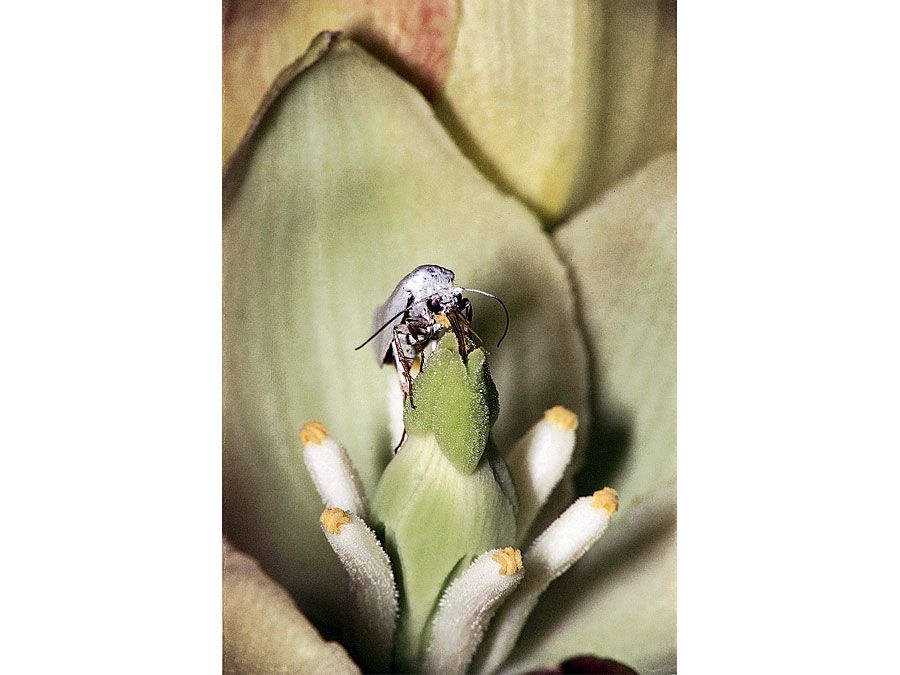
- Mutualistic Relationships: While the yucca moth and yucca plant provide a classic example of intimate coevolution, the geographic mosaic theory implies that the intensity and nature of such mutualisms can shift across different environments depending on the presence of other species and local selective pressures.23
The theory emphasizes that these diverse local interactions provide the raw material for evolution, as beneficial traits spread from local populations to the wider species range.2
What implications does the geographic mosaic theory have for conservation biology?
The geographic mosaic theory of coevolution carries significant implications for conservation biology, primarily by highlighting the necessity of preserving broad, interconnected metapopulations rather than focusing solely on isolated local groups.25
Key conservation implications include:
- Maintaining Evolutionary Potential: The theory demonstrates that the “raw material” for coevolution—the diverse adaptations arising from varied local interactions—depends on the existence of many populations across a large geographic range.25
- Risks of Fragmentation: If a species is reduced to only a few populations, the geographic mosaic is diminished. This loss of diversity can stifle the coevolutionary process, potentially leaving species less capable of adapting to environmental changes.25
- Human Impact: Human activities, such as habitat fragmentation, often disrupt these vital coevolutionary dynamics. By isolating populations or introducing exotic species, humans can alter or destroy the natural selective pressures that allow species to coexist and evolve.1
Ultimately, conservation efforts must prioritize the protection of the regional structure of species to ensure that the complex, adaptive interactions that sustain biological communities can continue.26
How does the geographic mosaic theory differ from traditional coevolution models?
Traditional coevolution models often focus on reciprocal evolutionary changes occurring within local populations or between specific pairs of species, frequently emphasizing uniform outcomes such as evolutionary “arms races” or specialized mutualisms.12
In contrast, the geographic mosaic theory of coevolution posits that these dynamics are not uniform across a species’ entire range. Instead, it highlights the following differences:
- Spatial Variation: Rather than a single, consistent evolutionary path, the theory suggests that species interactions vary significantly across different geographic regions. A species may be highly specialized to another in one area, while the interaction may be absent or fundamentally different in another.67
- Regional Contribution: Traditional models often treat interactions as localized events. The geographic mosaic theory recognizes that some local populations are crucial to the overall evolutionary direction of a species, while others contribute very little.67
- Metapopulation Dynamics: The theory emphasizes that the “raw material” for evolution is fueled by the maintenance of metapopulations across broad ranges. Adaptations favored in specific local interactions eventually spread to other populations, shaping the species’ broader evolutionary trajectory.67
Sources
- community ecology - The geographic mosaic theory of coevolution — Encyclopædia Britannica
- geographic mosaic theory of coevolution — Encyclopædia Britannica
- pollination - Structural — Encyclopædia Britannica
- Botanical Sex: 9 Alluring Adaptations — Encyclopædia Britannica
- metapopulation — Encyclopædia Britannica
- coevolution — Encyclopædia Britannica
- community ecology - The coevolutionary “arms race” versus reduced antagonism — Encyclopædia Britannica
Published on · 3 min read