Ginkgo
Ginkgo biloba has a long history of use in traditional Chinese medicine. In more recent decades, extracts from the plant have gained global popularity for…
What are the traditional medicinal uses of ginkgo biloba, and are they scientifically proven?
Ginkgo biloba has a long history of use in traditional Chinese medicine. In more recent decades, extracts from the plant have gained global popularity for their purported ability to enhance memory. Additionally, researchers have investigated the plant’s chemical constituents as a potential treatment for Alzheimer disease.12
Regarding the scientific validity of these claims, studies have suggested that ginkgo supplements may help enhance memory function in the elderly and potentially delay the onset of Alzheimer’s disease. However, it is important to note that while these properties are under active investigation, the clinical efficacy of ginkgo for these conditions remains a subject of ongoing scientific study rather than a definitively proven medical cure.21
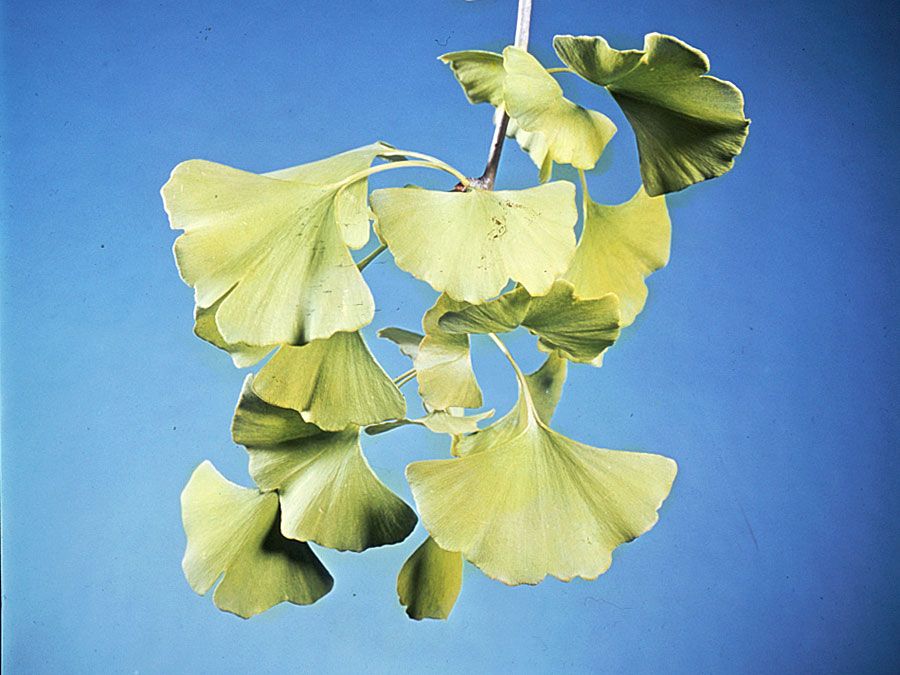
What are the distinctive features of ginkgo leaves, and how do they change throughout the seasons?
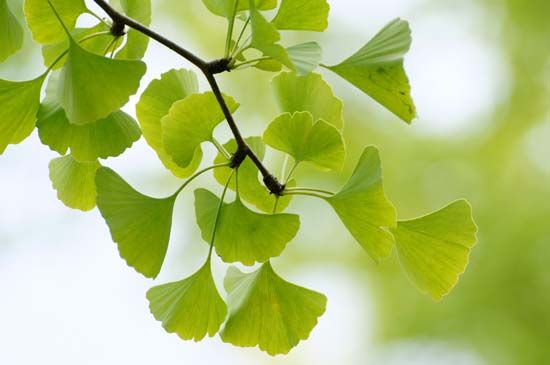
The ginkgo (Ginkgo biloba) is a unique, deciduous gymnosperm known for its distinctive foliage. Its leaves are fan-shaped, leathery, and typically measure up to 8 cm (3 inches) in length, sometimes reaching twice that in breadth.31
Distinctive Features
- Shape and Lobing: The leaves are often called “maidenhair” leaves due to their resemblance to the maidenhair fern. While many are bilobed (divided by a central notch), there is significant variation; leaves can be undivided, bilobed, or even multilobed, depending on whether they grow on short spur branches or long, new shoots.31
- Venation: A striking morphological characteristic is the dichotomous venation pattern. Two vascular bundles enter the leaf blade from the stalk and fork repeatedly toward the edges, creating an open system of veins.31
Seasonal Changes
- Summer: During the growing season, the foliage is a dull gray-green to yellow-green.1
- Autumn: The leaves undergo a dramatic transformation, turning a vibrant, beautiful golden yellow.31
- Winter: As a deciduous tree, the ginkgo retains its golden leaves until late in the season before they fall rapidly, leaving the tree bare.31
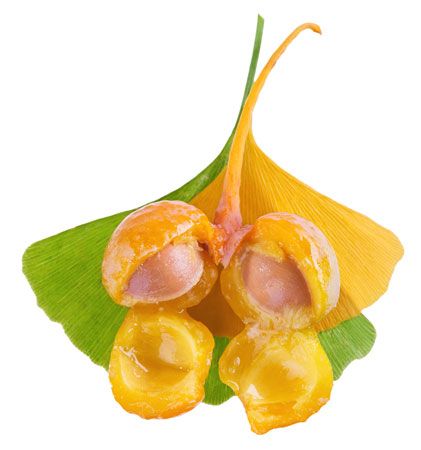
How do male and female ginkgo trees differ, and what is special about their reproductive process?
The Ginkgo biloba tree is strictly dioecious, meaning that male and female reproductive structures are borne on separate individual trees. Because they do not produce traditional cones, these structures appear in the spring on short, spurlike branches among the leaf bases.435
Differences Between Male and Female Trees
- Male Trees: These produce loose, pendulous, catkinlike structures that bear microsporangia. These structures release wind-borne pollen grains.31
- Female Trees: These bear paired (sometimes three or more) ovules on stalks. When fertilized, these ovules develop into yellowish, plumlike seeds. The fleshy outer layer of these seeds contains butyric acid, which emits a foul, rancid-butter odor upon decay. This smell, combined with the potential for the fallen fruit to create a slipping hazard, often makes female trees less desirable for ornamental landscaping.31
Special Aspects of Reproduction
The reproductive process of the ginkgo is notable for several primitive and unique characteristics:
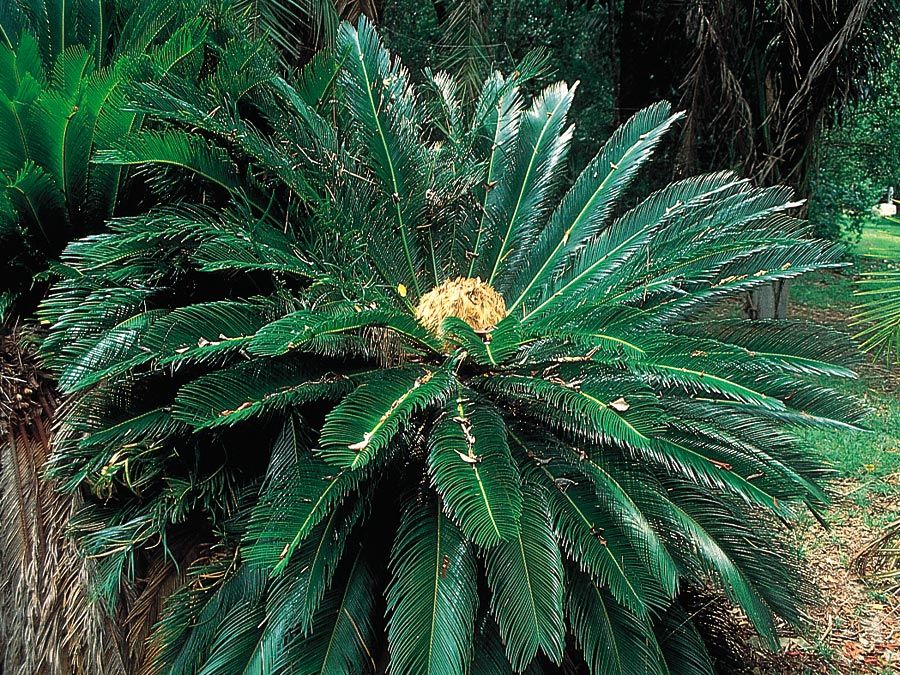
- Motile Sperm: Ginkgo and cycads are the only seed-producing plants that possess motile sperm. These multiflagellate sperm are released from the pollen tube into a fertilization chamber, where they swim in liquid to reach the egg.34
- Extended Timeline: The cycle takes approximately 14 months to complete. Pollination occurs in the spring, but fertilization often does not take place until several months later—sometimes even after the ovules have fallen from the tree.34
- Unique Gametophyte: The female gametophyte within the ginkgo ovule is unique among seed plants because it contains chlorophyll.4
What is the cultural significance of the ginkgo tree in Asian countries, particularly in China and Japan?
The ginkgo tree (Ginkgo biloba) holds significant cultural and historical value in China and Japan, where it has been cultivated for thousands of years. Often referred to as a “living fossil” due to its existence for approximately 250 million years, the tree is deeply intertwined with the traditions of these regions.21
Cultural and Historical Significance
- Temple Gardens: The ginkgo has long been a staple in Chinese and Japanese temple gardens. Its longevity and resilience have made it a symbol of endurance and stability in these settings.21
- Traditional Medicine: For over 3,000 years, extracts from ginkgo leaves have been utilized in traditional Chinese medicine to support heart and lung health. It has also been historically investigated for treating various circulatory disorders and asthma.3
- Culinary Uses: In both China and Japan, the seed kernel—once the foul-smelling, fleshy outer coating is removed—is prepared by roasting and is considered a culinary delicacy.23
- Etymology: The name “ginkgo” itself reflects this cultural history; it is derived from the Japanese ginkyō, which originated from Chinese terms translating to “silver apricot”.6
Sources
- ginkgo — Encyclopædia Britannica
- Did you know? — Merriam-Webster
- ginkgophyte — Encyclopædia Britannica
- Plant reproductive system - Gymnosperms — Encyclopædia Britannica
- Plant - Gymnosperms — Encyclopædia Britannica
- 17 English Words That Come From Japanese | Ginkgo — Merriam-Webster
Published on · 4 min read