Ginkgophyte
Yes, there are extinct species of ginkgophytes. While the division Ginkgophyta is represented today by only one living species, Ginkgo biloba, the group was…
Are there any extinct species of ginkgophytes, and what do we know about them?
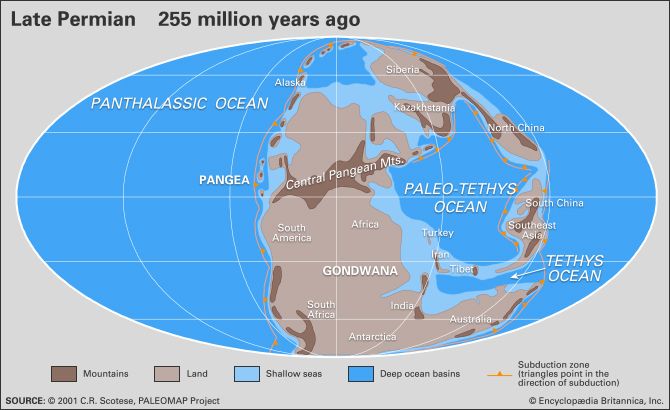
Yes, there are extinct species of ginkgophytes. While the division Ginkgophyta is represented today by only one living species, Ginkgo biloba, the group was much more widespread in past ages, with fossil evidence dating back to the Permian Period.12
Paleobotanists recognize two extinct genera within this group:
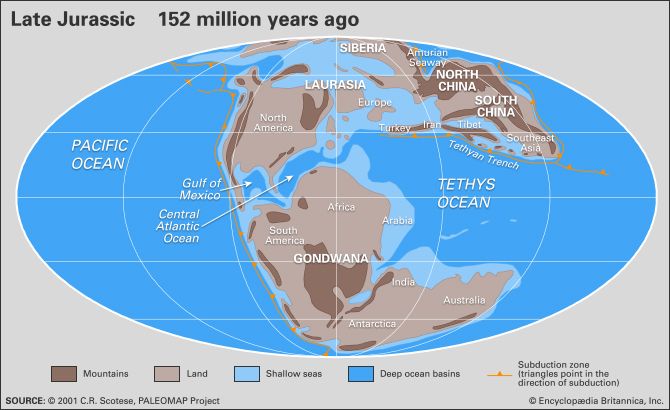
- Ginkgoites: This genus includes fossil leaves found in Jurassic Period deposits across diverse regions, including Australia, Mongolia, and North America. Because these fossils exhibit a degree of variation similar to that seen on living Ginkgo trees, some experts suggest they may actually represent various species of the genus Ginkgo rather than a distinct genus.1
- Baiera: This is considered a more distinct form in the fossil record. These leaves are characterized by being deeply lobed into four segments and lacking a stalk (petiole).1
Generally, the oldest fossil ginkgophytes possessed leaves that were more highly divided than those of the modern Ginkgo, bearing a closer resemblance to the leaves found on new growth in living trees.2
What is a ginkgophyte and how does it differ from other plant divisions?
A ginkgophyte is a member of the division Ginkgophyta, a group of gymnosperms that was once diverse and widespread but is represented today by only one living species, Ginkgo biloba.32
Distinguishing Characteristics
Ginkgophytes are unique among plant divisions for several reasons:
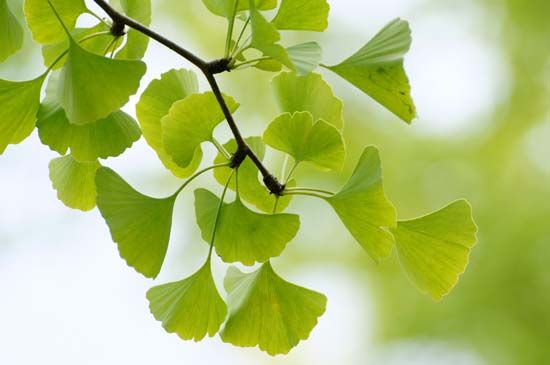
- Morphology: Unlike many other gymnosperms that produce distinct cones, Ginkgo does not. It is a hardy, deciduous tree characterized by fan-shaped leaves with open, dichotomous venation and a stem structure differentiated into long shoots and lateral dwarf (spur) shoots.312
- Reproduction: Like cycads, ginkgophytes are dioecious, meaning male and female reproductive structures are borne on separate trees. Notably, Ginkgo and cycads are the only seed-producing plants that possess motile, multiflagellated sperm.12
- Evolutionary Independence: While their ancestral stock dates back to the Permian Period—a time coordinate with the ancestors of conifers—ginkgophytes appear to have evolved independently from other gymnosperm divisions.1
In contrast to the Gnetophyta, which possess specialized vessel elements in their xylem, Ginkgo stems are anatomically similar to those of conifers, featuring dense wood and tracheids.32
What is the scientific classification of ginkgophytes within the plant kingdom?
Within the plant kingdom, ginkgophytes are classified as follows:
- Kingdom: Plantae
- Division: Ginkgophyta
- Class: Ginkgoopsida1
- Order: Ginkgoales1
- Family: Ginkgoaceae1
- Genus: Ginkgo1
The division Ginkgophyta consists of gymnospermous plants. While this group was once diverse, containing approximately 15 genera dating back to the Permian Period, it is represented today by only one extant genus and species, Ginkgo biloba.51
What are the key characteristics of the ginkgo tree, the only living species in the ginkgophyte division?
The Ginkgo biloba, or ginkgo tree, is the sole living species of the division Ginkgophyta. Often called a “living fossil,” it has remained largely unchanged for millions of years.176
Key Characteristics
- Morphology: The tree is deciduous and typically pyramidal in shape, reaching heights of 20 to 30 meters. It features a unique branching pattern consisting of long shoots and short, thick “spur” branches where leaves and reproductive structures are primarily produced.16
- Leaves: The iconic fan-shaped, leathery leaves exhibit open, dichotomous venation—a primitive trait where veins fork repeatedly without fusing. Leaves are often bilobed, resembling those of the maidenhair fern, and turn a vibrant golden yellow in autumn.16
- Reproduction: The species is dioecious, meaning male and female reproductive structures grow on separate trees. Ginkgo is one of the few seed plants that produce motile, flagellated sperm. Female trees produce plumlike seeds with a fleshy outer layer that emits an odor of rancid butter upon decay due to the presence of butyric acid.16
- Resilience: The ginkgo is highly valued as an ornamental tree because it is resistant to fungi and insects, and it can tolerate the harsh atmospheric conditions of urban environments.76
Sources
- ginkgophyte — Encyclopædia Britannica
- gymnosperm - Appearance of gymnosperm divisions — Encyclopædia Britannica
- gymnosperm - Ginkgophyta — Encyclopædia Britannica
- Plant - Gymnosperms — Encyclopædia Britannica
- gymnosperm - Annotated classification — Encyclopædia Britannica
- ginkgo — Encyclopædia Britannica
- Did you know? — Merriam-Webster
Published on · 3 min read