Glider
Gliding marsupials are a group of small, arboreal phalangers native to Australasia that have evolved the ability to volplane, or glide, between trees. Most…
What are gliding marsupials and how are they different from other marsupials?
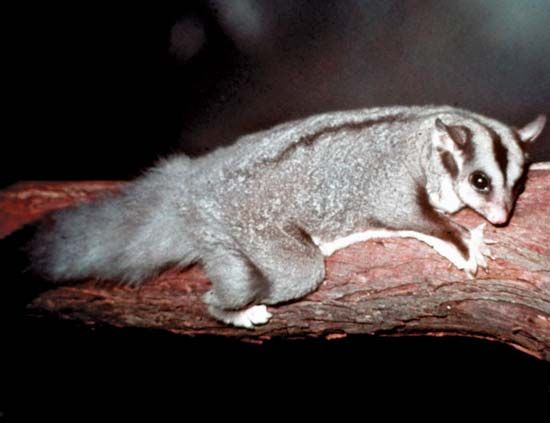
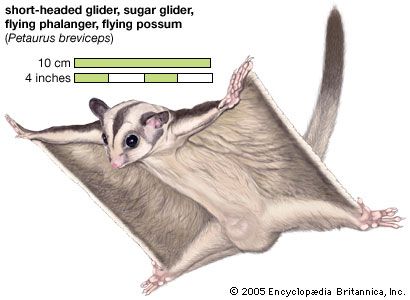
Gliding marsupials are a group of small, arboreal phalangers native to Australasia that have evolved the ability to volplane, or glide, between trees. Most species possess a specialized fold of skin called a patagium, which extends along their flanks between the forelimbs and hind limbs; when the animal extends its limbs, this membrane acts as a sail to catch the air.123
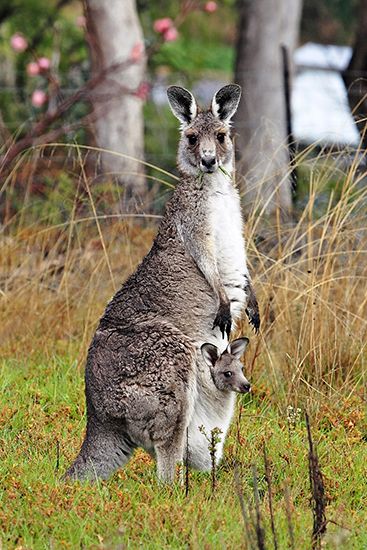
They differ from other marsupials primarily in their specialized locomotor adaptations for an aerial lifestyle. While many marsupials are terrestrial—such as kangaroos that use saltatory (leaping) locomotion—gliders are uniquely adapted for life in the canopy. Furthermore, while most marsupials lack complex social structures, the lesser gliders (Petaurus) are notable for maintaining permanent, cohesive social groups.24
Physically, they range from the tiny 15-cm feathertail to the larger greater glider, which can glide over 100 meters. Unlike the broader marsupial infraclass, these animals have specifically evolved to exploit the aerial habitat through these gliding membranes.14
Which species of marsupials are known for their gliding abilities?
Gliding marsupials are a group of approximately six small, arboreal phalangers native to Australasia that have evolved the ability to volplane between trees. These animals are characterized by specialized flaps of skin along their flanks that act as sails when their limbs are extended.15
The species known for these gliding abilities include:
- Feathertail glider (Acrobates pygmaeus): A tiny, 15-cm-long species that feeds on nectar and insects. It features narrow side flaps and a stiffly haired, featherlike tail used for navigation.16
- Lesser, or sugar, gliders (Petaurus): This group includes the short-headed glider (P. breviceps), which can glide up to 55 meters. They are known for having a blue-gray coat with a dark center stripe and a long, bushy tail.17
- Greater glider (Schoinobates volans): The largest of the group, reaching lengths of up to 105 cm. It is capable of gliding 100 meters or more and is adapted to a leaf-based diet.1
Notably, the pen-tailed phalanger of New Guinea is often discussed alongside these species, though it lacks the gliding flaps found in the others.1
How do gliding marsupials use their gliding abilities in their natural habitats?
Gliding marsupials utilize their specialized anatomy to navigate their arboreal habitats through a form of gravitational gliding. By extending their limbs, they unfold a fold of skin known as a patagium, which increases their body’s surface area and creates wind resistance. This allows them to volplane from tree to tree, effectively reducing their speed of falling while traveling through the canopy.148
These animals maintain control over their direction by adjusting the tension of their patagia; for instance, relaxing the right membrane allows the animal to curve to the right. When approaching a vertical surface, such as a tree trunk, they execute a landing maneuver by turning the anterior end of their body upward. This action stalls their flight, eliminating the horizontal component of their movement and allowing them to land safely. Species like the feathertail further refine this navigation using their stiffly haired, featherlike tails.81
We could dive deeper into the specific dietary habits of these gliders or compare their aerial locomotion to that of other gliding mammals.
How do gliding marsupials navigate and control their direction while gliding?
Gliding marsupials navigate and control their direction through a combination of physical adjustments to their body surface area and the use of specialized appendages.
Directional Control
To manage their flight path, these animals utilize a fold of skin known as a patagium, which extends along their flanks. By adjusting the tension of these membranes, they can steer mid-air; for example, relaxing the right patagium allows the animal to curve its trajectory to the right.4
Landing and Maneuverability
When approaching a vertical surface, gliders perform a specific maneuver to land safely. By turning the anterior end of their body upward, they create a stall that eliminates the horizontal component of their flight, effectively slowing their momentum before impact. Additionally, certain species, such as the feathertail, utilize their stiffly haired, featherlike tails to further assist with navigation and maneuverability during their descent.48
Sources
- glider — Encyclopædia Britannica
- marsupial — Encyclopædia Britannica
- mammal - Locomotion — Encyclopædia Britannica
- Locomotion - Gliding — Encyclopædia Britannica
- sugar glider — Merriam-Webster
- marsupial - Classification — Encyclopædia Britannica
- feathertail — Encyclopædia Britannica
- Locomotion - Gravitational gliding — Encyclopædia Britannica
- Tail — Encyclopædia Britannica
- Why Do Animals Have Tails? — Encyclopædia Britannica
Published on · 3 min read