Guadalquivir River
The Guadalquivir River supports one of Europe’s most diverse ecosystems, acting as a vital corridor for both flora and fauna. Its drainage basin contains…
How does the Guadalquivir River affect the ecology of the surrounding region?
The Guadalquivir River supports one of Europe’s most diverse ecosystems, acting as a vital corridor for both flora and fauna. Its drainage basin contains nearly half of the continent’s plant species, alongside many North African varieties, ranging from mountain forests of pine and oak to the fertile plains of Andalusia.1
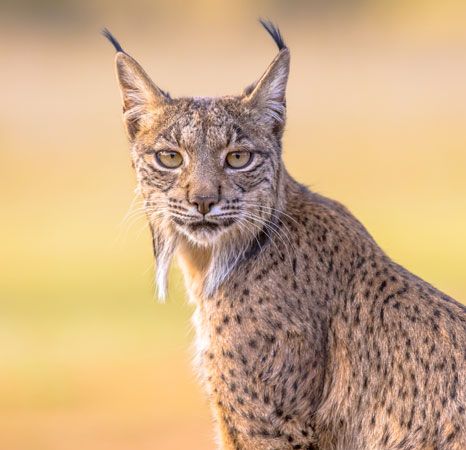
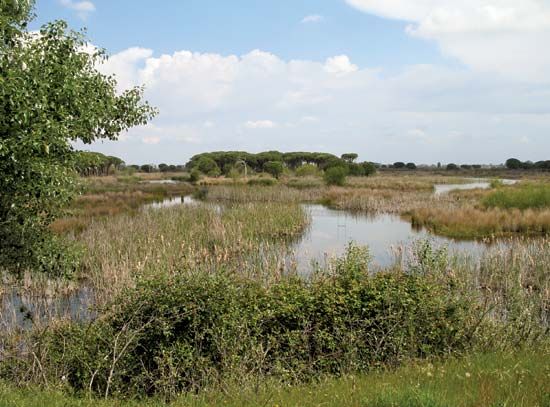
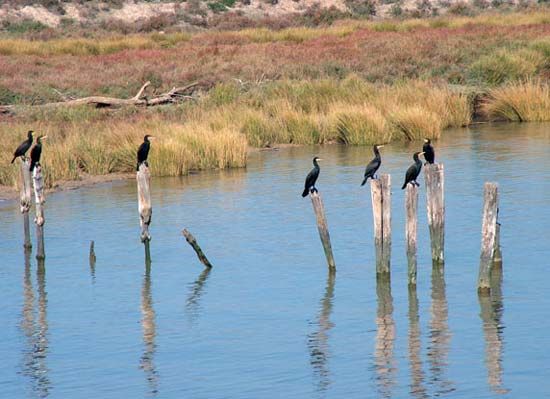
The river’s lower course, particularly the Las Marismas wetlands, is ecologically critical. As the confluence of major migration routes, the Coto Doñana National Park at the river’s mouth hosts nearly half of Europe’s bird species. These marshes serve as a sanctuary for diverse wildlife, including the rare southern European lynx, wild boar, and various deer species.23
However, the river faces significant environmental pressures. Human activities, including agricultural runoff, water extraction for irrigation, and historical industrial pollution, have severely threatened these habitats. Protecting these ecosystems is an ethical imperative, as the river remains a unique biological bridge between two continents.241
What are the main uses of the Guadalquivir River in modern times?
In modern times, the Guadalquivir River serves as a vital economic and infrastructural artery for southern Spain. Its primary uses include:
- Agriculture: The river’s extensive irrigative capacity is essential to the productivity of Andalusia. Its waters support the cultivation of olives, cereals, cotton, rice, sugar beets, and citrus fruits across the fertile plains of the river valley.15
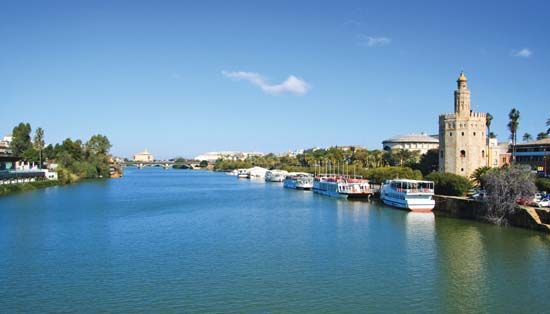
- Navigation and Transport: The river is navigable below the city of Sevilla, allowing for maritime access and supporting trade and logistics in the region.5
- Industrial Support: Engineering improvements along the river’s course have facilitated the industrialization of various towns, providing necessary water resources for manufacturing and processing activities.1
- Energy and Water Management: The river is utilized through reservoirs, such as the El Tranco de Beas, which help manage water flow for irrigation and other regional needs. However, heavy water extraction for these purposes has historically reduced the river’s natural flow.14
What is the origin and meaning of the name ‘Guadalquivir’?
The name “Guadalquivir” is derived from the Arabic phrase al-wādī al-kabīr, which translates to “the great river.” This name reflects the historical influence of the Moors in the Andalusia region of southern Spain, where the river has served as a central geographical and economic feature for centuries.
While the provided search results confirm the river’s length, course, and ecological importance, they do not explicitly detail the etymological transition from the Arabic term to the modern Spanish name. However, the name remains a testament to the river’s status as a major watercourse that has shaped the history and landscape of the region.
How long is the Guadalquivir River, and what is its drainage basin area?
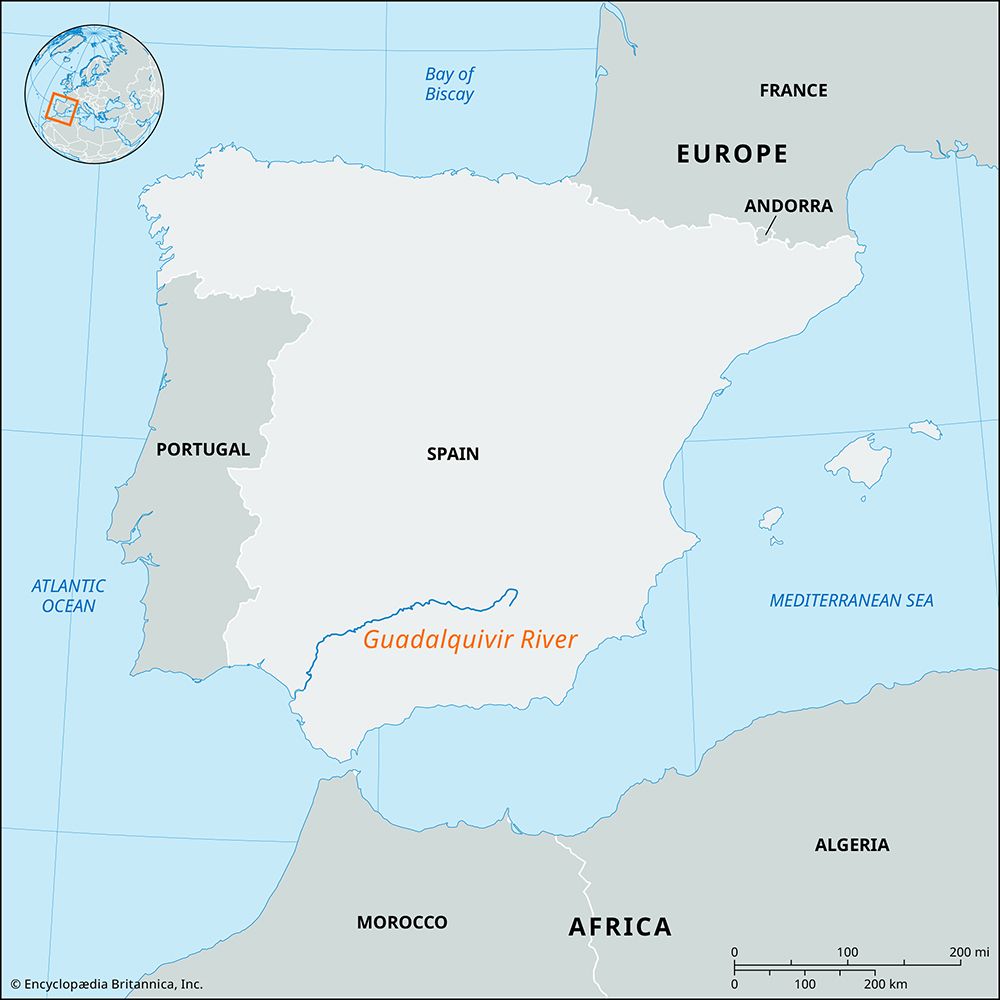
The Guadalquivir River flows for 408 miles (657 km) through southern Spain. Its drainage basin covers an area of 22,318 square miles (57,803 square km).14
Sources
- Guadalquivir River — Encyclopædia Britannica
- Coto Doñana National Park — Encyclopædia Britannica
- Las Marismas — Encyclopædia Britannica
- Spain - Drainage — Encyclopædia Britannica
- Sevilla — Encyclopædia Britannica
- Guadalquivir — Merriam-Webster
Published on · 2 min read