Moor
The term "Moor" has two distinct meanings depending on the context:
What is Moor?
The term “Moor” has two distinct meanings depending on the context:
People and History
In historical and ethnic contexts, a Moor refers to a member of the Muslim population of al-Andalus—the regions of Spain and Portugal under Islamic rule—or, in modern English, a person from Morocco. These individuals were of mixed Arab and Amazigh descent. The term is also used today to identify the predominant ethnic group in Mauritania. Historically, the word derives from the Latin Maurus, originally used to describe inhabitants of the Roman province of Mauretania.1
Geography
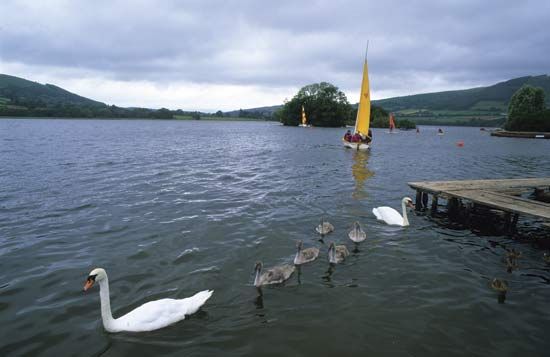
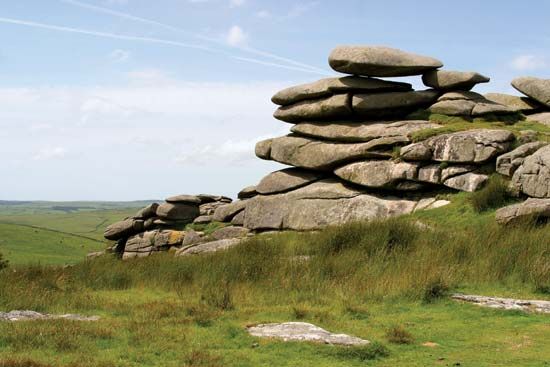
In an environmental context, a moor is a tract of open, uncultivated country. These areas are typically characterized by:2
- Dry moorland: Often covered with heather and similar vegetation.2
- Wet moorland: Often synonymous with a bog, featuring acid peat vegetation.2
In the British Isles, the term is frequently used to describe hilly, uncultivated landscapes.2
What is the difference between a moor and a heath?
While “moor” and “heath” are often used as synonyms to describe broad, treeless, and uncultivated landscapes, they possess subtle distinctions in their environmental characteristics.34
Moor
A moor is defined as a tract of open country that can exist in two primary states:5
- Dry moorland: Characterized by the presence of heather and associated vegetation.5
- Wet moorland: Often synonymous with a bog, this type is defined by the presence of acid peat vegetation.5
In the British Isles, the term “moorland” is frequently used to describe uncultivated, hilly terrain.5
Heath
A heath is generally described as an area of open, uncultivated land that is often level or rolling. While it shares the “treeless” quality of a moor, the term is frequently associated with specific types of low-growing, shrubby vegetation, such as heather. In some contexts, the terms are so closely linked that “heath grass” is used interchangeably with “moor grass”.46
Ultimately, while both terms refer to similar open, wild environments, “moor” often carries a stronger connotation of wet, peaty, or hilly terrain, whereas “heath” is frequently used for broader, flatter, or drier expanses.534
How did the Islamic civilization influence the culture of al-Andalus?
The Islamic civilization profoundly shaped the culture of al-Andalus, fostering a “golden age” characterized by economic prosperity, intellectual achievement, and architectural innovation. This vibrant society emerged from the intermingling of Muslims, Christians, and Jews under a relatively tolerant rule.7
Intellectual and Scientific Contributions
Al-Andalus became a celebrated center of learning while much of Europe was emerging from the Dark Ages.7
- Education: Rulers like al-Ḥakam II established extensive libraries and free schools, attracting scholars from across the Islamic world.8
- Science and Philosophy: Andalusian scholars excelled in astronomy, inventing tools like the azafea and criticizing the Ptolemaic system. The philosopher Averroës became a leading intellectual figure, and his interpretations of Aristotle later influenced medieval European Scholasticism European Scholasticism.9810
- Medicine: Collaborations between Arab, Jewish, and Christian physicians led to significant advancements in materia medica, documenting over 1,400 medicinal plants.9
Agriculture and Economy
The region flourished through sophisticated irrigation systems and the introduction of new crops, including sugarcane, almonds, and apricots. This agricultural surplus supported a thriving economy that exported luxury goods like Cordoban leather, Damascus steel, and woven silk.78
Architecture and Arts
The period left an enduring architectural legacy, most notably the Mosque-Cathedral of Córdoba and the Alhambra in Granada. These structures showcased complex geometric patterns, horseshoe arches, and the integration of water as a central design element. Even after the Reconquest, the Mudéjar style continued to influence Spanish art and architecture for centuries.711
What types of plants and animals are adapted to moorland environments?
Moorland environments are characterized by specific vegetation and wildlife adapted to open, often acidic or nutrient-poor conditions.
Vegetation
The primary vegetation on moorlands consists of hardy, low-growing plants capable of thriving in uncultivated, often acidic soil:
- Heather (Calluna vulgaris): This low evergreen shrub is the defining vegetation of many dry moorlands, particularly in northern and western Europe.15
- Grasses: Various species are common, including moor grass (Molina coerulea), a coarse perennial mountain grass, and cotton grass (Eriophorum angustifolium), which is frequently found in these temperate zones.16
- Peat-forming plants: In wet moorlands, or bogs, the landscape is dominated by acid-tolerant vegetation that contributes to the formation of peat.3
Animal Life
Moorland fauna includes species that rely on these specific plants for food and shelter:
Sources
- Moor — Encyclopædia Britannica
- moors — Merriam-Webster
- Moor — Encyclopædia Britannica
- moor — Merriam-Webster
- heaths — Merriam-Webster
- moor grass — Merriam-Webster
- Caliphate of Córdoba — Encyclopædia Britannica
- Andalusia - History of Andalusia — Encyclopædia Britannica
- Spain - Science — Encyclopædia Britannica
- Spain - Society — Encyclopædia Britannica
- Islamic arts - Western Islamic art: Moorish — Encyclopædia Britannica
- Mozarabic art — Encyclopædia Britannica
- Islamic philosophy — Encyclopædia Britannica
- history of science - Science in Islam — Encyclopædia Britannica
- heather — Encyclopædia Britannica
- Tundra - Birds — Encyclopædia Britannica
Published on · 4 min read