Farāh River
The Farāh River is a 350-mile (560 km) river located in western Afghanistan. It originates on the southern slopes of the Band-e Bāyan Range and flows in a…
What is Farāh River?
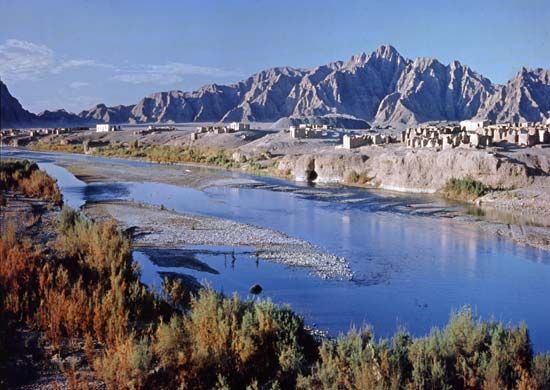
The Farāh River is a 350-mile (560 km) river located in western Afghanistan. It originates on the southern slopes of the Band-e Bāyan Range and flows in a southwestern direction, passing the town of Farāh before terminating in the Helmand (Sīstān) swamps near the Iranian border.1
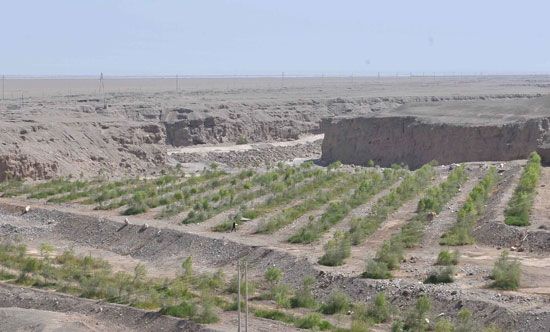
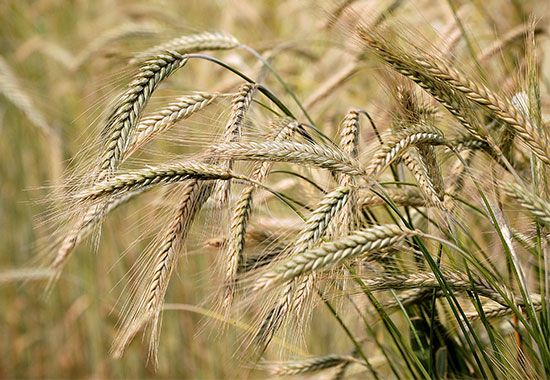
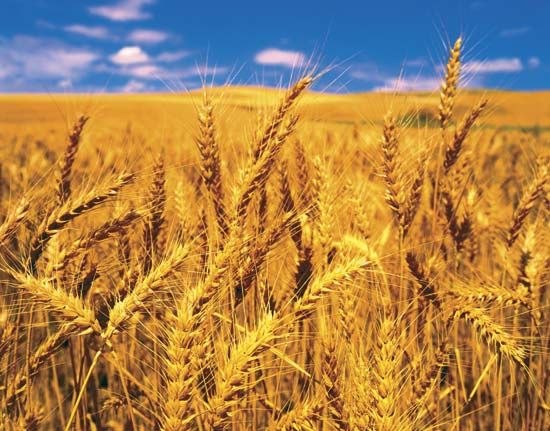
The river’s flow is highly seasonal; it is known to flood during the spring, occasionally becoming impassable. Despite this volatility, its waters are vital for irrigation along much of its course, supporting local agriculture in a region characterized by dry plains and low mountains. Crops cultivated in the area include wheat, cotton, tobacco, and barley.12
What are the Helmand swamps?
The Helmand swamps, also known as the Sīstān basin, are a series of lakes, marshes, and swamps located along the border between Afghanistan and Iran. This basin serves as the terminal point for the Helmand River, which flows from the Hindu Kush mountains to empty into this depression.3
These wetlands are ecologically significant, providing a vital habitat for numerous migratory birds and acting as a natural buffer against desertification in the arid region. The basin is characterized by a series of lagoons, locally called hāmūn, which expand into shallow lakes during periods of high flood.34
The area is central to the long-standing water dispute between Afghanistan and Iran, as the downstream Sīstān region relies heavily on the river’s flow for agriculture and drinking water. Because the region experiences a true desert climate with irregular rainfall and extreme temperatures, the water provided by the Helmand River is essential for sustaining local livelihoods.34
How do irrigation systems like the kārĨz work?
A kārēz (often referred to as a qanāt) is an ancient, sustainable water-supply system designed for arid environments. It functions by tapping into underground water sources, typically found in the upper reaches of alluvial fans near mountains.7
The system operates through the following process:
- Collection: Engineers locate an underground water source and dig a mother well to reach the water table.
- Conveyance: A gently sloping tunnel is excavated from the source toward the destination. The slight gradient allows gravity to transport the water over several kilometers without the need for pumps or external energy.7
- Maintenance: A series of vertical shafts are dug along the tunnel’s path. These shafts provide ventilation during construction and allow for the removal of debris and ongoing maintenance of the tunnel.7
- Distribution: The water emerges at the surface, where it is channeled into fields for irrigation or used for domestic purposes.7
Developed approximately 2,500 to 3,000 years ago in Iran, this technology remains a vital method for water management in Afghanistan and other dry regions.7
What is the history of the Mongol invasion in Afghanistan?
The Mongol invasion of Afghanistan began in 1219 when Genghis Khan attacked the eastern territories of the empire of Ala al-Din. Following Ala al-Din’s death in 1220, his son, Jalal al-Din Mingburnu, rallied local forces at Parwan and achieved a significant victory against the Mongols.
Genghis Khan responded by personally leading a campaign to avenge this defeat. He laid siege to Bamiyan, where the death of his grandson, Mutugen, prompted him to order the total destruction of the citadel and the slaughter of its inhabitants. The Mongol forces subsequently defeated Jalal al-Din near Ghazna, forcing him to retreat toward the Indus River in 1221.
Following the death of Genghis Khan in 1227, the Mongol Empire fragmented, leading to a period where local chiefs established independent principalities or acknowledged various Mongol princes as suzerains. This era of decentralized rule persisted until the late 14th century, when Timur conquered much of the region. The legacy of these migrations remains visible today, as certain ethnic groups, such as the Hazara, retain physical and cultural traits associated with the Mongol and Turkic peoples of Central Asia.8
Sources
- Farāh River — Encyclopædia Britannica
- Farāh — Encyclopædia Britannica
- Helmand River — Encyclopædia Britannica
- Sīstān — Encyclopædia Britannica
- Iran: Top Questions — Encyclopædia Britannica
- Iran - Land — Encyclopædia Britannica
- qanāt — Encyclopædia Britannica
- Afghanistan - Later dynasties — Encyclopædia Britannica
- Afghanistan - The Mongol invasion — Encyclopædia Britannica
- Afghanistan - Languages of Afghanistan — Encyclopædia Britannica
- Afghanistan — Encyclopædia Britannica
Published on · 3 min read