Gulf of Genoa
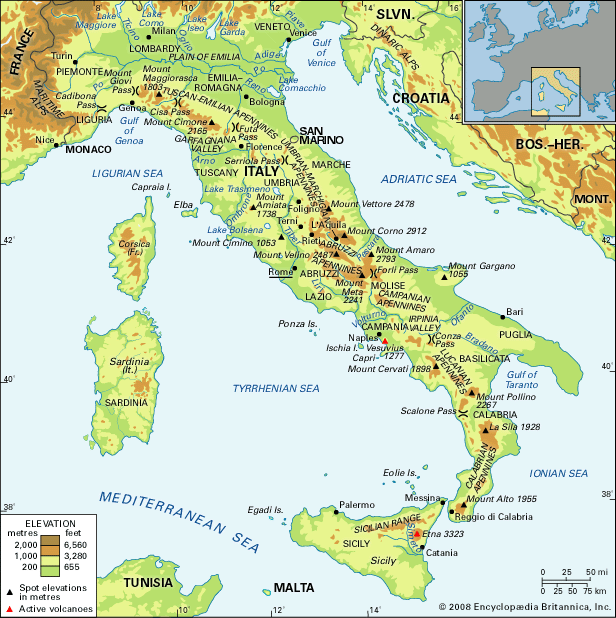
The Gulf of Genoa is the northern section of the Ligurian Sea, an inlet of the Mediterranean. It spans approximately 90 miles (145 km) along the northwest…
What is Gulf of Genoa?
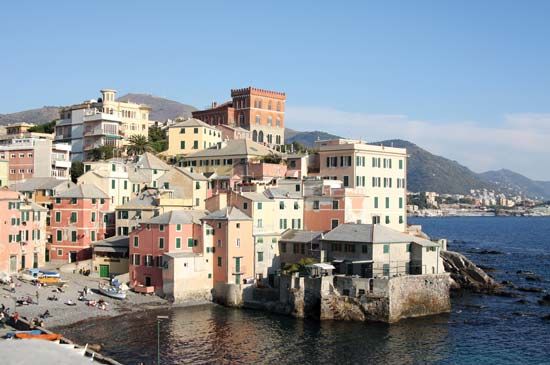
The Gulf of Genoa is the northern section of the Ligurian Sea, an inlet of the Mediterranean. It spans approximately 90 miles (145 km) along the northwest coast of Italy, stretching from Imperia to La Spezia.1
This coastal area, which includes the smaller gulfs of Spezia and Rapallo, is a central part of the Italian Riviera. It is renowned for its scenic beauty, mild winter climate, and lush subtropical vegetation. The city of Genoa serves as the gulf’s primary port and a vital commercial hub for northern Italy and central Europe. The region is also home to numerous popular resorts, including Savona and Sestri Levante, while the Gulf of Spezia has functioned as a major Italian naval station since the mid-19th century.12
What is the significance of the Italian Riviera?
The Italian Riviera is a significant coastal region stretching along the Ligurian Sea from the French border to La Spezia. Its importance is defined by several key factors:
- Climate and Agriculture: Sheltered by the Maritime Alps and the Ligurian Apennines, the region enjoys exceptionally mild winters and abundant sunshine. This climate supports the growth of delicate plants and allows for the large-scale cultivation of flowers for export to northern markets.1
- Tourism and Economy: As a premier destination within Italy, the Riviera is a cornerstone of the nation’s tourism industry. It is characterized by rugged coastal scenery and a dense population of residents and visitors, supported by a mix of luxury villas, hotels, and popular resort facilities.13
- Strategic and Commercial Hubs: The city of Genoa serves as the region’s central port and a vital commercial hub. Additionally, the Gulf of Spezia has functioned as a major Italian naval station since the mid-19th century, highlighting the area’s long-standing strategic value.4
How does the Ligurian Sea connect to the rest of the Mediterranean?
The Ligurian Sea is an arm of the Mediterranean Sea that serves as a northern extension of the basin. Its primary connection to the broader Mediterranean is through the southeast, where it links to the Tyrrhenian Sea via the Tuscan Archipelago.6
As part of the larger Mediterranean system, the Ligurian Sea participates in the complex hydrodynamics of the region. The Mediterranean as a whole maintains its water balance through a continuous exchange with the Atlantic Ocean at the Strait of Gibraltar. In this “breathing” process, less saline surface water flows inward from the Atlantic, while denser, more saline water—formed by evaporation and cooling—exits the Mediterranean as a deep, subsurface countercurrent.7
What role has the port of Genoa played in maritime history?
The port of Genoa has been a cornerstone of maritime history for centuries, evolving from an ancient Ligurian village into a dominant naval and commercial power.
Rise to Prominence
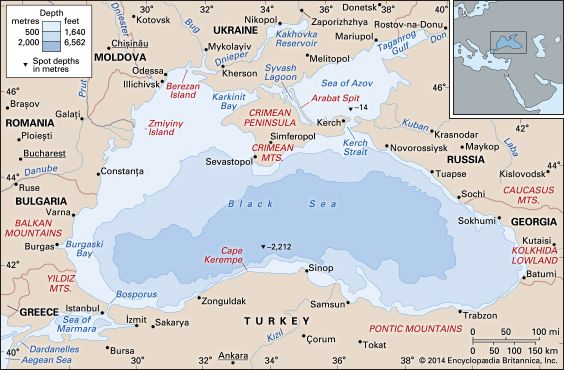
By the 12th and 13th centuries, Genoa emerged as a leading maritime power, rivaling Venice in the Levant trade. Its influence was secured through a network of self-governing commercial colonies established across the Mediterranean, the Black Sea, and the Crimean coast. The city’s naval strength was cemented by decisive victories, such as the defeat of the Pisans at Meloria in 1284.
Economic and Global Impact
Genoa functioned as a sophisticated business state, with banking and shipbuilding at the heart of its prosperity. Its maritime tradition produced figures like Christopher Columbus, who embodied the city’s adventurous spirit. Following the unification of Italy in 1861, the port became Italy’s primary commercial gateway, competing with major European hubs for trade with Switzerland and central Europe. Today, it remains the leading Italian port for passenger and freight traffic, serving as a vital economic engine for northern Italy.
Sources
- Gulf of Genoa — Encyclopædia Britannica
- Genoa - Geography — Encyclopædia Britannica
- Riviera — Encyclopædia Britannica
- Italy - Tourism — Encyclopædia Britannica
- the Riviera — Merriam-Webster
- Ligurian Sea — Encyclopædia Britannica
- density current - Mediterranean overflow current — Encyclopædia Britannica
- Mediterranean Sea - Hydrology — Encyclopædia Britannica
- Genoa - History — Encyclopædia Britannica
Published on · 3 min read