Hackberry
Hackberry trees, belonging to the genus Celtis, are primarily recognized for their ornamental value and timber rather than extensive traditional medicinal…
What are some of the traditional medicinal or culinary uses of hackberry trees?
Hackberry trees, belonging to the genus Celtis, are primarily recognized for their ornamental value and timber rather than extensive traditional medicinal applications.1
Regarding culinary uses, several species produce small, edible fruit that are often pea-sized. For example:12
- Eastern North American hackberry (C. occidentalis): Produces purplish-black fruits that are edible.1
- Mediterranean hackberry (C. australis): Known for having larger edible fruits compared to other varieties.1
While these fruits are consumed, the trees are most frequently valued for their wood or as street trees due to their ease of culture. The provided information does not detail specific traditional medicinal preparations or recipes involving these trees.1
How are hackberry trees used in landscaping and urban forestry?
Hackberry trees, members of the genus Celtis, are highly valued in landscaping and urban forestry primarily due to their ease of culture and ornamental qualities.1
In urban environments, the eastern North American hackberry (C. occidentalis) is frequently planted as a street tree. These trees are favored for their ability to reach significant heights, typically ranging from 12 to 30 metres (40 to 100 feet), and their attractive, bright green elmlike leaves. Additionally, the Mediterranean hackberry (C. australis) is widely utilized as an ornamental tree, noted for its distinct lance-shaped, gray-green foliage.1
Beyond their aesthetic appeal, these trees contribute to urban biodiversity by producing small, edible fruits that are attractive to birds, helping to support local wildlife populations within city settings. While some species are also prized for their timber, their resilience and adaptability make them a practical choice for managed landscapes and street-side planting.1
What are some interesting cultural or historical facts about hackberry trees?
The hackberry tree, belonging to the genus Celtis, possesses several interesting historical and linguistic facts:
- Etymological Origins: The name “hackberry” is an alteration of the word hagberry, which historically referred to a type of cherry resembling the chokecherry.1
- Linguistic Timeline: The term was first recorded in use in 1779.1
- Botanical Classification: While often associated with elms due to their leaf shape, hackberries are actually members of the hemp family (Cannabaceae).2
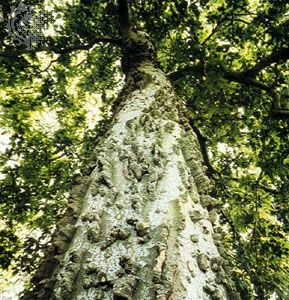
- Distinctive Features: The trees are known for their unique bark, which is often covered in wartlike bumps, and their leaves, which typically feature three prominent veins originating from the base of the blade.2
- Historical Naming: The eastern North American species (C. occidentalis) is also known as the nettle tree, while the Mediterranean species (C. australis) is sometimes referred to as the European nettle tree.2
How tall do hackberry trees typically grow, and what is their average lifespan?
Hackberry trees in the genus Celtis exhibit significant variation in size depending on the specific species and their environment. The eastern North American hackberry (C. occidentalis), often referred to as the nettle tree, typically reaches heights between 12 and 30 metres (40 to 100 feet). Other species, such as the Mississippi hackberry or sugarberry (C. laevigata), are generally shorter in stature.1
Regarding their lifespan, the provided information does not contain data on the average longevity of hackberry trees.
Sources
- hackberry — Encyclopædia Britannica
- hackberry — Merriam-Webster
Published on · 2 min read