Hemipode
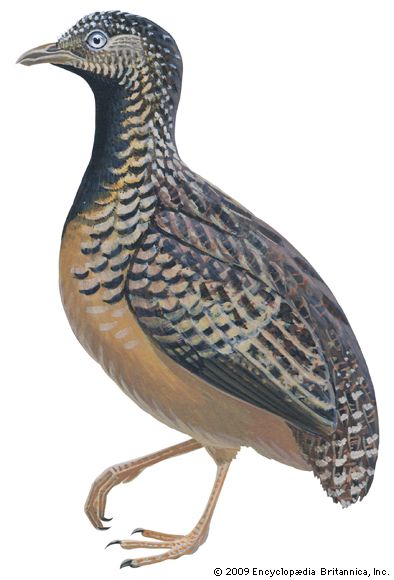
A hemipode is a term generally used to describe any bird belonging to the suborder Turnices within the order Gruiformes. The name is derived from the Greek…
What is Hemipode?
A hemipode is a term generally used to describe any bird belonging to the suborder Turnices within the order Gruiformes. The name is derived from the Greek words for “half foot,” referring to the fact that most hemipodes lack a hind toe (hallux) and possess only three toes.1
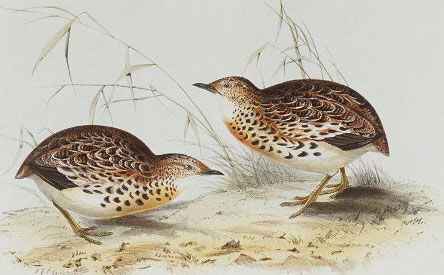
The suborder includes the plains wanderer (family Pedionomidae), as well as the button quail and lark quail (family Turnicidae). While most species in this group lack a hind toe, the collared hemipode—also known as the plains wanderer—is an exception. These birds are typically small, quail-like, and found in grasslands and brush across Africa, Asia, Australia, and southern Europe.12
Why are female button quails often larger and more colorful than males?
In the button quail family, the traditional roles of the sexes are reversed, which explains why females are often larger and more brightly patterned than males.
This reversal is driven by a polyandrous mating system, where females compete for access to multiple males throughout a single breeding season. Because the females are responsible for courting and defending their territory, they have evolved to be more conspicuous and physically dominant. Once the eggs are laid, the female leaves to find another mate, leaving the male to perform all incubation and parental care duties. Consequently, the males are less vocal and less brightly colored, which likely helps them remain camouflaged while they tend to the nest and protect the young.4
What makes the plains wanderer different from other hemipodes?
The plains wanderer (Pedionomus torquatus) is distinct from other hemipodes primarily due to its posture. While other members of the group are characterized by a crouching stance, the plains wanderer does not exhibit this behavior.5
Additionally, the plains wanderer is taxonomically unique as the sole member of the family Pedionomidae, although some authorities choose to classify it within the button quail family (Turnicidae). Physically, it is distinguished by its mottled reddish-brown plumage and a characteristic collar of black spots set against a white throat.5
How do birds without a hind toe maintain their balance?
Birds that have lost their hind toe, or hallux, such as ostriches and rheas, have undergone significant anatomical adaptations to maintain balance and support their bipedal locomotion.
In typical perching birds, the hind toe is essential for gripping branches, and the weight of a crouched bird automatically keeps the toes clasped around a perch. However, for terrestrial birds that have moved out of the trees and evolved for rapid running, the loss of the opposable first toe is a trade-off associated with the modification of their leg structure.678
To maintain balance while running, these birds rely on differently proportioned feet and legs. Terrestrial species often possess longer toes and longer, straighter claws, which provide stability and traction on the ground. The relative lengths of their leg segments are specifically adapted so that their centre of gravity remains positioned over their feet as they shift between standing and moving.68
Sources
- Hemipode — Encyclopædia Britannica
- hemipode — Merriam-Webster
- Gruiform - Annotated classification — Encyclopædia Britannica
- Button quail — Encyclopædia Britannica
- Plains wanderer — Encyclopædia Britannica
- Passeriform - Feet and legs — Encyclopædia Britannica
- Anatomy 101: Obscure Words for Body Parts | Hallux — Merriam-Webster
- Bird - Walking and hopping — Encyclopædia Britannica
- Bird - Skeleton — Encyclopædia Britannica
Published on · 2 min read