Hoopoe
The hoopoe (Upupa epops) is a strikingly crested bird belonging to the family Upupidae within the order Coraciiformes. Found across southern Europe, Africa…
What is Hoopoe?
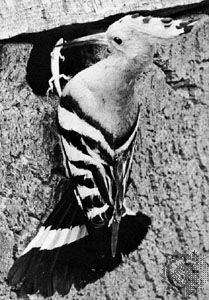
The hoopoe (Upupa epops) is a strikingly crested bird belonging to the family Upupidae within the order Coraciiformes. Found across southern Europe, Africa, and southeastern Asia, this bird measures approximately 28 centimeters (11 inches) in length.12
It is characterized by its pinkish-brown head and shoulders, a long, black-tipped, erectile crest, and distinctive black-and-white barred wings and tail. The hoopoe uses its long, downcurved bill to probe the ground for insects and other small invertebrates.12
Unlike many other members of its order, the hoopoe is known for adding nest material to its cavity nests. During the breeding season, the female alone performs incubation, while the male provides food. The species is distinct from the wood hoopoe, which belongs to a different family (Phoeniculidae) and exhibits different social behaviors, such as living in close-knit groups.34
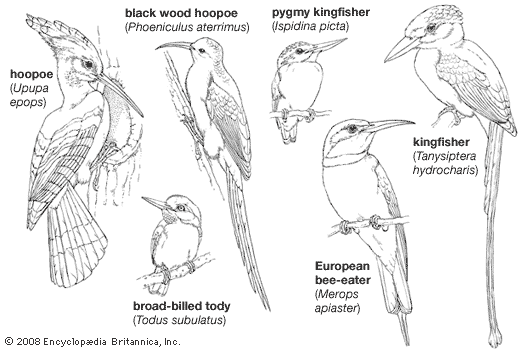
What are the main differences between a hoopoe and a wood hoopoe?
While hoopoes and wood hoopoes are both members of the order Coraciiformes, they belong to distinct families—Upupidae and Phoeniculidae, respectively—and exhibit significant differences in appearance and behavior.35
Key Differences
- Appearance: The hoopoe is known for its pinkish-brown plumage and a prominent, erectile crest. In contrast, wood hoopoes are predominantly greenish or purplish black and possess long, graduated tails, sometimes tipped with white.2
- Social Behavior: Wood hoopoes are highly social, often moving in noisy, close-knit bands of 5 to 10 individuals that engage in cooperative displays like “flag-waving” or synchronized body-rocking. While they move in parties, they nest solitarily.26
- Nesting Habits: The hoopoe is unique among its order for adding nest material to its cavity nests. Wood hoopoes, like many other coraciiforms, typically do not add nest material.5
- Feeding: Wood hoopoes, particularly those in the genus Rhinopomastus (scimitarbills), have bills specifically adapted for probing into tree bark and crevices for insects.2
How does the hoopoe’s long, downcurved bill help it find food?
The hoopoe (Upupa epops) is a ground-dwelling bird that utilizes its long, downcurved bill as a specialized tool for foraging. As it walks along the ground with quick, rhythmic steps, the bird uses this slender bill to probe into the soil and various crevices.178
This probing behavior allows the hoopoe to locate and extract its primary food sources, which consist of large arthropods and other small invertebrates. By inserting its bill into the ground, the hoopoe can reach prey that is hidden beneath the surface or tucked away in small openings, effectively utilizing the bill’s shape to access niches that would otherwise be unreachable.78
What other birds belong to the Coraciiformes order?
The order Coraciiformes is a diverse group of birds that includes 10 distinct families. In addition to hoopoes and wood hoopoes, the order comprises the following groups:1112
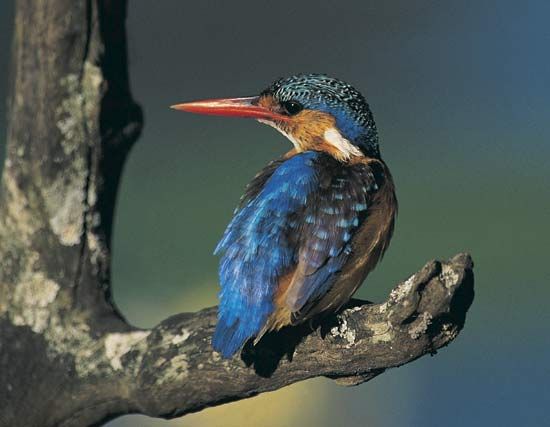
- Kingfishers: Known for their hunting techniques, such as the kookaburra and the belted kingfisher.11
- Bee-eaters: Birds often noted for their specialized diet.11
- Rollers: Named for their unique aerial displays.11
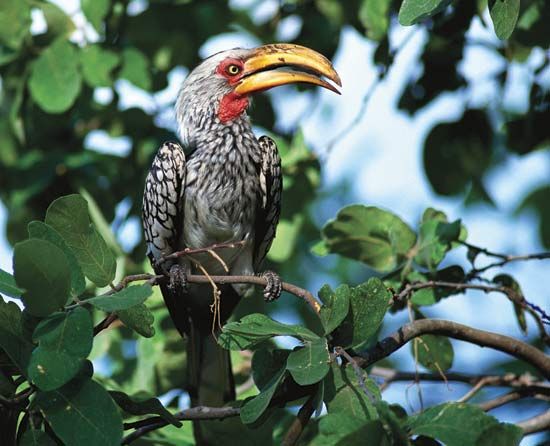
- Hornbills: Notable for their unique nesting behaviors, where the female is often sealed inside the nest during incubation.11
- Motmots: A group of colorful, forest-dwelling birds.11
- Todies: Small, insectivorous birds native to the Caribbean.11
These birds are primarily arboreal and share various anatomical and behavioral characteristics that define the order.12
Sources
- Hoopoe — Encyclopædia Britannica
- Coraciiform - Life history — Encyclopædia Britannica
- Wood hoopoe — Encyclopædia Britannica
- hoopoe — Merriam-Webster
- Coraciiform - Critical appraisal — Encyclopædia Britannica
- Coraciiform - Social behaviour — Encyclopædia Britannica
- Coraciiform - Locomotion and feeding — Encyclopædia Britannica
- Charadriiform - Locomotion and feeding behaviour — Encyclopædia Britannica
- Coraciiform - Morphological specializations — Encyclopædia Britannica
- Ciconiiform - Bill shape — Encyclopædia Britannica
- Coraciiform — Encyclopædia Britannica
- Coraciiformes — Merriam-Webster
Published on · 3 min read