Kingfisher
Kingfishers are a diverse group of birds characterized by several distinct physical traits that support their specialized hunting behaviors.
What are the distinguishing physical characteristics of kingfishers?
Kingfishers are a diverse group of birds characterized by several distinct physical traits that support their specialized hunting behaviors.12
Key Physical Characteristics
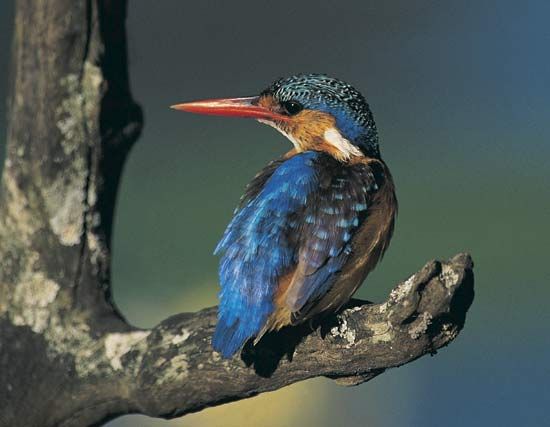
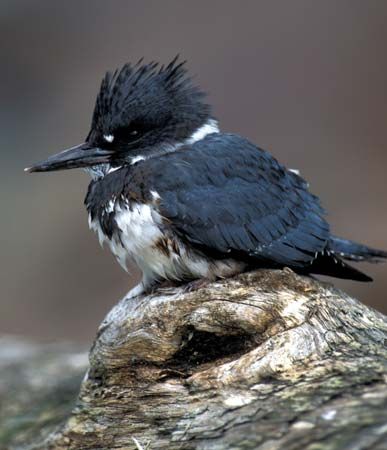
- Body and Size: Kingfishers are compact birds that range in length from approximately 10 to 46 cm (4 to 18 inches). They possess a large head and a relatively short or medium-length tail.132
- Bill: A defining feature is their long, massive, and dagger-shaped bill. This stout, straight bill is an adaptation for seizing and subduing active prey, such as fish, crustaceans, amphibians, and reptiles. The bill is often brightly colored, frequently appearing in shades of red or orange.123
- Plumage: Many species are known for their vivid plumage, which often features bold patterns and a tendency toward metallic blues and blue-greens. Additionally, many kingfishers are crested.134
- Wings and Feet: They have moderate, rounded wings suited for their hunting style of watching from a perch and diving after prey. Their feet are small and typically used primarily for perching, with a characteristic fusion of the front toes.21
How many species of kingfishers exist, and where are they found?
There are approximately 90 species of kingfishers categorized into three families: Alcedinidae, Halcyonidae, and Cerylidae.1
Regarding their distribution, kingfishers are found worldwide, though they are primarily concentrated in tropical regions. They are unique among the families of the order Coraciiformes in that they are represented in both the Eastern and Western Hemisphere. While they occupy a wide variety of environments, their presence in specific areas is often dictated by the availability of suitable nesting sites and perches, which are essential for their hunting behavior.156
What unique hunting techniques do kingfishers use to catch their prey?
Kingfishers are renowned for their specialized hunting techniques, which vary depending on whether the species is aquatic or terrestrial.
Aquatic Hunting
Most kingfishers are famous for their dramatic dives into water. The process typically involves the following steps:
- Perching: The bird sits still on a favorite perch, patiently watching for movement in the water below.
- Plunging: Once it spots its quarry, the kingfisher dives into the water, typically targeting fish no deeper than 25 cm (10 inches) below the surface.
- Capture: It uses its long, dagger-shaped bill to seize the prey.
- Subduing: After returning to its perch with the catch, the bird stuns the fish by beating it against the perch before swallowing it whole.
Terrestrial Hunting
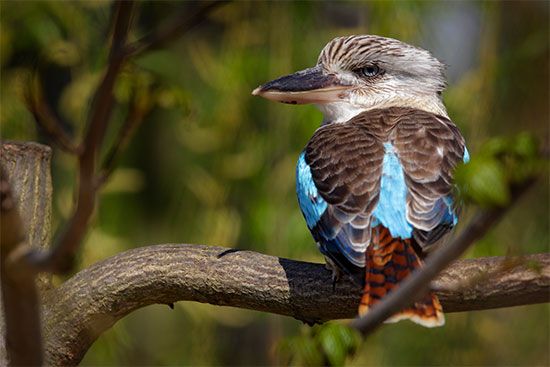
Not all kingfishers rely on water. Forest kingfishers, such as the kookaburra, hunt on the ground. They capture a variety of prey, including insects, snails, frogs, reptiles, and even small birds, rather than diving for aquatic life.
What is the typical diet of kingfishers, and how does it vary among different species?
The diet of kingfishers is diverse, largely determined by whether a species is aquatic or terrestrial. While many are famous for their piscivorous (fish-eating) habits, others have adapted to consume a wide range of prey.17
Aquatic Kingfishers
Typical river-dwelling species, such as the belted kingfisher, are specialized fish eaters. Their diet primarily consists of fish caught by plunging into water from a perch. In addition to fish, these birds frequently consume crustaceans, amphibians, and reptiles.17
Terrestrial Kingfishers
Forest-dwelling species, such as the kookaburra, hunt primarily on the ground. Their diet is varied and includes:1
- Invertebrates: Insects and snails.18
- Small Vertebrates: Frogs, reptiles, and small birds1.8
- Specialized Prey: Kookaburras are known to eat venomous snakes and, in areas where they have been introduced, may occasionally attack poultry like chickens and ducklings.8
Some African species have even adapted to nest in termite mounds, where they feed on termites and other insects found near their nesting sites.7
Sources
- Kingfisher — Encyclopædia Britannica
- Coraciiform - Size and plumage — Encyclopædia Britannica
- kingfisher — Merriam-Webster
- Coraciiform - Morphological specializations — Encyclopædia Britannica
- Coraciiform - Distribution — Encyclopædia Britannica
- Asia - Birds — Encyclopædia Britannica
- Coraciiform - Habitat selection and ecological diversity — Encyclopædia Britannica
- Kookaburra — Encyclopædia Britannica
Published on · 3 min read