Liana
Lianas are long-stemmed, woody vines that utilize trees for structural support to reach the forest canopy. While scientific research on these plants has…
What are the potential uses of lianas in traditional medicine or modern applications?
Lianas are long-stemmed, woody vines that utilize trees for structural support to reach the forest canopy. While scientific research on these plants has historically lagged due to their complex growth patterns, they have long been utilized by humans for various practical and medicinal purposes.1
In traditional and practical applications, lianas serve as a source of fresh drinking water, as their hollow stems effectively conduct water through the plant. Medicinally, certain species are highly significant; for example, the potent muscle relaxant curare is derived from a liana. Beyond these uses, lianas are recognized for their ecological importance, providing essential food sources—such as sap, pollen, and fruit—for a wide variety of animals within tropical forest ecosystems.1
Despite their abundance, much remains to be discovered regarding the full chemical and medicinal potential of these diverse woody species.1
What are some examples of well-known liana species?
Lianas are diverse, woody vines that play a significant structural role in tropical forest ecosystems. While they belong to many different plant families, several species are notable for their biological properties and historical uses:1
- Banisteriopsis caapi: Often called the “vine of the soul,” this woody liana is native to the Amazon basin. It is a primary ingredient in the traditional hallucinogenic drink ayahuasca, where it acts as a monoamine oxidase inhibitor, allowing other psychoactive compounds to take effect.2
- Strychnos toxifera: This South American liana is well-known as a source of curare. Historically used as a poison for hunting, curare has also been utilized in modern medicine for its properties as a muscle relaxant.31
It is important to note that the commercial exploitation of such plants, particularly when involving the traditional knowledge of Indigenous communities, raises significant ethical concerns regarding biopiracy, which involves the unauthorized use of biological resources without fair compensation to the local people who have stewarded them for generations.2
How do lianas impact the trees they grow on and the forest ecosystem?
Lianas significantly influence both individual trees and the broader forest ecosystem through their structural and competitive interactions.
Impact on Host Trees
Lianas act as structural parasites, utilizing the trunks and limbs of trees to reach the well-lit portions of the forest canopy. This relationship often comes at a cost to the host; research indicates that lianas affect the growth of more than 50 percent of trees with a diameter exceeding 10 cm (4 inches). By competing for light and space, they can place substantial physical stress on the trees they inhabit.1
Impact on the Forest Ecosystem
Lianas are a defining feature of tropical forests, representing approximately one-quarter of all woody species in these environments. Their presence has several key ecological effects:1
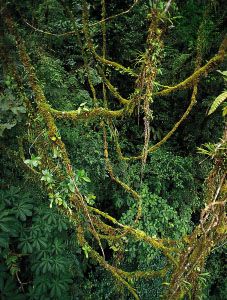
- Structural Complexity: They form tangled, hanging networks of vegetation that contribute to the unique architecture of tropical forests.1
- Forest Dynamics: While these tangles can delay forest regrowth in canopy gaps, the presence of large lianas serves as a reliable indicator of mature, older forest stands.1
- Biodiversity Support: Despite their competitive nature, lianas are vital to forest wildlife, providing essential food resources such as sap, nectar, pollen, fruit, and leaves for a wide variety of animals.1
How do lianas climb and attach themselves to other plants?
Lianas climb and attach themselves to host trees using several specialized biological mechanisms that allow them to reach the forest canopy for light. These methods include:1
- Tendrils: Many lianas utilize tendrils, which are slender, threadlike organs derived from leaves, leaf tips, or stems. These structures are highly sensitive to contact; when they brush against an object, they wrap around it. Once attached, the tendrils develop strong mechanical tissue to support the weight of the plant. Some tendrils even produce adhesive pads that cement the plant to a firm surface.6
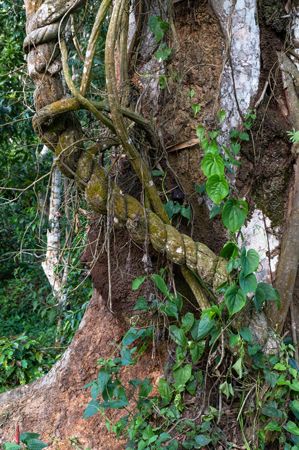
- Twining: Lianas often climb by physically twining their stems around the trunks and limbs of host trees. This growth habit allows them to use the host as a structural scaffold.1
- Adventitious Roots: Some climbing plants use specialized adventitious roots to grip their supports. These roots arise from stem tissues and act as anchors, allowing the vine to cling firmly to the bark or surface of a tree.7
Through these adaptations, lianas form complex, tangled networks that are a hallmark of mature tropical forest ecosystems.1
Sources
- Liana — Encyclopædia Britannica
- Lantana — Encyclopædia Britannica
- Banisteriopsis caapi — Encyclopædia Britannica
- liana — Merriam-Webster
- Gentianales - Loganiaceae — Encyclopædia Britannica
- Adventitious root — Encyclopædia Britannica
- Tendril — Encyclopædia Britannica
- reptile - Clinging and climbing — Encyclopædia Britannica
Published on · 3 min read