How Do Butterflies Migrate?
Butterfly migration is a remarkable phenomenon involving nearly 600 species across the globe. While often less publicized than bird migration, these journeys…
How Do Butterflies Migrate?
Butterfly migration is a remarkable phenomenon involving nearly 600 species across the globe. While often less publicized than bird migration, these journeys are driven by seasonal changes, the availability of nectar, and the need for suitable host plants for caterpillars.1
Multigenerational Journeys
Unlike many migratory birds, most butterflies do not complete their entire migration in a single lifetime. Instead, these movements are often multigenerational “relays.” One generation travels part of the way, lays eggs, and dies; the next generation continues the journey. The monarch butterfly is a notable exception, as it is the only species known to perform a true two-way, long-distance migration where the same individuals travel south in autumn and north in spring.12
Navigation and Mechanics
Butterflies use sophisticated biological tools to navigate:
- Solar Compasses: Many species use the Sun’s position combined with their internal biological clocks to maintain a heading.1
- Magnetic Cues: Monarchs can detect the Earth’s magnetic field to assist in orientation.1
- Wind Selection: Research shows that migratory lepidopterans can reach speeds of 100 km/h by selecting favorable wind currents at high altitudes.2
- Visual Landmarks: Some species, such as lemon emigrants, rely on rivers and valleys for guidance.1
How do butterflies use the Sun and magnetic fields to navigate?
Migratory butterflies utilize sophisticated biological mechanisms to navigate during their long-distance journeys. Because these insects do not learn their routes from their parents, their ability to orient themselves is driven by instinct.3
Solar Navigation
Many butterflies rely on the Sun as a primary navigational aid, though the complexity of this system varies by species:
- Time-Compensated Solar Compass: Well-studied monarch butterflies use a time-compensated solar compass. By combining the Sun’s position in the sky with their internal biological clocks, they can adjust their heading throughout the day as the Sun moves.3
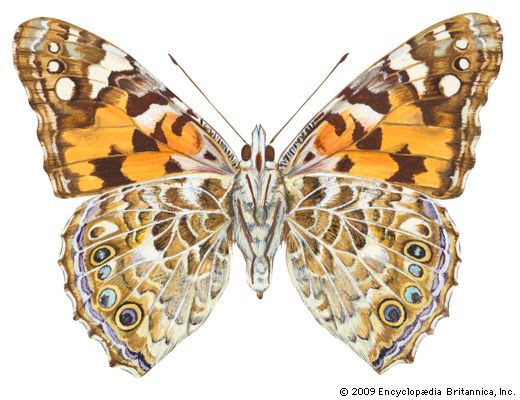
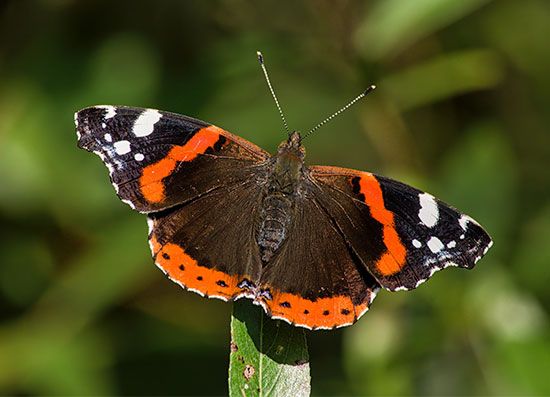
- Simple Solar Compass: Other species, such as the painted lady and the red admiral, utilize a time-independent solar compass. In these cases, the Sun serves only as a basic directional indicator rather than a time-adjusted navigational tool.3
Magnetic Cues
In addition to solar cues, some migratory butterflies are sensitive to the Earth’s magnetic field. Monarchs, for example, incorporate geomagnetic information to assist in their orientation. However, this sensitivity is not universal; species like the painted lady and red admiral do not appear to rely on magnetic cues for their migrations.3
What is the difference between butterfly migration and hibernation?
Butterfly migration and hibernation are distinct biological strategies that insects use to survive unfavorable environmental conditions, though they are often linked in the life cycles of migratory species.
Migration
Migration is the movement of insects from one geographic area to another, often covering vast distances to reach regions with better climates, food sources, or breeding grounds. While some insects migrate to reach specific sites for hibernation, migration itself is a journey of displacement. Most butterfly migrations are multigenerational, meaning the journey is completed by a relay of successive generations rather than a single individual.28
Hibernation
Hibernation is a state of dormancy characterized by reduced metabolic activity, a cessation of growth, and a suspension of sexual activity. It is a survival mechanism that allows insects to endure periods of extreme cold or resource scarcity. During this time, insects may remain inactive in sheltered locations, such as under tree bark, in leaf litter, or in mountain caves, until favorable conditions return.921
The Connection
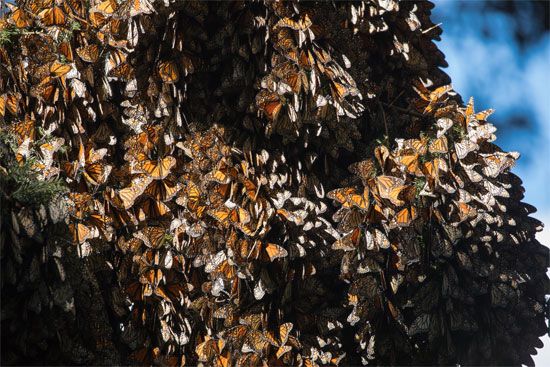
For many species, these two behaviors work in tandem. For example, the monarch butterfly migrates thousands of miles to reach specific overwintering sites, where the individuals then enter a state of dormancy (hibernation) to survive the winter months.21
Why do some butterfly species require multiple generations to complete a migration?
Most butterfly species do not complete their long-distance migrations in a single lifetime because their individual lifespans are generally too short to cover the entire journey. Instead, these migrations function as a “relay of life,” where the migration is completed over several successive generations.1
The process typically unfolds as follows:
- Multigenerational Relay: One generation flies a portion of the route, lays eggs on host plants, and then dies. The next generation matures from larva to adult and continues the journey from that point.1
- Individual Limitation: Because most adult butterflies live only a few weeks, no single individual is capable of completing the entire migration circuit. Each leg of the journey represents that specific insect’s first and only voyage.41
- The Exception: While most migrations are multigenerational, some species, such as the monarch butterfly, produce a special “super generation” of adults that live for seven to nine months. This long-lived generation is responsible for the majority of the southward trip to overwintering sites.41
Sources
- Monarch butterfly - Migration — Encyclopædia Britannica
- Migration - Insects — Encyclopædia Britannica
- How Do Butterflies Migrate? — Encyclopædia Britannica
- Monarch butterfly - Life cycle — Encyclopædia Britannica
- Lepidoptera - Migration — Encyclopædia Britannica
- Migration - Other animals — Encyclopædia Britannica
- life - Photosensitivity , audiosensitivity, thermosensitivity, chemosensitivity, and magnetosensitivity — Encyclopædia Britannica
- insect - Reproduction — Encyclopædia Britannica
- Dormancy - Diapause in insects — Encyclopædia Britannica
- Lepidoptera - Pupa , or chrysalis — Encyclopædia Britannica
Published on · 4 min read