How Many Legs Does a Caterpillar Have?
Caterpillars, which are the larval form of moths and butterflies, possess two distinct types of appendages:
How Many Legs Does a Caterpillar Have?
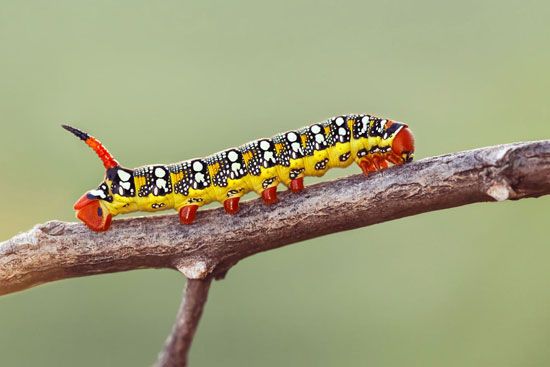
Caterpillars, which are the larval form of moths and butterflies, possess two distinct types of appendages:
- True Legs: Like all insects, caterpillars have three pairs of jointed, true legs attached to the three thoracic segments of their bodies.12
- Prolegs: Most species also feature fleshy, unjointed appendages on their abdominal segments known as prolegs. These are typically found on abdominal segments 3 through 6 and 10.13
The total number of legs can vary significantly by species. While many common lepidopterans have five pairs of prolegs, some species have fewer. For example, inchworms and cabbage loopers possess only two or three pairs of prolegs, which influences their characteristic looping movement. Conversely, some specialized larvae, such as slug caterpillars, lack prolegs entirely and use suckers to move.13
How do caterpillars use silk to protect themselves?
Caterpillars utilize silk as a versatile tool for protection and survival in several ways:
- Shelter Construction: Many caterpillars spin silk cases, nests, or shelters that shield them from both harsh environmental elements and potential predators. These structures are often camouflaged by weaving in external materials such as leaves, pebbles, and other debris, allowing the caterpillar to blend seamlessly into its natural surroundings.45
- Enhanced Mobility and Grip: Larvae frequently spin continuous silk threads that adhere to the surfaces they inhabit. This provides them with a secure, almost unshakable grip, which helps prevent them from falling or being easily dislodged by predators.5
- Dispersal: Some species use silk threads to hang from plants, allowing them to be carried by the wind to new locations, which can be a strategy for avoiding localized threats or finding better resources.5
- Cocoon Formation: While primarily associated with the transition to the pupal stage, the cocoon itself serves as a vital protective enclosure for the larva as it undergoes metamorphosis.35
What is the process of metamorphosis from a caterpillar to a butterfly?
Butterflies undergo a process known as holometabolous (complete) metamorphosis, which consists of four distinct life stages: egg, larva, pupa, and adult.7
The transformation from a caterpillar to a butterfly occurs during the pupal stage, which is regulated by hormones during the pupal stage, which is regulated by hormones. During this inactive, nonfeeding phase, the caterpillar’s larval tissues and organs are broken down, and adult structures—such as wings—are developed.78
For butterflies, this pupal stage is often called a chrysalis. Once the transformation is complete, the adult butterfly emerges, typically by splitting the pupal skin. After emerging, the butterfly must spend several hours drying its wings before it is capable of flight. This dramatic change ensures that the larval and adult forms do not compete for the same food or living space, as they are adapted to different modes of life.987
How do caterpillars use camouflage and other defenses to avoid predators?
Caterpillars employ a diverse array of strategies to avoid predation, ranging from physical concealment to sophisticated chemical warfare.
Camouflage and Concealment
Many caterpillars rely on camouflage to blend into their environment. This cryptic appearance is often paired with behavioral adaptations, such as remaining immobile or assuming a rigid, deathlike posture.1011
- Visual Mimicry: Some species possess patterns that simulate leaf veins or irregular shapes that resemble twisted dead leaves. Others, like young swallowtail larvae, resemble bird droppings.113
- Structural Hiding: Caterpillars may live in silk-lined tunnels, rolled leaves, or portable cases masked with debris to remain hidden from view.113
- Disruptive Coloration: Bold, contrasting patterns can break up a caterpillar’s outline, making it harder for predators to recognize them as prey.11
Chemical and Mechanical Defenses
When concealment fails, caterpillars utilize various deterrents:
- Toxicity: Many species sequester toxic compounds from their host plants, such as the cardenolides found in milkweed, making them poisonous to predators.113
- Irritants and Stings: Some caterpillars possess barbed hairs that break off and cause intense itching, while others are armed with venomous spines.103
- Chemical Sprays: Certain larvae can release foul-smelling substances from scent organs or spray chemicals like formic acid when threatened.11
- Startle Displays: Features like false eyespots, sudden movements, or the production of ultrasonic chirps and vibrations can startle or deter attackers.113
Sources
- How Many Legs Does a Caterpillar Have? — Encyclopædia Britannica
- Lepidoptera - The larva, or caterpillar — Encyclopædia Britannica
- caterpillar — Encyclopædia Britannica
- spider - Silk — Encyclopædia Britannica
- sericulture — Encyclopædia Britannica
- Lepidoptera - Larva, or caterpillar — Encyclopædia Britannica
- Metamorphosis — Encyclopædia Britannica
- Monarch butterfly - Life cycle — Encyclopædia Britannica
- pupa — Encyclopædia Britannica
- insect - Protection from enemies — Encyclopædia Britannica
- Lepidoptera - Protection against danger — Encyclopædia Britannica
- Chemoreception - Defensive tastes — Encyclopædia Britannica
Published on · 3 min read