How Do Plants Grow?
Plants grow throughout their entire life span through a combination of three primary processes: cell division (mitosis), cell enlargement, and cell…

How do plants grow?
Plants grow throughout their entire life span through a combination of three primary processes: cell division (mitosis), cell enlargement, and cell differentiation.1
Mechanisms of Growth
- Meristems: Specialized regions of cells capable of division, known as meristems, drive growth. Apical meristems at the tips of roots and shoots facilitate primary growth, while lateral meristems increase stem thickness.12
- Cell Enlargement: Unlike animals, plant cells grow significantly in volume after division. This is largely achieved by taking up water into a central vacuole, which exerts pressure against elastic cell walls to increase size and stiffness.12
- Hormonal Regulation: Hormones like auxin, cytokinins, and gibberellins regulate the rate and direction of these growth processes.1
Environmental Factors
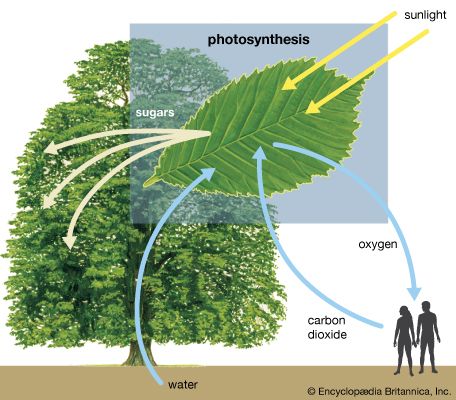
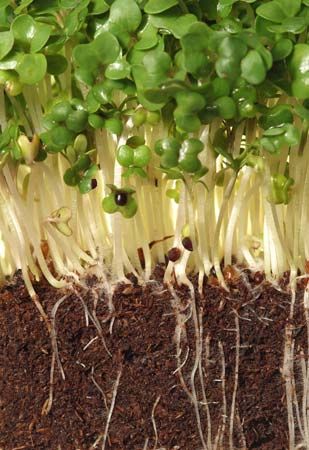
Growth is fueled by photosynthesis, which converts light into chemical energy. Plants also require essential macroelements (such as nitrogen, phosphorus, and potassium) and microelements for metabolism. Environmental cues like light, temperature, and gravity further guide development, particularly during germination and seedling establishment.134
What is the role of the meristem in plant development?
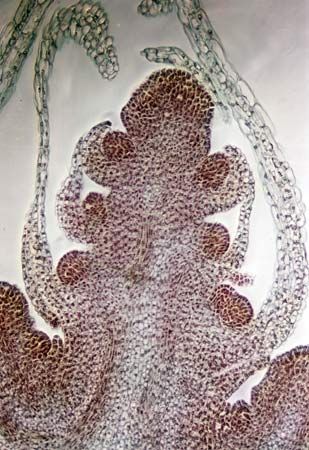
Meristems are specialized regions of plant tissue consisting of undifferentiated cells that are capable of continuous division, allowing plants to grow throughout their entire life span. They function as the primary engines of development by generating new cells that eventually mature into the various tissues of the plant body.678
Types and Functions of Meristems
Meristems are classified by their location and specific roles in development:
- Apical Meristems: Located at the tips of roots and shoots, these are responsible for primary growth, which extends the length of the plant. They give rise to three primary meristematic tissues: the protoderm (which forms the epidermis), the ground meristem (which forms ground tissues), and the procambium (which forms vascular tissues).698
- Lateral Meristems: Also known as secondary meristems, these include the vascular cambium and cork cambium. They are responsible for secondary growth, which increases the girth and thickness of stems and roots.68
- Intercalary Meristems: Found at internodes or leaf bases, these contribute to the extension of specific organs, such as the stems of grasses.67
Within these regions, specialized cells called initials undergo mitosis. Typically, one daughter cell remains in the meristem to maintain the population, while the other differentiates into a specific cell type required for plant function.78

How do plant hormones like auxin influence growth?
Auxins are a vital group of plant hormones that primarily regulate growth by stimulating cell elongation in stems. The most significant naturally occurring auxin is β-indolylacetic acid (IAA), which promotes growth by acting on the chemical bonds of carbohydrates within cell walls. This action allows cells to irreversibly deform, facilitating water uptake and the synthesis of new cell-wall material.1011
Beyond simple elongation, auxins orchestrate complex developmental responses:
- Tropisms: Auxins enable plants to respond to their environment. In phototropism, unequal distribution of auxin causes the shaded side of a stem to elongate more, bending the plant toward light. Similarly, in geotropism, auxin accumulation on the lower side of stems promotes upward curvature, while in roots, higher concentrations inhibit growth, directing them downward.1011
- Developmental Roles: Auxins influence cell division, cell differentiation, fruit development, and the formation of roots from cuttings.1011
- Horticultural Use: Synthetic auxins are utilized as selective weed killers and to manage fruit setting and leaf fall (abscission).1011
What are the differences between macroelements and microelements for plants?
Plants require specific essential elements to complete their life cycles, which are categorized based on the quantity needed for healthy growth and development.213
Macroelements
Macroelements are required in relatively large quantities. They serve as the primary constituents of structural and metabolic compounds, accounting for more than 96 percent of a plant’s dry weight.2
- Elements: Carbon (C), hydrogen (H), oxygen (O), nitrogen (N), potassium (K), calcium (Ca), magnesium (Mg), phosphorus (P), and sulfur (S).2
- Functions: Beyond structural roles, these elements are vital for regulating osmotic pressure and are key components of nucleic acids like DNA and cellular membranes.2
Microelements
Microelements, also known as trace elements, are essential mineral elements required in much smaller amounts (0.01 percent or less).213
- Elements: Iron (Fe), chlorine (Cl), manganese (Mn), boron (B), copper (Cu), molybdenum (Mo), zinc (Zn), and nickel (Ni).2
- Functions: These elements generally act as activators or essential components of [enzymes] (https://www.britannica.com/science/enzyme), facilitating critical metabolic pathways.2
When the supply of any essential nutrient falls below the required level, plants may suffer from deficiency, leading to symptoms such as stunted growth, leaf malformation, or failure to develop fruit.13
Sources
- How do plants grow? — Encyclopædia Britannica
- Plant - Essential elements and minerals — Encyclopædia Britannica
- Growth - In plants — Encyclopædia Britannica
- Reproduction - Life cycles of plants — Encyclopædia Britannica
- Germination — Encyclopædia Britannica
- Meristem — Encyclopædia Britannica
- Plant development - The activity of meristems — Encyclopædia Britannica
- apical meristem — Encyclopædia Britannica
- Angiosperm - Vegetative structures — Encyclopædia Britannica
- Hormone - Auxins — Encyclopædia Britannica
- Hormone - Growth inhibitors — Encyclopædia Britannica
- Auxin — Encyclopædia Britannica
- Plant disease - Adverse environment — Encyclopædia Britannica
Published on · 4 min read