Isthmus
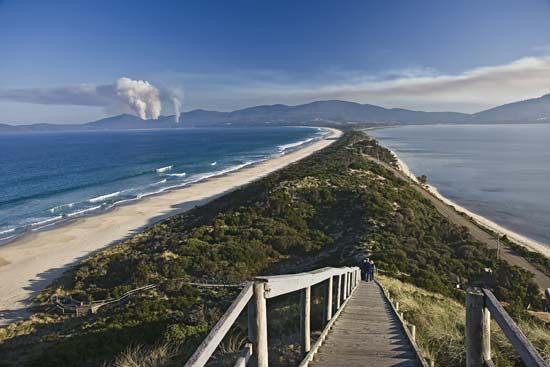
An isthmus is a narrow strip of land that connects two larger land areas that are otherwise separated by bodies of water.
What is the definition of an isthmus in geography?
An isthmus is a narrow strip of land that connects two larger land areas that are otherwise separated by bodies of water.12
These geographic features are significant in geography because they serve as corridors for the migration of plants and animals between landmasses. Notable examples include the Isthmus of Panama, which links North and South America, and the Isthmus of Corinth, which connects the Peloponnese to the Greek mainland. Many such locations have been modified by canals to improve shipping efficiency.1
What are some famous examples of isthmuses around the world?
Several isthmuses are globally recognized for their strategic importance in geography and trade. The most prominent examples include:
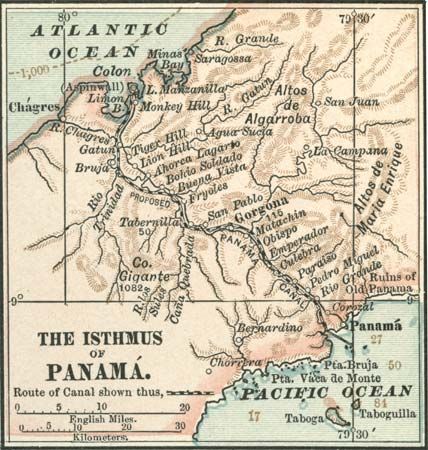
- Isthmus of Panama: This land link connects North and South America, separating the Caribbean Sea from the Gulf of Panama. Its narrowest section is traversed by the Panama Canal, which has been a vital artery for global shipping since its completion in 1914.14
- Isthmus of Suez: Connecting Africa and Asia, this isthmus provides a critical shortcut between the Mediterranean Sea and the Indian Ocean. It is bisected by the Suez Canal, a major international waterway that has undergone significant expansions to accommodate modern maritime traffic.15
- Isthmus of Corinth: This narrow strip of land connects the Peloponnese peninsula to the Greek mainland. Historically significant, it was crossed by ancient ship railways before the opening of the Corinth Canal in 1893, which significantly shortened the journey between the Adriatic and Aegean seas.163
What role do isthmuses play in the formation of land bridges?
An isthmus functions as a land bridge by providing a physical connection between two larger landmasses that are otherwise separated by water. These narrow strips of land act as vital corridors, enabling the migration and dispersal of plants and animals between previously isolated regions.91
The role of an isthmus in this process is dynamic; geological changes, such as tectonic activity or fluctuating sea levels, can cause an isthmus to emerge or submerge over time. For example, the Isthmus of Panama was submerged for much of the Paleogene and Neogene periods, keeping North and South American faunas largely separate. When the isthmus was elevated during the Pliocene Epoch, it facilitated a significant biological interchange, resulting in the rich, mixed biodiversity seen in the region today. Similarly, land bridges like the one between Siberia and Alaska have historically allowed for the movement of various organisms, including Homo sapiens, across continents.910
We could dive deeper into how these biological interchanges have shaped modern ecosystems or explore the geological processes that create these land bridges.
What are the strategic military importance of isthmuses?
The strategic military importance of an isthmus primarily stems from its role as a narrow, critical choke point that controls movement between larger landmasses and bodies of water. Because isthmuses often serve as the only viable land route between regions or the site of essential canals, they have historically been focal points for territorial control, defense, and conflict.
For instance, the Isthmus of Panama has a long history of being a strategic asset due to its position between the Atlantic and Pacific oceans. Its importance was underscored by the construction of the Panama Canal, which revolutionized maritime logistics and military mobility. Throughout colonial history, the region was frequently targeted by foreign powers and pirates seeking to control this vital passage, leading to a turbulent history of defense and sovereignty struggles. Similarly, the Isthmus of Corinth has historically been significant for controlling access to the Peloponnese, serving as a defensive barrier and a transit point for military and commercial forces.136
Sources
- isthmus — Encyclopædia Britannica
- isthmus — Merriam-Webster
- isthmuses — Merriam-Webster
- canals and inland waterways - The Suez Canal — Encyclopædia Britannica
- Isthmus of Corinth — Encyclopædia Britannica
- Isthmus of Panama — Encyclopædia Britannica
- Corinth Canal — Encyclopædia Britannica
- Panama, Isthmus of — Merriam-Webster
- land bridge — Encyclopædia Britannica
- Panama - Plant and animal life — Encyclopædia Britannica
- Panama Canal: Top Questions — Encyclopædia Britannica
Published on · 3 min read