Juniper
Juniper plants, which belong to the cypress family, are widely distributed throughout the Northern Hemisphere. These aromatic evergreen trees and shrubs…
Where are juniper plants typically found in nature?
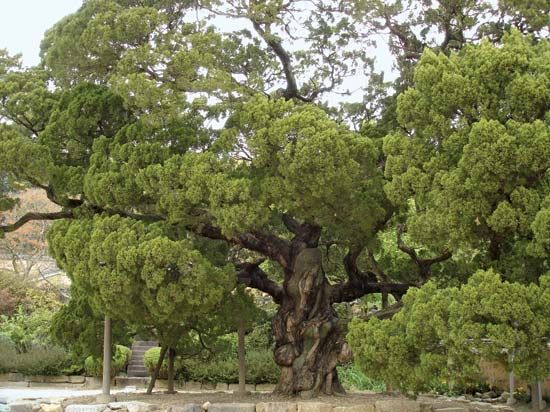
Juniper plants, which belong to the cypress family, are widely distributed throughout the Northern Hemisphere. These aromatic evergreen trees and shrubs thrive in a variety of natural environments:1
- Rocky Soils: The common juniper is frequently found growing on rocky terrain across the Northern Hemisphere.1
- Open Landscapes: Certain species, such as the eastern red cedar, are known to inhabit glades, pastures, prairies, and other open, grassy areas.1
- High Altitudes and Exposed Sites: Varieties like the mountain juniper are typically found in exposed locations and mountainous regions, particularly in northeastern North America.2
Because some species are considered invasive in open grasslands or can host cedar apple rust—a fungus that damages apple trees—their growth is often discouraged near orchards and commercial plantings.1
How are juniper berries used in culinary and medicinal applications?
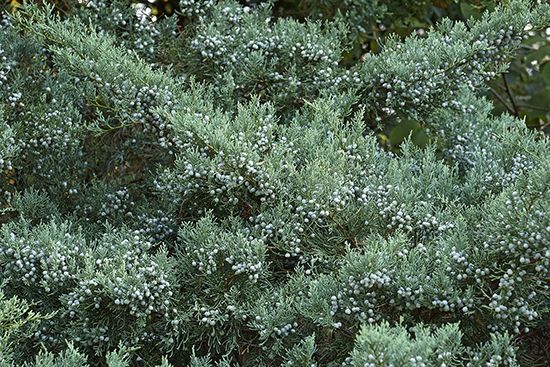
The berrylike cones of the common juniper are valued for their fragrant, spicy aroma and slightly bittersweet flavor, making them a versatile ingredient in culinary and medicinal contexts.1
Culinary Applications
In the kitchen, these “berries” are primarily used as a seasoning to enhance various dishes:
- Flavoring Meats: They are frequently paired with venison to help neutralize its gamey taste.1
- Seasoning: They are used to flavor sauces, stuffings, and pickling brines for meats.1
- Beverages: The berries are a key flavoring agent for gin—which derives its name from the genus Juniperus—as well as various liqueurs and bitters.1
Medicinal and Other Uses
Beyond culinary use, the plant provides essential oils with therapeutic properties:
- Medicinal: Oil of juniper, which is distilled from the leaves and wood of several species, is utilized in medicines, specifically as a diuretic.1
- Fragrance: The oil is also incorporated into the production of perfumes.1
What are some common pests or diseases that affect juniper plants?
Juniper plants can be affected by several pests and diseases that impact their health and appearance.
Fungal Diseases
The most notable diseases affecting junipers are various types of rust, which are caused by fungi that require two different host species to complete their life cycle.
- Cedar-apple rust: This disease primarily affects the eastern red cedar and various apple or crabapple species. It is marked by the development of greenish-brown to chocolate-brown galls on twigs and branches, often called “cedar apples,” which produce spores during rainy spring weather.31
- Related Rusts: Similar diseases, such as cedar-quince rust and cedar-hawthorn rust, also infect junipers and members of the rose family.3
Pests
- Juniper Webworm: The larvae of certain European moths (specifically Phalonia rutilana and Dichomeris marginella) are known as juniper webworms. These pests were introduced to North America and are destructive because they devour the foliage of various juniper species.4
Management of these issues often involves pruning infected branches, applying fungicides at appropriate times, or removing alternate host plants from the vicinity.35
What is a juniper plant?
A juniper is any of the 60 to 70 species of aromatic evergreen trees or shrubs belonging to the cypress family (Cupressaceae), found throughout the Northern Hemisphere.1
Physical Characteristics
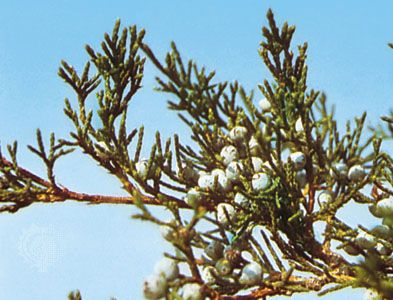
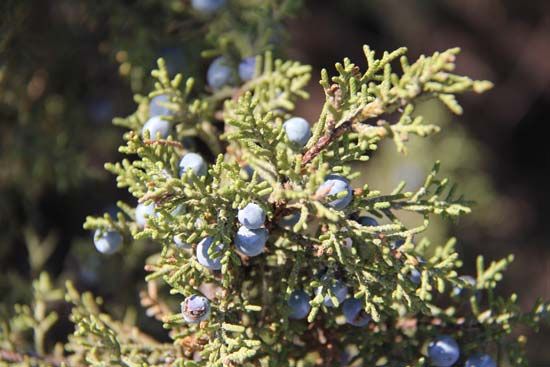
Juniper foliage changes as the plant matures: juvenile leaves are needlelike, while mature leaves are typically awl-shaped or small and scalelike, often featuring an oil gland. These plants are dioecious, meaning male and female reproductive structures usually grow on separate plants. Their most distinct feature is the fleshy, berrylike cone, which is often bluish or reddish-brown with a waxy coating.1
Uses and Significance
- Culinary: The berrylike cones of the common juniper are used to flavor gin, liqueurs, and various foods, including venison.1
- Commercial: The fragrant wood is used for cabinetry, fence posts, and pencils, while the eastern red cedar is prized for lining closets to repel moths.1
- Medicinal: Distilled oils from the plant are used in perfumes and as diuretics.1
Sources
- juniper — Encyclopædia Britannica
- mountain juniper — Merriam-Webster
- Cedar-apple rust — Encyclopædia Britannica
- juniper webworm — Merriam-Webster
- Plant disease - Eradication — Encyclopædia Britannica
- common juniper — Merriam-Webster
Published on · 3 min read