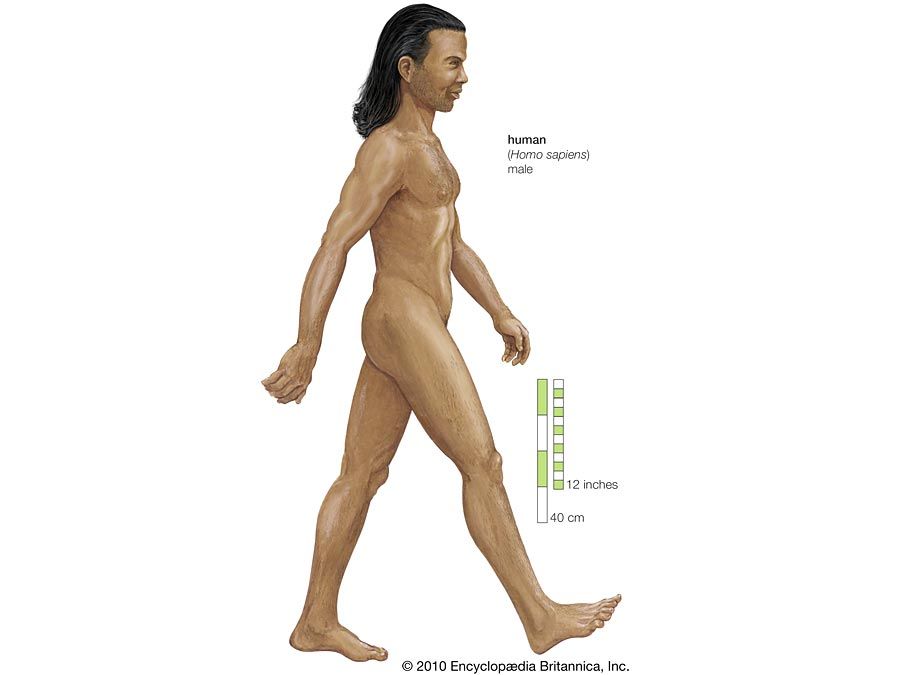
Just How Old Is Homo Sapiens?
Scientific understanding of the age of Homo sapiens has evolved significantly due to new fossil discoveries and advanced dating techniques.

Just How Old Is Homo sapiens?
Scientific understanding of the age of Homo sapiens has evolved significantly due to new fossil discoveries and advanced dating techniques.
For many years, the species was thought to have emerged approximately 200,000 years ago, a timeline supported by remains found in Ethiopia’s Omo Valley. While these remains were initially dated to 130,000 years ago, subsequent analysis in 2005 refined the estimate to 195,000 years ago, and more recent 2022 argon-dating analysis suggests they may be at least 233,000 years old.12
However, the discovery of fossils at Jebel Irhoud in Morocco shifted this perspective. These specimens, which include skull fragments and a jawbone, have been dated to approximately 315,000 years ago. This evidence indicates that H. sapiens may have been present in North Africa much earlier than previously assumed and suggests that the species may have been widely dispersed across the continent rather than originating solely in East Africa.12
What are the main differences between Homo sapiens and Neanderthals?
The distinction between Homo sapiens and Neanderthals is a subject of ongoing scientific debate, involving both physical morphology and behavioral complexity. While they are often classified as separate species, genetic evidence of interbreeding—with Eurasians carrying approximately 2 percent Neanderthal nuclear DNA—suggests a more nuanced biological relationship.67
Physical Differences
When comparing individual specimens, Neanderthals and H. sapiens are distinct, though a broad examination of fossils reveals overlapping traits. Key anatomical differences include:6
- Cranium: H. sapiens possess a high, rounded, and thin-boned braincase, whereas Neanderthals typically have a low-vaulted, long, and rounded braincase.789
- Face and Jaw: H. sapiens have a greatly reduced face without large air sinuses and a complex, distinctive chin (mental trigone). In contrast, Neanderthals feature large nasal and orbital openings, prominent arched brow ridges, and a robust lower jaw that lacks a chin.789
- Musculature and Build: Neanderthals had a pronounced occipital region at the base of the skull to anchor large neck muscles and possessed a stockier, “cold-adapted” frame compared to the more lightly built skeleton of H. sapiens.78
Behavioral and Cognitive Differences
While both groups utilized stone tools, H. sapiens eventually demonstrated a unique capacity for symbolic thought and rapid technological innovation.10
- Technology: Neanderthals were masters of the “prepared-core” (Mousterian) tool industry. H. sapiens later introduced blade-based technologies and tools made from bone and antler, which were crafted with greater sensitivity to material properties.710
- Symbolism and Art: The arrival of behaviorally modern H. sapiens (such as the Cro-Magnons in Europe) is marked by a surge in symbolic expression, including cave paintings, musical instruments, complex burials, and personal adornment, which contrasts with the simpler symbolic records left by Neanderthals.10
- Innovation: A defining trait of H. sapiens is the rapid proliferation of diverse cultural and technological traditions, a pace of change that was largely absent in the long periods of stability characterizing earlier hominin history.10
How do scientists use argon-dating to determine the age of fossils?
Scientists determine the age of fossils using potassium-argon dating, a radiometric method based on the predictable radioactive decay of potassium-40 into argon-40.1112
The Scientific Principle
Because potassium-40 decays at a constant, known rate, the ratio of parent (potassium) to daughter (argon) atoms in a sample serves as a “geologic clock”. While potassium is a common element in many rock-forming minerals, argon is a gas that typically escapes from molten rock. When volcanic material—such as ash layers often found near fossil sites—cools, it traps the argon produced by the decay of potassium, effectively resetting the clock to zero.13141112
Measurement Process
- Sample Analysis: Scientists analyze potassium-bearing samples to measure the remaining parent potassium and the accumulated daughter argon.1213
- Mass Spectrometry: Because argon is a gas, it is purified in a vacuum and introduced into a mass spectrometer to measure its atomic abundance.1213
- Refinements: Advanced techniques like the argon-40–argon-39 method allow researchers to analyze smaller samples and use laser heating to date single grains or spots on a crystal, which helps identify and exclude contaminated or altered material.12
By dating the volcanic ash layers surrounding a fossil, scientists can establish a precise chronological framework for the specimen’s age.15
What are some of the earliest stone tools ever discovered?
The earliest known stone tools date back approximately 3.3 million years and were discovered at the Lomekwi 3 site near Lake Turkana in Kenya. These primitive artifacts include hammers, anvils, and cutting tools, which predate the oldest confirmed specimens of the genus Homo by nearly a million years, suggesting they were likely crafted by earlier hominins such as Australopithecus or Kenyanthropus.161718
Following these, the Oldowan industry emerged around 2 million years ago. These tools are characterized by simple, crudely worked pebble choppers made from materials like quartz, quartzite, or basalt. These versatile implements were used for tasks such as scraping, cutting, and breaking bones to access marrow. While often associated with Homo habilis, the Oldowan tradition represents a long-standing, generalized technology that remained largely unchanged for nearly a million years before the development of more standardized industries like the Acheulean.192017
Sources
- Just How Old Is Homo sapiens? — Encyclopædia Britannica
- Homo sapiens - The genus Homo — Encyclopædia Britannica
- Homo habilis - The fossil evidence — Encyclopædia Britannica
- Homo habilis - Dating the fossils — Encyclopædia Britannica
- human evolution - The emergence of Homo sapiens — Encyclopædia Britannica
- Neanderthal - Neanderthal classification — Encyclopædia Britannica
- Homo sapiens - Bodily structure — Encyclopædia Britannica
- Homo sapiens - Behavioral influences — Encyclopædia Britannica
- Neanderthal - Craniofacial features — Encyclopædia Britannica
- Saccopastore skulls — Encyclopædia Britannica
- potassium-argon dating — Encyclopædia Britannica
- dating - Potassium–argon methods — Encyclopædia Britannica
- dating - Principles of isotopic dating — Encyclopædia Britannica
- geology - Isotopic geochemistry — Encyclopædia Britannica
- Omo — Encyclopædia Britannica
- Oldowan industry — Encyclopædia Britannica
- History of Technology Timeline - 3.3 million years ago: The first tools — Encyclopædia Britannica
- Homo habilis - Behavioral inferences — Encyclopædia Britannica
- hand tool - Eoliths — Encyclopædia Britannica
- human evolution - Refinements in hand structure — Encyclopædia Britannica
- Stone tool industry — Encyclopædia Britannica
Published on · 4 min read