Komandor Islands
The Komandor Islands, located in the southwestern Bering Sea, support a distinct Arctic maritime ecosystem characterized by a variety of marine mammals and…
What unique wildlife can be found on and around the Komandor Islands?
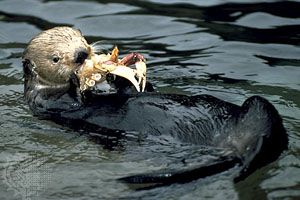
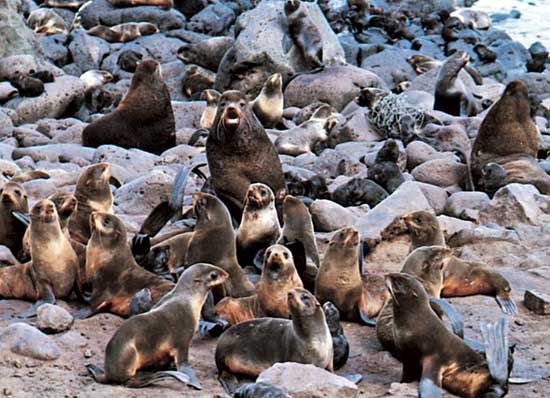
The Komandor Islands, located in the southwestern Bering Sea, support a distinct Arctic maritime ecosystem characterized by a variety of marine mammals and avian species.
The islands serve as critical breeding grounds for several key marine animals, most notably:
- Sea otters: These animals are a characteristic species of the island group.12
- Fur seals: The islands provide essential habitat for these populations.12
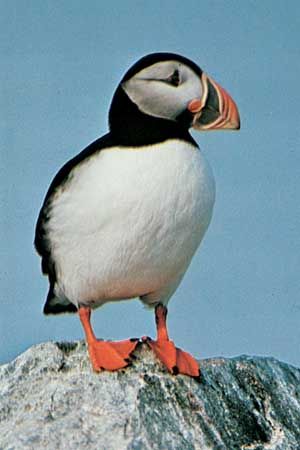
In addition to these mammals, the islands are home to a diverse array of bird life. Puffins are frequently cited as a characteristic species, alongside numerous other types of seabirds that inhabit the rocky terrain and coastal areas.1
While the broader Bering Sea region also hosts species such as walrus and sea lions, the Komandor group is specifically noted for its role in supporting the aforementioned seal and otter populations within its cold, rugged environment.12
Where are the Komandor Islands located, and to which country do they belong?
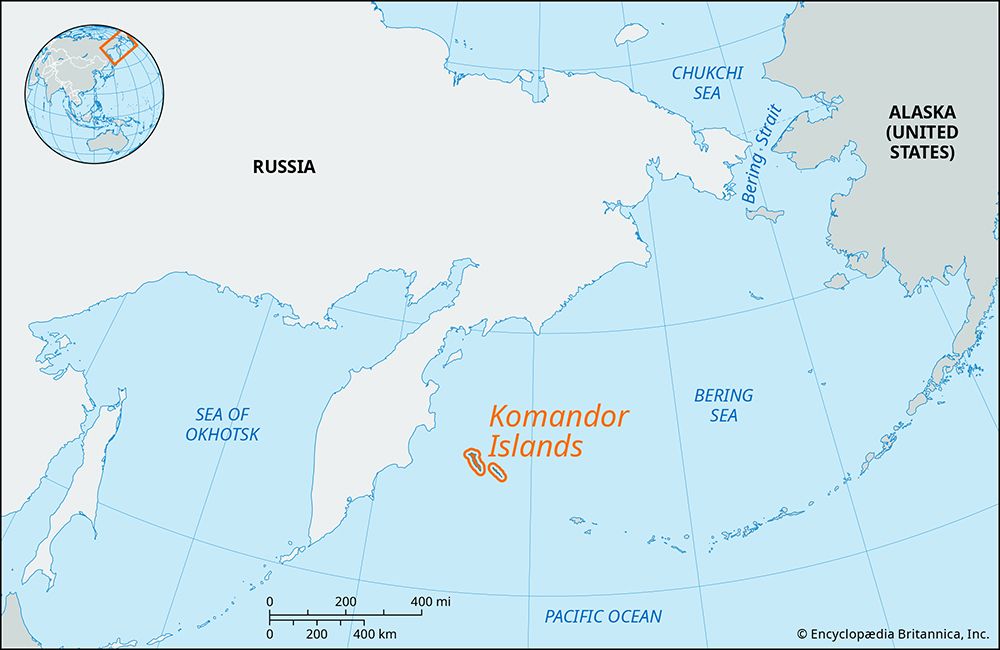
The Komandor Islands (also known as the Commander Islands or Komandorski Islands) are located in the southwestern part of the Bering Sea, approximately 110 miles (180 km) east of the Kamchatka Peninsula in extreme eastern Russia.14
While they are geographically considered part of the Aleutian Islands chain, they are politically and administratively part of the Kamchatka oblast (province) of Russia. Most of the Aleutian Islands are administered by the United States, but the Komandor group remains under Russian administration.15
How did the Komandor Islands get their name, and what is their historical significance?
The Komandor Islands, also known as the Commander Islands, derive their name from the Russian navigator Vitus Bering, who held the rank of commander.16
The islands hold significant historical importance as the site of the final chapter of Bering’s second expedition (1733–1743). In 1741, Bering’s ship, the St. Peter, was wrecked on the largest island of the group—now known as Bering Island—where the navigator subsequently died. While his second-in-command, Aleksey Ilich Chirikov, led a separate vessel and successfully returned to the Russian mainland, the survivors from the St. Peter eventually managed to return to the mainland in supply vessels, providing critical information about the region. This expedition was instrumental in mapping the area and supporting Russian claims in the North Pacific.14
How accessible are the Komandor Islands to tourists, and what attractions do they offer?
The Komandor Islands are remote and present significant challenges for tourism due to their isolated location in the southwestern Bering Sea and their harsh, cold climate. Access is limited, and the islands are primarily known for their rugged, untouched natural environment rather than traditional tourist infrastructure.1
The primary attractions of the islands are centered on their unique wildlife and natural history. Visitors interested in nature may encounter:
- Marine Mammals: The islands are home to populations of sea otters and fur seals.1
- Birdwatching: The area hosts a variety of seabirds, including puffins.1
- Historical Sites: The islands serve as a memorial to the explorer Vitus Bering, who died on the largest island, Bering Island, in 1741.1
The largest settlement, Nikolskoye, serves as the main hub for the group, which also includes the island of Medny, the smaller island of Toporkov, and the craggy Ary Rock.1
Sources
- Komandor Islands — Encyclopædia Britannica
- Bering Sea and Strait - Biological and mineral resources — Encyclopædia Britannica
- Alaska - Plant and animal life — Encyclopædia Britannica
- Komandorski Islands — Merriam-Webster
- list of islands - Russia — Encyclopædia Britannica
- Aleksey Ilich Chirikov — Encyclopædia Britannica
- Bering Sea and Strait — Encyclopædia Britannica
Published on · 2 min read