Kili
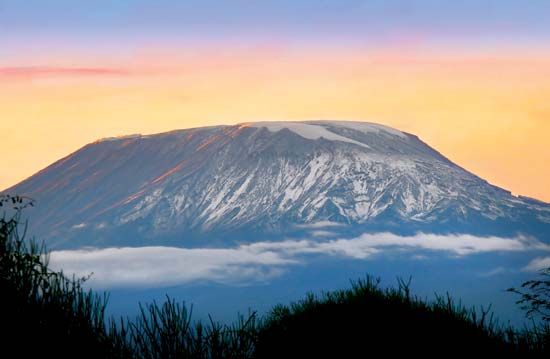
"Kili" is a common shorthand for Kilimanjaro, a volcanic massif located in northeastern Tanzania near the border with Kenya.
What is Kili?
“Kili” is a common shorthand for Kilimanjaro, a volcanic massif located in northeastern Tanzania near the border with Kenya.
The massif is composed of three distinct extinct volcanoes:
- Kibo: The central, youngest, and highest cone, which reaches 19,340 feet (5,895 meters) and serves as the highest point in Africa.12
- Mawensi: The older, highly eroded eastern core.2
- Shira: A ridge representing the remnant of an earlier crater to the west.2
Designated a World Heritage site in 1987, the mountain is protected within Mount Kilimanjaro National Park. Because the summit of Kibo can be reached without specialized mountaineering equipment, it is a popular destination for thousands of hikers annually.2
What are the three main volcanic cones of Kilimanjaro?
The volcanic massif of Kilimanjaro is composed of three principal extinct volcanic cones:
- Kibo (centre): The youngest and highest cone, reaching an elevation of 19,340 feet (5,895 meters). It retains the form of a typical volcanic cone and crater and is the only one of the three to maintain a permanent ice cap.12
- Mawensi (east): The older, highly eroded core of a former summit, reaching 16,893 feet (5,149 meters). It is characterized by jagged, precipitous slopes and is cleft by deep gorges.2
- Shira (west): A ridge representing the remnant of an earlier, inactive crater, reaching an elevation of 13,000 feet (3,962 meters).25
These formations are linked by a 7-mile (11-km) saddle at an elevation of approximately 15,000 feet (4,500 meters).2
How does the climate change as you climb the mountain?
As you ascend Kilimanjaro, the climate undergoes significant changes driven by altitude, which creates a clear succession of distinct environmental zones.26
Generally, as elevation increases, temperatures drop, eventually reaching levels where frost and glaciation occur. Precipitation patterns also shift: while the lower slopes—particularly on the southern and southeastern sides—receive significant rainfall, moisture levels decrease markedly above a cloud ceiling of approximately 10,000 feet. Consequently, the higher reaches of the mountain, known as the Afro-Alpine zone, are characterized by an arid, desert-like climate.632
These climatic shifts dictate the vegetation found at each level, moving from the base to the summit:2
- Surrounding Plateau: Semiarid scrub.2
- Lower Slopes: Cultivated, well-watered areas and dense cloud forest.2
- Moorland: Open terrain featuring unique species like giant lobelia and giant groundsel.2
- Alpine Desert: A sparse environment with moss and lichen communities.2
- Summit: The highest point, Kibo, is defined by its permanent ice cap and extreme cold.23
What unique plants grow in the alpine moorlands?
The alpine moorlands of East African mountains, including Kilimanjaro, are home to unique vegetation characterized by the phenomenon of “giantism,” where plants have evolved to reach impressive sizes in high-altitude environments.7
Two of the most notable species found in these moorlands are:
- Giant Lobelia (Lobelia deckenii): A striking plant that rises out of the ground vegetation.72
- Giant Groundsel (Senecio johnstonii cottonii): Another iconic species that thrives in this zone.2
In addition to these giants, the moorland ground cover typically consists of tussocky grassland and everlastings—composite plants whose flowers can be dried without losing their color or form. These Afro-Alpine plant communities are considered unique because they consist of cold-loving species that retreated to higher elevations following the Pleistocene epoch, where they have been preserved and transformed over time.7
Sources
- Kilimanjaro: Top Questions — Encyclopædia Britannica
- Kilimanjaro — Encyclopædia Britannica
- East African mountains - Climate — Encyclopædia Britannica
- East African mountains - Tourism — Encyclopædia Britannica
- East African mountains - Geology — Encyclopædia Britannica
- Africa - Afromontane vegetation — Encyclopædia Britannica
- East African mountains - Plant life — Encyclopædia Britannica
Published on · 3 min read