King Cobra
King cobras are active hunters that prowl for food during both the day and night across forests, fields, and villages. They are specialized predators that…
How do king cobras hunt and what are their primary prey species?
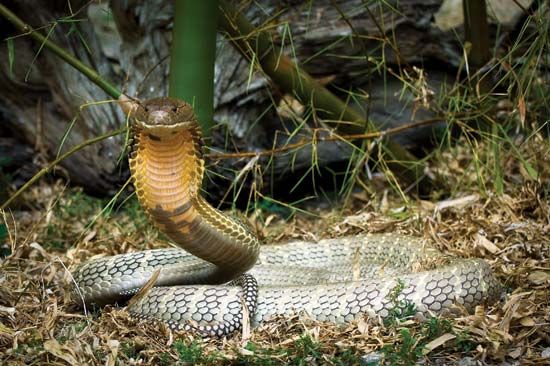
King cobras are active hunters that prowl for food during both the day and night across forests, fields, and villages. They are specialized predators that feed almost exclusively on other snakes.12
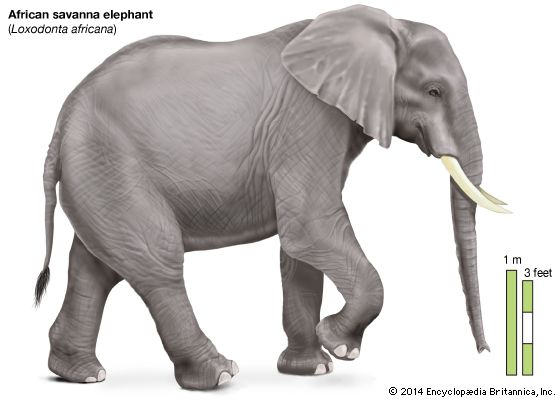
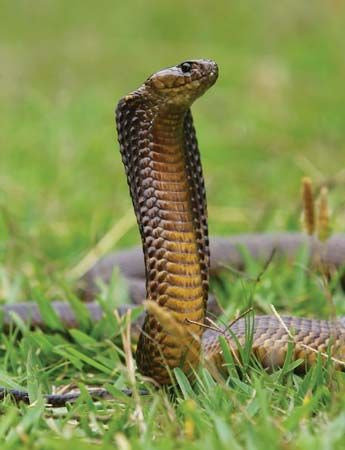
When hunting, these snakes rely on their potent and copious venom to paralyze their victims. While they are generally not aggressive toward humans, they are highly dangerous if cornered or startled. In such instances, they perform a distinct threat display by lifting the front portion of their body roughly perpendicular to the ground, spreading their hood, and emitting a low-pitched hiss before striking. Their venom is powerful enough to be lethal to large animals, such as elephants, in a matter of hours.1
What is the typical habitat and geographic distribution of king cobras?
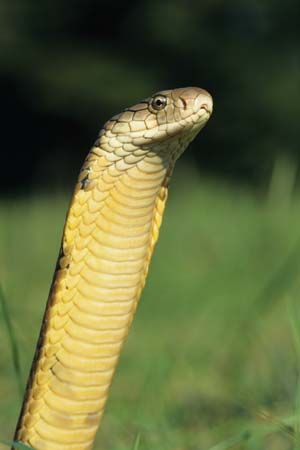
King cobras are primarily forest-dwelling reptiles found across a broad geographic range in South and Southeast Asia. Their distribution extends from eastern Pakistan and India through Southeast Asia to the Philippines and Indonesia.12
Recent genetic research has identified four distinct species, each with specific regional habitats:
- Northern king cobra (O. hannah): Ranges across eastern Pakistan and northern and eastern India.1
- Western Ghats king cobra (O. kaalinga): Inhabits upland areas within the Western Ghats of southwestern India.1
- Sunda king cobra (O. bungarus): Found from the Malay Peninsula through the Greater Sunda Islands to the southern Philippines.1
- Luzon king cobra (O. salvatana): Occurs exclusively on the island of Luzon1.
These snakes are versatile in their environment, prowling through forests, fields, and even human-inhabited villages in search of prey. Despite their wide range, they face significant threats from habitat loss and overharvesting, which have contributed to population declines.1
How do king cobras reproduce and care for their young, and how does this differ from other snake species?
King cobras (Ophiophagus) exhibit reproductive behaviors that are notably distinct from most other snake species, primarily due to their nest-building and parental care.
Reproduction and Nesting
Unlike the majority of snakes, which typically abandon their eggs after laying them in a suitable site, king cobras are unique in their commitment to their offspring. During the breeding season, mated pairs remain together. The female constructs a specialized nest mound by using a loop of her body to gather dead leaves, soil, and ground litter into a compact structure. She then lays between 20 and 50 eggs within this mound.312
Parental Care
Parental involvement continues well after the eggs are deposited:
- Incubation: The female remains with the nest, coiling above or near the eggs for the duration of the approximately two-month incubation period.3
- Defense: The female is known to fiercely defend the breeding ground against potential predators or intruders. Some herpetologists and wildlife officials have also observed the male remaining nearby to assist in guarding the area.32
- Aggression: The guarding parent is highly protective and will strike if a person or predator approaches the nest too closely.2
This level of active nest construction and defense is rare among squamates, as most snakes simply deposit their eggs in a hollow or crevice and depart, leaving the hatchlings to survive on their own.1
How does the king cobra’s venom compare to that of other venomous snakes in terms of potency and effects?
The king cobra’s venom is exceptionally potent and is delivered in large quantities, making it one of the most dangerous snakes in the world. While many cobras rely on neurotoxins that target the nervous system to paralyze prey, the king cobra’s venom is noted for being both highly powerful and delivered in such copious amounts that it can be fatal to large mammals, such as elephants, within hours of a bite.215
Comparison and Effects
- Mode of Action: Like other members of the Elapidae family, king cobra venom is primarily neurotoxic. These toxins interfere with the nervous system, leading to symptoms such as muscle weakness, paralysis, and the eventual arrest of respiration and heartbeat.25
- Potency and Volume: While various venomous snakes—such as the “big four” in South Asia (including the Indian cobra and Russell’s viper)—pose significant medical threats, the king cobra is distinguished by the sheer volume of venom it can inject.25
- Specialized Adaptations: Unlike some other cobras that have evolved to “spit” venom as a defensive mechanism to cause temporary or permanent blindness, the king cobra delivers its venom through short, fixed front fangs during a strike.2
The severity of any snakebite depends on factors such as the amount of venom injected, the location of the bite, and the victim’s age. While antivenin is effective, it must be administered promptly to counteract the neurotoxic effects.25
Sources
- king cobra — Encyclopædia Britannica
- cobra — Encyclopædia Britannica
- Egyptian cobra — Encyclopædia Britannica
- reptile - Embryonic development and parental care — Encyclopædia Britannica
- Venom — Encyclopædia Britannica
Published on · 4 min read