Labyrinth Fish
Labyrinth fish, which belong to the suborder Anabantoidei, are defined by their unique ability to breathe atmospheric oxygen using a specialized structure…
How did labyrinth fish evolve, and what are their closest relatives?
Labyrinth fish, which belong to the suborder Anabantoidei, are defined by their unique ability to breathe atmospheric oxygen using a specialized structure called the labyrinth organ. This organ is a vascularized chamber located above the gills that allows these fish to survive in oxygen-poor water or even out of water for short periods.12
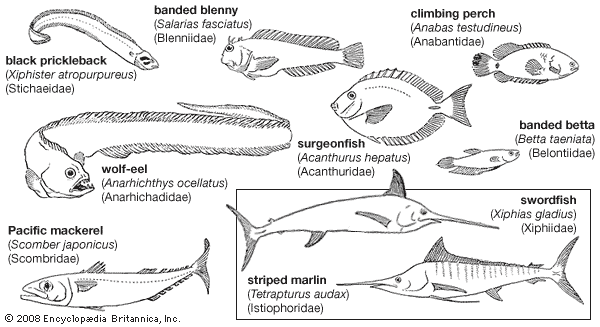
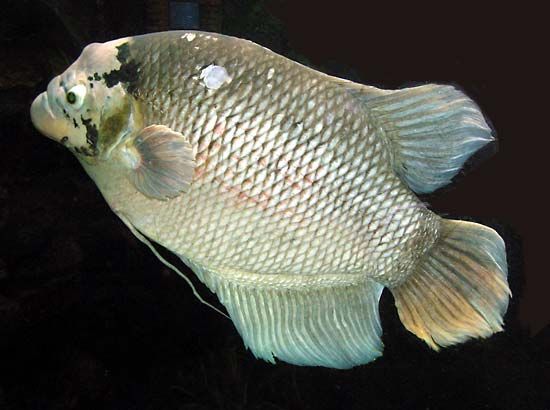
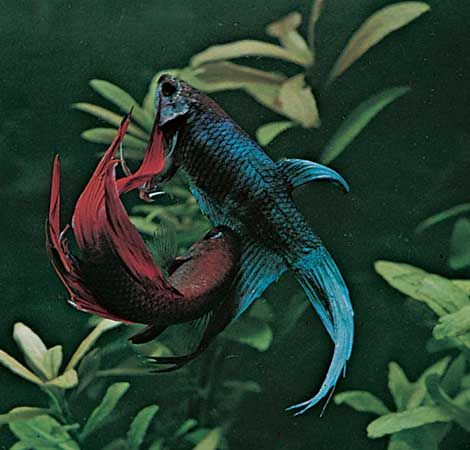
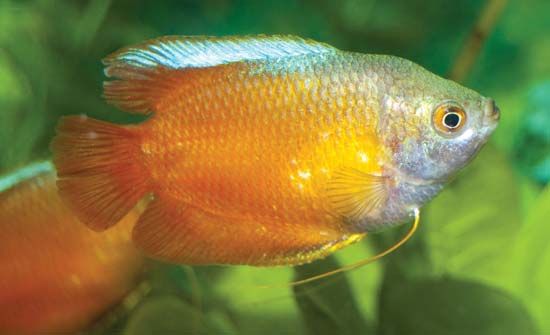
Regarding their evolution and classification, labyrinth fish are part of the order Perciformes. While the provided search results detail the broad classification of bony fishes, they do not offer specific evolutionary pathways or a detailed phylogenetic tree explaining the precise ancestral origins of the labyrinth organ itself. The group includes approximately 70 species, which are categorized into five families: Badidae, Anabantidae, Belontiidae, Helostomatidae, and Osphronemidae. Common examples of these fish include the climbing perch, gourami, and Siamese fighting fish1.1
How does the labyrinth organ function in these fish?
The labyrinth organ functions as a supplemental breathing apparatus that allows labyrinth fish to extract oxygen directly from the air. Located in a specialized chamber above the gills, this structure is highly vascularized, meaning it is densely supplied with blood vessels.41
When these fish inhabit oxygen-poor water or are temporarily out of water, they gulp air through their mouths. This air enters the labyrinth chamber, where the proximity of the blood vessels to the air allows for efficient gas exchange, functioning much like a rudimentary lung. While these fish continue to use their gills for respiration, the labyrinth organ provides a critical survival advantage in environments where dissolved oxygen levels are insufficient to support them through gill respiration alone.41
It is important to note that the “labyrinth organ” used for breathing in these fish is distinct from the “labyrinth” found in the inner ear of vertebrates, which serves as a sensory organ for balance and hearing.6
How do labyrinth fish differ from other tropical freshwater fish?
Labyrinth fish differ from most other tropical freshwater fish primarily due to their unique respiratory adaptation. While the vast majority of fish rely exclusively on gills to extract dissolved oxygen from water, labyrinth fish possess a specialized, highly vascularized structure called the labyrinth organ located in a chamber above their gills.14
This organ functions as a rudimentary lung, enabling these fish to gulp air from the surface and extract oxygen directly from the atmosphere. This adaptation provides a significant survival advantage, allowing them to thrive in oxygen-poor waters or even survive for short periods outside of the water—environments that would be lethal to many other fish species.14
Additionally, many labyrinth fish are distinguished by their reproductive behavior; they are frequently referred to as “bubble-nest builders” because males construct and maintain floating nests made of foamy, soaplike bubbles to protect their eggs and fry.1
What unique behaviors or breeding habits do labyrinth fish exhibit?
Labyrinth fish are well-known for their distinct reproductive behaviors, most notably their role as “bubble-nest builders.” In most species, the male takes the lead in creating a nursery for the eggs by constructing a floating nest made of foamy, soaplike bubbles at the water’s surface.81
The process of building this nest is highly specialized:
- Construction: The male swims to the surface, gulps air into his mouth, coats it with a mucous secretion (saliva), and spits out the bubble. This is repeated until a stable, floating structure is formed.91
- Spawning and Care: After the female releases her eggs, the male collects them in his mouth and spits them into the bubble nest. He then guards the nest and protects the eggs from intruders.91
- Parental Investment: Beyond guarding the nest, some labyrinth fish engage in oral incubation, where one or both parents hold the eggs in their mouths until they hatch.1
In addition to these breeding habits, labyrinth fish often exhibit sexual dimorphism, with males typically displaying brighter, more vibrant coloration on their bodies and fins compared to females, which serves to enhance their courtship displays.1
Sources
- labyrinth fish — Encyclopædia Britannica
- fish - Annotated classification — Encyclopædia Britannica
- labyrinth fish — Merriam-Webster
- How do fish breathe? — Encyclopædia Britannica
- bivalve - Critical appraisal — Encyclopædia Britannica
- sound reception - Sound reception in vertebrates — auditory mechanisms of fishes and amphibians — Encyclopædia Britannica
- Mechanoreception - Mechanoreceptor function — Encyclopædia Britannica
- 14 Questions About Aquatic Animals Answered - Which fish makes a nursery out of bubbles? — Encyclopædia Britannica
- perciform - Life history — Encyclopædia Britannica
Published on · 3 min read