Lyretail
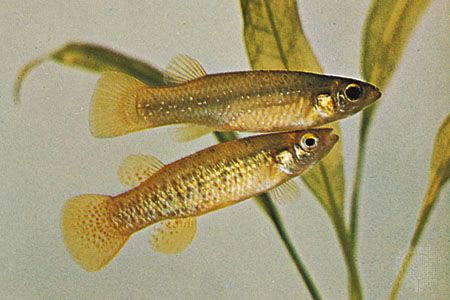
A lyretail is any of about six species of freshwater fish belonging to the genus Aphyosemion within the killifish group. Native to tropical Africa, these…
What is lyretail?
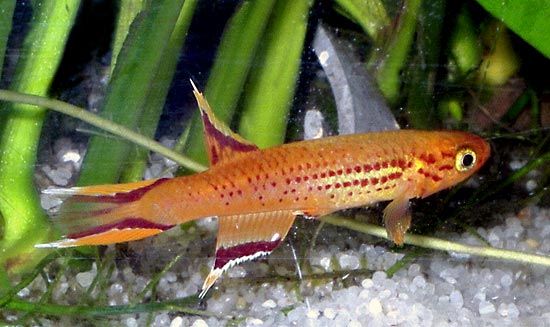
A lyretail is any of about six species of freshwater fish belonging to the genus Aphyosemion within the killifish group. Native to tropical Africa, these fish typically grow to about five centimeters (two inches) in length.1
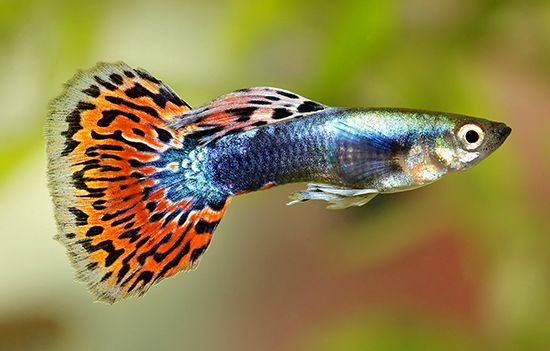
While females are generally drab in color, males are known for their brilliant, speckled patterns of red, yellow, green, and blue. Their name is derived from their fan-shaped tails, which feature extended filaments at the top and bottom that resemble the shape of a lyre. Due to their striking appearance, species such as the Cape Lopez lyretail are popular choices for home aquariums.1
What are the defining characteristics of killifish?
Killifish are a diverse group of elongated fish belonging to the family Cyprinodontidae. They are found globally, particularly in tropical regions of Africa and the New World, and inhabit a variety of environments including fresh, brackish, and salt water, as well as desert hot springs.2
Key characteristics include:
- Size: They are relatively small, typically reaching a maximum length of about 15 cm (6 inches), with many species being significantly smaller.2
- Feeding Habits: They are surface feeders that consume both plant and animal material.2
- Reproduction: Unlike related live-bearing topminnows, all killifish lay eggs.2
- Annual Life Cycles: Certain species in Africa and South America are known as “annual fishes.” They inhabit seasonal pools that dry out, during which time they bury their eggs in the substrate. These eggs remain dormant until the water returns. Consequently, their entire life cycle—from birth to mating and death—often lasts less than one year.2
- Economic and Ecological Value: Many are popular in the aquarium trade due to their vibrant colors. They are also utilized for mosquito control by consuming insect larvae and serve as bait for anglers.2
How do male and female fish in the same species differ in appearance?
In many fish species, males and females exhibit sexual dimorphism, a condition where the sexes differ in appearance due to genetic patterns. These differences are often driven by sexual selection, where specific traits provide a reproductive advantage by helping individuals compete for mates or attract them.4567
Common differences include:
- Coloration: Males often develop brilliant, vibrant colors—such as red, yellow, green, and blue—on their heads, bodies, and fins, particularly during the breeding season. These colors can signal health and genetic quality to potential mates or serve to intimidate rival males.86
- Size: Size differences are common, with the sex responsible for parental care often being the larger one. In some species, such as certain live-bearers, males are significantly smaller than females.89
- Fin Structure: Males frequently possess larger or more elaborate fins. In some groups, such as flatfishes, males may have elongated pectoral fin rays or specialized spines.810
- Specialized Organs: Males may develop unique structures for mating, such as the gonopodium in poeciliids or the priapium in phallostethoids, which are modified fins used for internal fertilization. Other males may develop breeding tubercles (pearl organs) on the head or body to assist in maintaining contact during spawning.98
What makes a fish well-suited for a home aquarium?
A fish is considered well-suited for a home aquarium primarily based on its aesthetic appeal and its ability to thrive within the constraints of a managed aquatic environment. Many popular choices, such as cichlids, butterfly fishes, angelfishes, and labyrinth fishes like the Siamese fighting fish, are favored by aquarists for their vibrant colors and interesting behaviors. Certain species, such as the freshwater angelfish and discus, are particularly prized for their unique parental care, where they feed their young with mucous secretions from their bodies.12
Beyond appearance, a fish’s suitability depends on the owner’s ability to maintain proper water quality, which is the most critical factor for survival. Successful aquarium keeping requires managing temperature, nutrition, and the removal of metabolic wastes like ammonia, which can be toxic even at low concentrations. While some enthusiasts attempt “balanced” aquariums with plants, maintaining a stable environment typically requires effective filtration and regular water maintenance.13
Sources
- lyretail — Encyclopædia Britannica
- killifish — Encyclopædia Britannica
- fish - Reproduction — Encyclopædia Britannica
- Reproductive behaviour - Fishes — Encyclopædia Britannica
- atheriniform - Natural history — Encyclopædia Britannica
- Sexual dimorphism — Encyclopædia Britannica
- sexual dimorphism — Merriam-Webster
- ostariophysan - Secondary sexual characteristics — Encyclopædia Britannica
- Why are male animals more colorful? — Encyclopædia Britannica
- sexual selection — Encyclopædia Britannica
- pleuronectiform - Form and function — Encyclopædia Britannica
- perciform - Aquarium fishes — Encyclopædia Britannica
- aquarium - Maintenance problems — Encyclopædia Britannica
Published on · 3 min read