Lake Buir
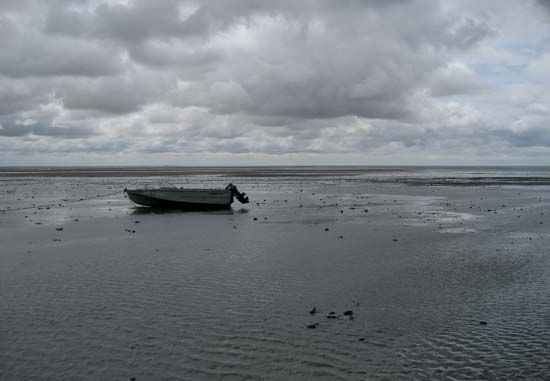
Lake Buir is a lake located primarily in eastern Mongolia, situated on the border with the Inner Mongolia Autonomous Region of China.
What is Lake Buir?
Lake Buir is a lake located primarily in eastern Mongolia, situated on the border with the Inner Mongolia Autonomous Region of China.1
The lake covers an area of 235 square miles (609 square km). It is fed by the Halhïn (Halaha) River from the southeast, and its waters exit via the Orxon (Orshun) River, which flows northward into Lake Hulun.1
What is the significance of the Halhin River?
The Halhïn (also spelled Khalkhyn) River is historically significant primarily as the site of a decisive military conflict in 1939 between Mongolian and Soviet forces and the Japanese military.23
Following a series of border incursions by Japanese and Manchukuo troops into northeastern Mongolia, the conflict reached its climax in August 1939. Soviet and Mongolian troops, commanded by Gen. Georgy Zhukov, annihilated a large Japanese force near the river. This victory had profound geopolitical consequences: Japan subsequently abandoned its plans to invade the Soviet Union and redirected its expansionist efforts toward the Pacific and Southeast Asia during World War II.23
Geographically, the river is also notable for its role in the regional drainage system, as it flows from the southeast into Lake Buir, a lake situated on the border between Mongolia and China.4
How does Lake Buir compare to Lake Hulun?
Lake Buir and Lake Hulun are two significant freshwater bodies located in the Hulun Buir Plain, sharing several ecological and hydrological characteristics while differing in size and connectivity.
Comparison of Features
Feature
Lake Buir
Lake Hulun
Location
Primarily eastern
Mongolia
Northern
Inner Mongolia
,
China
Surface Area
~235 sq miles (609 sq km)
~894 sq miles (2,315 sq km)
Water Quality
Fresh water
Fresh water
Hydrology
Drains into Lake Hulun via the Orxon River
Receives water from the Orxon and Kerulen rivers
Key Relationships
- Historical Connection: The two lakes were once part of a single, larger body of water.1
- Hydrological Link: Lake Buir serves as an upstream source for Lake Hulun, with the Orxon River acting as the connecting outlet.15
- Biological Interaction: Both lakes are well-stocked with fish. During the harsh winter months, fish from Lake Hulun migrate up the Orxon River to the waters of Lake Buir.1
- Environmental Context: Unlike many other lakes in the region that are highly saline, both maintain a minimal salt content, making them vital freshwater resources.1
We could dive deeper into the environmental challenges facing these lake systems or explore the broader geography of the Hulun Buir Plain.
What kind of wildlife lives near Lake Buir?
The wildlife surrounding Lake Buir is characteristic of the diverse fauna found in the freshwater lakes and surrounding steppe regions of Mongolia.
Aquatic Life
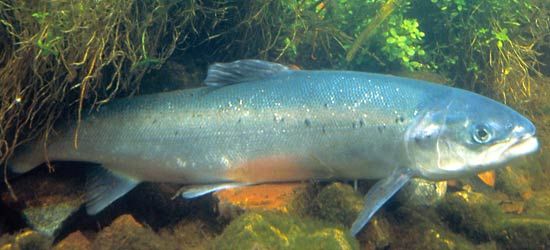
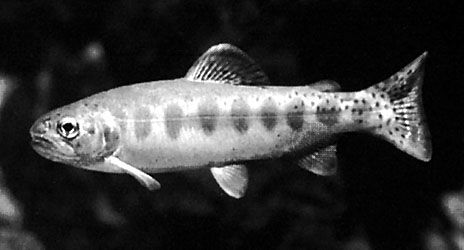
As a freshwater lake with minimal salt content, Lake Buir is well-stocked with a variety of fish, including species of salmon, trout, grayling, perch, and pike. The lake also serves as a critical refuge for fish migrating from Lake Hulun during the harsh winter months.65
Birdlife and Mammals
The lake and its surrounding rivers support a rich array of birdlife, including:
- Waterfowl: Geese, ducks, gulls, pelicans, swans, and cormorants.6
- Steppe Birds: Larks, partridges, cranes, pheasants, bustards, and falcons.6
While specific terrestrial wildlife counts for the immediate lakeshore are not detailed separately from the broader region, the surrounding Mongolian steppes are home to the Mongolian gazelle and the marmot, both of which are iconic species of the area.6
Sources
- Lake Buir — Encyclopædia Britannica
- Mongolia - Drainage — Encyclopædia Britannica
- Mongolia - Counterrevolution and Japan — Encyclopædia Britannica
- history of Mongolia - Counterrevolution and Japan — Encyclopædia Britannica
- Lake Hulun — Encyclopædia Britannica
- Mongolia - Animal life — Encyclopædia Britannica
- Kunlun Mountains - Plant and animal life — Encyclopædia Britannica
Published on · 3 min read