Trout
Trout reproduce through external fertilization, a process in which they are oviparous, meaning they lay eggs that develop outside the body. Because trout…
How do trout reproduce and what is unique about their life cycle?
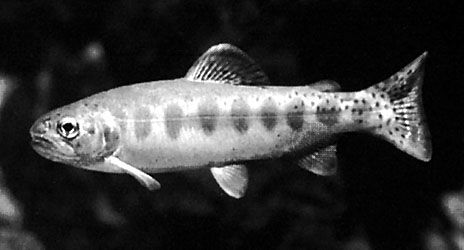
Trout reproduce through external fertilization, a process in which they are oviparous, meaning they lay eggs that develop outside the body. Because trout typically spawn in cold, swift rivers where food is sparse, they have evolved to produce relatively large eggs (4 to 8 mm in diameter) that contain a significant amount of yolk. This large yolk supply allows for direct development, where the young hatch in an advanced stage that resembles a miniature adult. To protect these embryos in harsh environments, trout exhibit nest-building behavior, depositing their heavy, demersal eggs on or within the stream or lake bottom.1
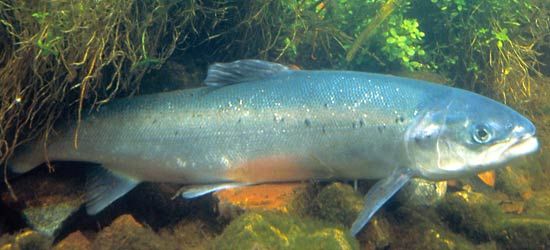
A unique aspect of the trout life cycle is the variation in migratory behavior, even among closely related species or populations. While many trout are strictly freshwater, others are anadromous, meaning they migrate from freshwater to the ocean to mature before returning to their natal streams to spawn. This return is guided by a remarkable homing instinct, primarily utilizing the sense of smell to locate their specific birth site.123
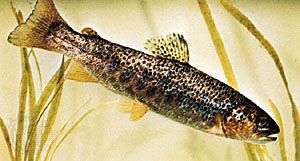
What are the main species of trout and where are they typically found?
Trout are members of the family Salmonidae and are native to the cooler freshwater environments of the Northern Hemisphere, including North America, Europe, and Asia. While they are primarily freshwater fish, many species have been widely introduced to suitable waters across Africa, South America, Australia, and New Zealand.45
Trout are generally classified into two main genera: Oncorhynchus and Salvelinus (often referred to as chars), with the brown trout (Salmo trutta) being the sole remaining member of the genus Salmo.5
Common Trout Species
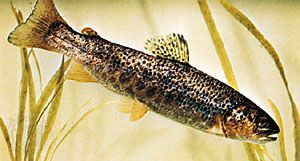
- Genus Oncorhynchus: Includes the rainbow trout (O. mykiss), a North American native known for its reddish side band; the cutthroat trout (O. clarki), identified by red streaks beneath its jaw; and the golden trout, found in California’s Sierra Nevada mountains.567
- Genus Salvelinus (Chars): Includes the brook trout, lake trout, Dolly Varden trout, and bull trout.5
These fish typically inhabit cool, clean streams, lakes, and rivers. Some populations are anadromous, migrating to the sea to mature before returning to freshwater to spawn.854
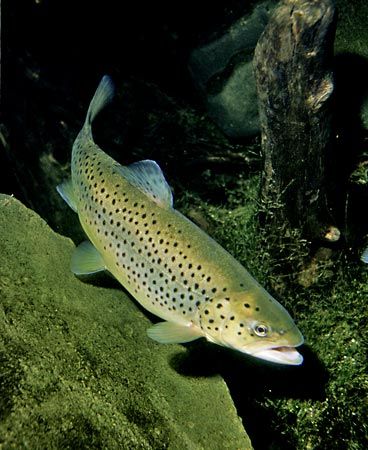
What are the key physical characteristics that distinguish trout from other fish?
Trout are characterized by a streamlined, symmetrical, and fusiform body shape, which allows them to be active, swift-moving swimmers capable of navigating strong currents and leaping over obstacles. Their bodies are covered in small, smooth cycloid scales.64
Several specific anatomical features distinguish trout from other fish:
- Fins: Their fins are composed of soft supporting rays rather than spines. A key identifying feature is the presence of a small, fleshy adipose fin located on the back between the dorsal fin and the tail.6
- Mouth Anatomy: The shape and dentition of the vomer bone in the roof of the mouth are primary diagnostic tools for classification. For example, in the genus Oncorhynchus, teeth are found on both the front and the shaft of the vomer, whereas in chars (Salvelinus), teeth are present only on the front of the vomer.1112
- Coloration: While highly variable, trout in the genus Oncorhynchus typically display red or black spots on a lighter body, whereas chars (Salvelinus) often exhibit red- or cream-colored spots on a darker body.1112
What techniques are used in trout farming and aquaculture?
Trout farming relies on precise environmental control and artificial propagation techniques to manage these cold-water, oxygen-dependent fish.13
Artificial Propagation and Hatchery Management
Trout are cultivated through artificial fertilization, a process where eggs and sperm are manually collected from spawning adults and mixed under controlled conditions. Hatchery buildings serve as the center of operations, utilizing low-temperature water and filtration systems to maintain optimal conditions for breeding in small tanks. Once the fry can swim and feed independently, they are transferred to rearing ponds.1314
Rearing Environments
- Ponds and Tanks: Trout are traditionally raised in earth ponds, concrete-lined ponds, or concrete tanks. Concrete enclosures are often preferred for their ease of cleaning and the ability to apply disinfectants.1314
- Net Enclosures: A modern approach involves placing netting enclosures directly into natural waters, such as lakes, allowing for intensive farming in areas previously considered of low value.1314
Feeding and Growth
As carnivores, trout are typically fed meatpacking by-products, often delivered via automatic dispensers. While some producers emphasize natural food sources, others utilize commercial feeds, including products derived from wild-caught fish.13
Sources
- protacanthopterygian - Life cycle and reproduction — Encyclopædia Britannica
- teleost — Encyclopædia Britannica
- protacanthopterygian - Behaviour and locomotion — Encyclopædia Britannica
- protacanthopterygian - Distribution and abundance — Encyclopædia Britannica
- brook trout — Encyclopædia Britannica
- trout — Encyclopædia Britannica
- rainbow trout — Merriam-Webster
- rainbow trout — Encyclopædia Britannica
- cutthroat trout — Encyclopædia Britannica
- cutthroat trout — Merriam-Webster
- protacanthopterygian - External characteristics — Encyclopædia Britannica
- char — Encyclopædia Britannica
- aquaculture - Trout and salmon — Encyclopædia Britannica
- aquaculture - Fish farming — Encyclopædia Britannica
- protacanthopterygian - Importance — Encyclopædia Britannica
Published on · 3 min read