Lake Titicaca
Lake Titicaca holds profound cultural and historical significance for the indigenous peoples of the Andes, serving as a cradle for some of the oldest…
What is the cultural importance of Lake Titicaca to the indigenous people living in the region?
Lake Titicaca holds profound cultural and historical significance for the indigenous peoples of the Andes, serving as a cradle for some of the oldest civilizations in the Americas.1
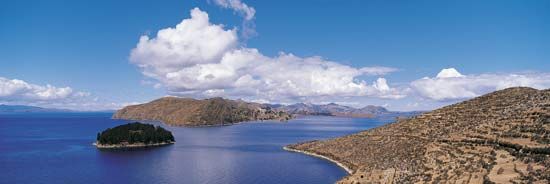
- Inca Traditions: The lake is central to Inca mythology. According to tradition, the founders of the Inca dynasty, Manco Capac and Mama Ocllo, were sent to Earth by the Sun at Isla del Sol, where a temple of the Sun was later established.12
- Ancient Heritage: The region is home to the Tiwanaku civilization, and the lake’s shores and islands contain significant archaeological ruins.1
- Traditional Livelihoods: The Aymara people continue to utilize ancient agricultural methods, such as stepped terraces, to cultivate crops like quinoa and potatoes. The Uru people maintain a traditional lifestyle on floating islands made of totora reeds, from which they also craft their iconic balsas boats.1
These practices reflect a deep, enduring connection between the indigenous communities and the lake’s environment, which has sustained human populations for millennia.13
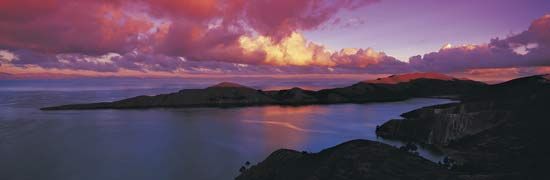
What is the average depth and surface area of Lake Titicaca?
Lake Titicaca covers a surface area of approximately 3,200 square miles (8,300 square km). Regarding its depth, the lake averages between 460 and 600 feet (140 and 180 meters), though it reaches a maximum recorded depth of 920 feet (280 meters) near the lake’s northeastern corner.1
What are some of the interesting islands within Lake Titicaca, and what makes them special?
Lake Titicaca is home to 41 islands, many of which are densely populated and rich in historical significance. Two of the most notable islands include:5
- Isla del Sol: Located in the Bolivian sector, this island is central to Inca mythology as the legendary birthplace of the dynasty’s founders, Manco Capac and Mama Ocllo. It features the Temple of the Sun and the “Inca’s Palace” (Pilco Kayma), a two-story structure with galleries carved from stone. The island also retains ancient stone agricultural terraces that are still in use today.15
- Isla de la Luna: Situated southeast of Isla del Sol, this smaller island is also home to significant Inca ruins.1
Beyond these, the lake is famous for the floating islands inhabited by the Uru people. These unique structures are crafted from dried totora reeds, a material the Uru also use to construct their traditional crescent-shaped balsas boats.5
What role does Lake Titicaca play in the water systems of Peru and Bolivia?
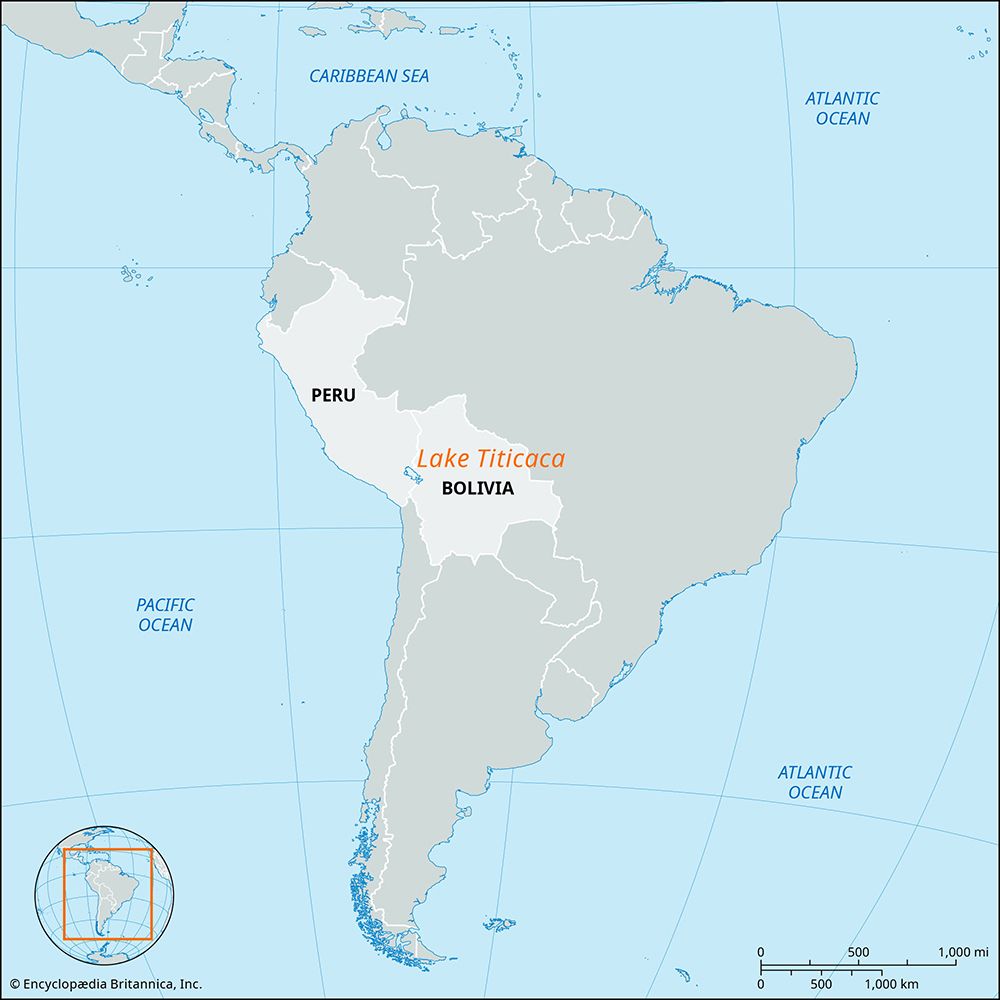
Lake Titicaca serves as the centerpiece of an isolated, inland-draining watershed on the Altiplano that spans the border between Peru and Bolivia. Its role in the regional water system is defined by its capacity to store a vast volume of fresh water, which it receives from more than 25 rivers, the largest being the Ramis River1.1
The lake acts as a critical regulator for the Titicaca-Poopó system. While it receives significant inflow, it has only one small natural outlet, the Desaguadero River, which drains only 5 percent of the lake’s excess water; the majority of water loss occurs through evaporation due to the intense sun and winds of the high plateau. The Desaguadero River flows southward, historically providing water to Lake Poopó, though irrigation and mining demands have increasingly diverted this flow, contributing to the desiccation of the downstream basin.678
By maintaining this large freshwater reservoir, the lake supports local agriculture, including ancient terrace farming and raised platform fields, which are vital to the livelihoods of the Aymara and Uru peoples in both nations.6
Sources
- Lake Titicaca — Encyclopædia Britannica
- Lake Ballivián — Encyclopædia Britannica
- Altiplano — Encyclopædia Britannica
- Pre-Columbian civilizations - Temples and shrines — Encyclopædia Britannica
- Isla del Sol — Encyclopædia Britannica
- Bolivia - Drainage of Bolivia — Encyclopædia Britannica
- 6 Lakes That Are Drying Up - Lake Poopó — Encyclopædia Britannica
- Lake Poopó — Encyclopædia Britannica
Published on · 3 min read