Lake Ballivián
Lake Ballivián was a massive paleolake that existed during the Pleistocene Epoch (approximately 2,600,000 to 11,700 years ago) in the region now occupied by…
What is Lake Ballivián?
Lake Ballivián was a massive paleolake that existed during the Pleistocene Epoch (approximately 2,600,000 to 11,700 years ago) in the region now occupied by the border between Bolivia and Peru.1
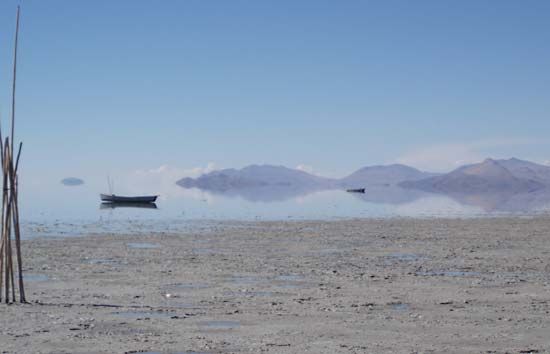
It served as the predecessor to the modern Lake Titicaca. Geological evidence suggests that the surface of Lake Ballivián sat at least 100 meters (330 feet) higher than the current level of Lake Titicaca. As the lake eventually drained, it receded into two distinct basins: the northern portion became Lake Titicaca, while the southern portion formed Lake Minchin, which is the predecessor to the modern Lake Poopó.1
How did the Pleistocene Epoch influence the formation of lakes?
The Pleistocene Epoch was a transformative period for the Earth’s surface, serving as the primary mechanism for the creation of numerous lake basins, particularly across the Northern Hemisphere.3
Glacial Influence
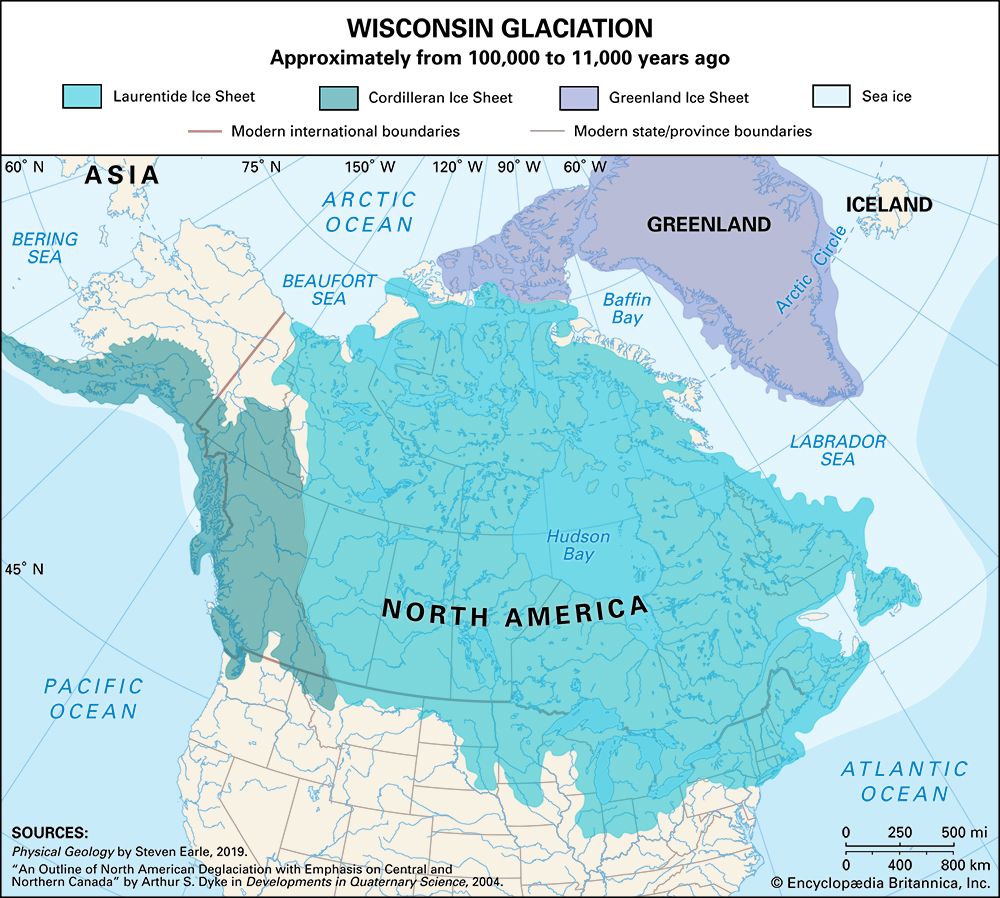
Glaciation shaped the landscape through both mechanical erosion and the damming of water. As massive ice sheets advanced and retreated, they scoured preexisting lowlands, deepening valleys to create basins for large bodies of water, such as the Great Lakes. In mountainous regions, glacial movement carved out circular cirques and deep, narrow fjord lakes. Additionally, the deposition of glacial moraine and outwash created natural dams that confined postglacial waters, as seen in the Finger Lakes of New York.43
Pluvial Lakes
In arid and semiarid regions, the Pleistocene climate fostered the development of pluvial lakes. These lakes formed in closed basins where increased precipitation and reduced evaporation—often caused by shifts in the polar jet stream—allowed water levels to rise significantly. Notable examples include Lake Bonneville in the western United States and Lake Ballivián in South America, both of which were far larger than their modern remnants.41
What is the connection between Lake Ballivián and Lake Poopó?
The connection between Lake Ballivián and Lake Poopó is rooted in the geological evolution of the Altiplano region during the Pleistocene Epoch.
Lake Ballivián served as a massive, singular predecessor to the modern lake systems in the area. As this ancient lake eventually drained, its basin receded into two distinct parts. The northern portion of the basin became the modern Lake Titicaca, while the southern portion formed a separate body of water known as Lake Minchin. Lake Minchin is identified as the direct predecessor to the modern Lake Poopó.1
We could dive deeper into the geological processes that caused these ancient lakes to drain and recede.
How do scientists use radiocarbon dating to study ancient lakes?
Scientists use radiocarbon dating to study ancient lakes by measuring the residual carbon-14 in organic materials—such as plant remains, wood, or animal tissues—found within lake sediments. Because organisms absorb carbon-14 while alive and cease doing so upon death, the steady radioactive decay of this isotope provides a reliable “clock” for estimating when the material was deposited.53
To ensure accuracy, researchers must address several challenges:
- Calibration: Because atmospheric carbon-14 levels have fluctuated over time, scientists convert “radiocarbon years” into precise calendar years using calibration curves. These curves are often verified by comparing radiocarbon data with other dating methods, such as dendrochronology (tree-ring analysis) and varve chronology, which involves counting annual sediment layers in lakes that freeze seasonally.52
- Contamination: Samples can be skewed by younger materials, such as modern rootlets in ancient peat, or by the presence of “old” carbon from dissolved limestone or upwelling deep water, which can make samples appear older than they are. Researchers use specialized chemical treatments to remove these contaminants.52
- Technological Precision: The use of accelerator mass spectrometry has revolutionized the field, allowing scientists to obtain precise dates from extremely small samples, such as a single milligram of carbon.2
Sources
- Lake Ballivián — Encyclopædia Britannica
- playa - Paleolake chronologies — Encyclopædia Britannica
- Pleistocene Epoch - Lacustrine environments — Encyclopædia Britannica
- lake - Basins formed by glaciation — Encyclopædia Britannica
- Holocene Epoch - Chronology and correlation — Encyclopædia Britannica
- dating - Carbon-14 dating and other cosmogenic methods — Encyclopædia Britannica
- carbon-14 dating — Encyclopædia Britannica
- lake - Clastic sediments — Encyclopædia Britannica
- geochronology - Accumulational processes — Encyclopædia Britannica
Published on · 3 min read