Laki
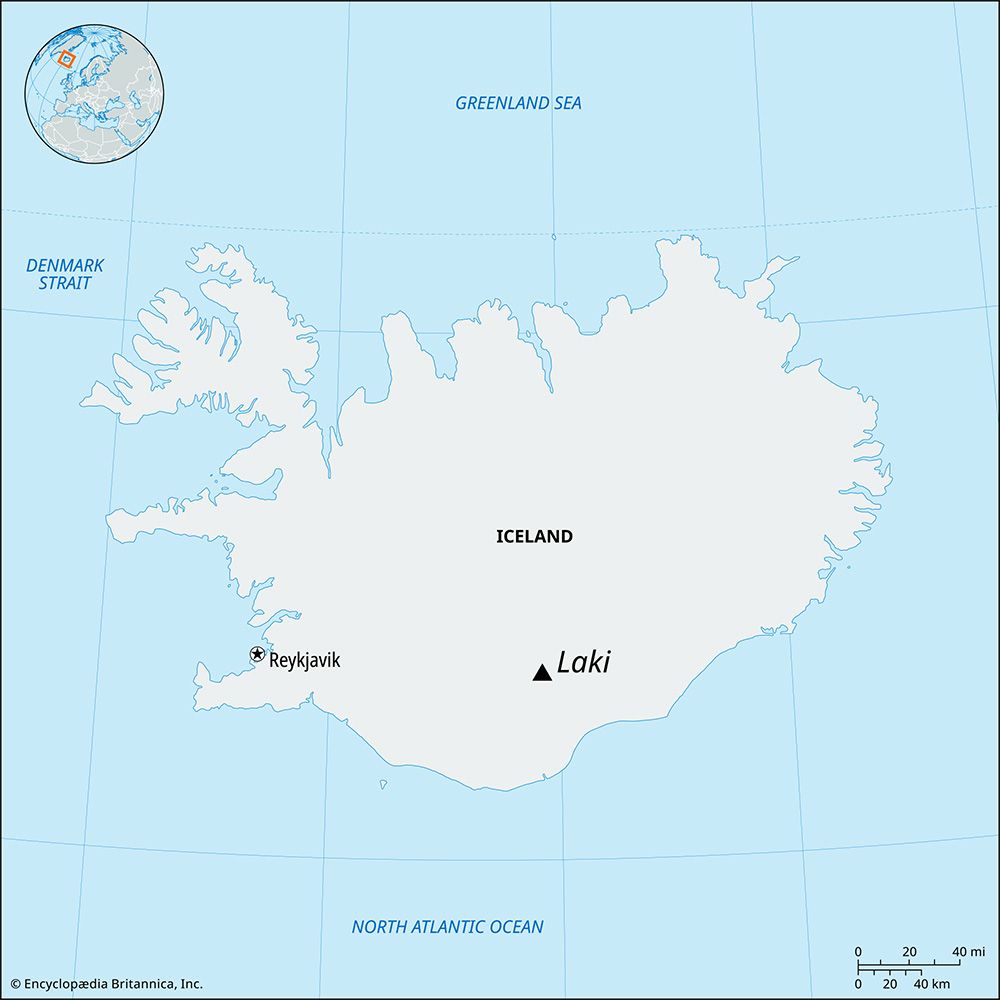
Laki is a volcanic fissure and mountain located in southern Iceland, situated near the Vatna Glacier. It is best known for the massive fissure eruption—often…
What is Laki?
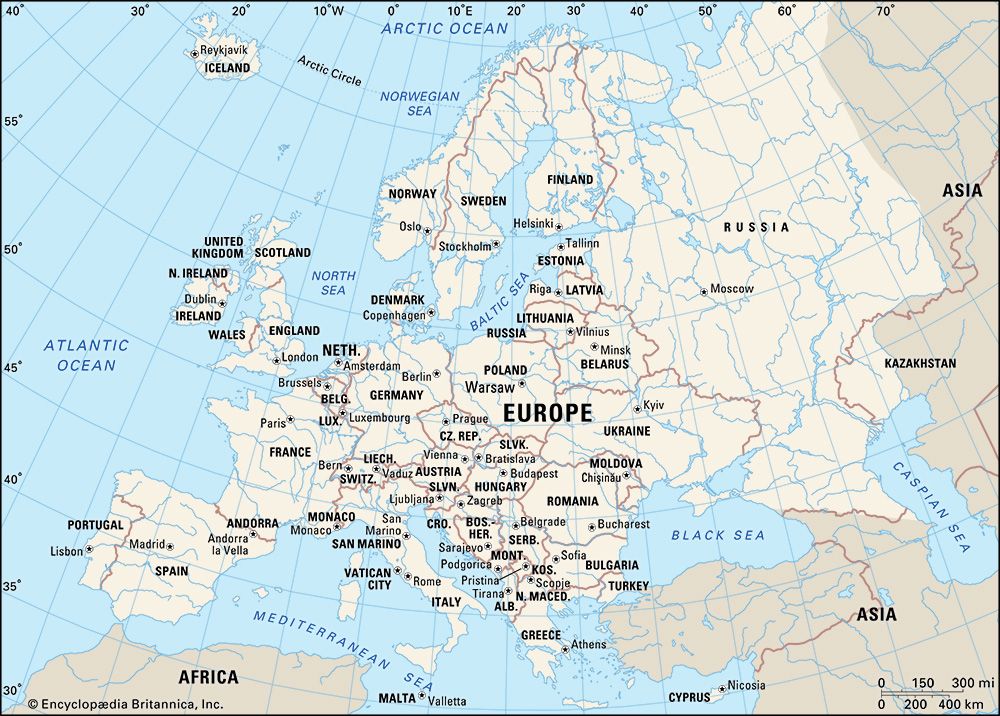
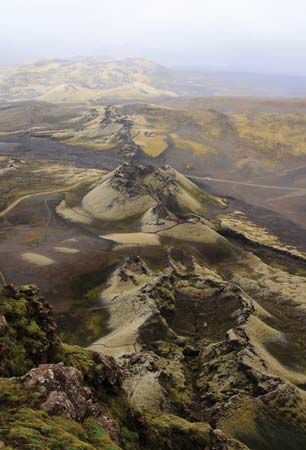
Laki is a volcanic fissure and mountain located in southern Iceland, situated near the Vatna Glacier. It is best known for the massive fissure eruption—often called the Laki Craters or Lakagígar—that occurred between June 1783 and February 1784.1
Considered the greatest lava eruption on Earth in historical times, the event extruded approximately 2.95 cubic miles of lava, covering 220 square miles. Beyond the lava flow, the eruption released enormous quantities of sulfurous gases. This created a persistent haze across much of continental Europe and as far away as North Africa and Siberia. In Iceland, the resulting pollution killed most domestic livestock and caused the “Haze Famine,” which led to the death of roughly one-fifth of the island’s population. Some scientists also link the atmospheric haze from this eruption to the severe Northern Hemisphere winter of 1783–84.12
What is a volcanic winter and how does it affect global temperatures?
A volcanic winter is a period of global surface cooling triggered by the injection of massive amounts of volcanic ash and sulfur aerosols into the stratosphere during explosive volcanic eruptions2.
How It Affects Global Temperatures
Once these sulfur compounds reach the stratosphere, they form aerosol droplets that remain suspended for several years due to the lack of atmospheric turbulence in that layer. These aerosols impact the climate in two primary ways:23
- Reflection of Sunlight: The aerosols reflect incoming solar radiation back into space, reducing the amount of energy that reaches the Earth’s surface.23
- Absorption of Terrestrial Radiation: The aerosols absorb longwave radiation emitted by the surface, which contributes to the cooling of the troposphere below.23
The resulting cooling can lead to significant climate changes, including crop failures and atypical weather patterns. For example, the 1815 eruption of Mount Tambora reduced average global temperatures by as much as 3 °C (5.4 °F), leading to the “year without a summer” in 1816. While the general effect is global cooling, changes in wind patterns can occasionally cause warmer winters in specific regions, such as Europe.243
How did the Laki eruption lead to the Haze Famine in Iceland?
The Laki eruption, which began in June 1783, triggered the devastating Haze Famine through the massive release of volcanic gases. Over the course of the eruption, which lasted until February 1784, the fissure expelled vast quantities of sulfurous gases into the atmosphere.1
These gases had a catastrophic impact on the local environment. The resulting pollution stunted the growth of crops and grasses across Iceland, effectively destroying the island’s primary food sources. Consequently, the lack of forage and crops led to the death of most of the country’s domestic livestock. This widespread agricultural failure caused a severe food shortage known as the Haze Famine, which ultimately resulted in the death of approximately one-fifth of Iceland’s population.1
What are some other famous volcanic eruptions that changed the world’s climate?
Several major volcanic eruptions throughout history have significantly altered the Earth’s climate by injecting sulfur aerosols into the stratosphere, which reflect sunlight and lead to global cooling.23
- Mount Toba (c. 71,000–74,000 years ago): This massive eruption in Sumatra is considered one of the most severe events in history. It expelled roughly 2,800 cubic km of ash, causing global temperatures to plunge by 3–5 °C (5.4–9.0 °F) for several years, potentially triggering a severe ice age.2
- Mount Tambora (1815): As the largest eruption in recorded history, this Indonesian volcano released enough sulfur to reduce average global temperatures by up to 3 °C (5.4 °F). The resulting “year without a summer” in 1816 caused widespread crop failures and starvation across North America and Europe.253
- Krakatoa (1883): This eruption in the Indonesian archipelago discharged nearly 21 cubic km of rock fragments. The resulting ash and aerosols caused global cooling and produced spectacular sunsets worldwide for the following year.24
- Mount Pinatubo (1991): A more recent example, this eruption in the Philippines cooled the global climate by approximately 0.5 °C (0.9 °F) for several years following the event.243
We could dive deeper into how atmospheric scientists use ice cores and other data to reconstruct these ancient climate events.
Sources
- Laki — Encyclopædia Britannica
- volcanic winter — Encyclopædia Britannica
- volcano - Long-term environmental effects — Encyclopædia Britannica
- Global warming - Volcanic aerosols — Encyclopædia Britannica
- Mount Tambora — Encyclopædia Britannica
Published on · 3 min read