Southern Beech
Southern beech refers to the genus Nothofagus, which comprises 35–40 species of trees and shrubs native to cooler regions of the Southern Hemisphere…
What is Southern beech?
Southern beech refers to the genus Nothofagus, which comprises 35–40 species of trees and shrubs native to cooler regions of the Southern Hemisphere, including South America, Australia, New Zealand, New Caledonia, and New Guinea-collectivity-Pacific-Ocean), and New Guinea.1
While formerly classified within the beech and oak family (Fagaceae), they are now placed in their own family, Nothofagaceae. Their unique distribution is widely considered evidence of continental drift following the breakup of the supercontinent Gondwana, as their fruits are highly susceptible to damage by seawater, making transoceanic dispersal unlikely.1
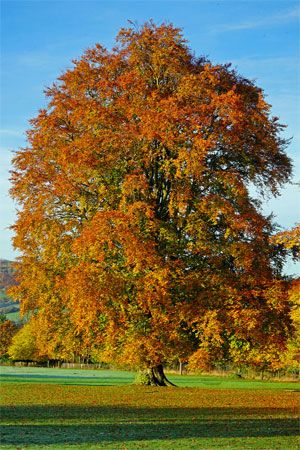
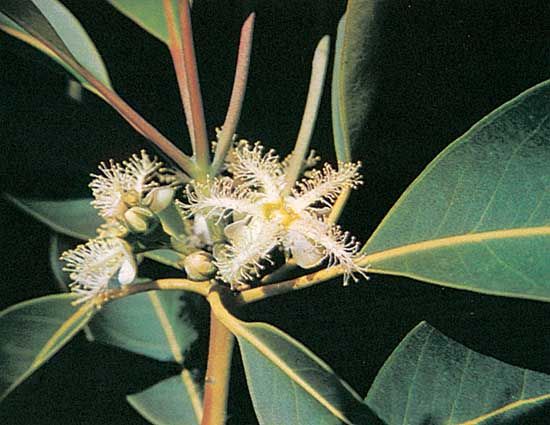
Species vary significantly: some, such as the Antarctic beech, are deciduous and valued for their hardwood, while many Australasian species are evergreen timber trees, such as the myrtle beech and red beech.1
How does the theory of continental drift explain the distribution of Southern beech?
The distribution of Southern beech (Nothofagus) is a classic piece of evidence supporting the theory of continental drift. These trees are found in widely separated regions across the Southern Hemisphere, including South America, Australia, New Zealand, New Caledonia, and New Guinea.31
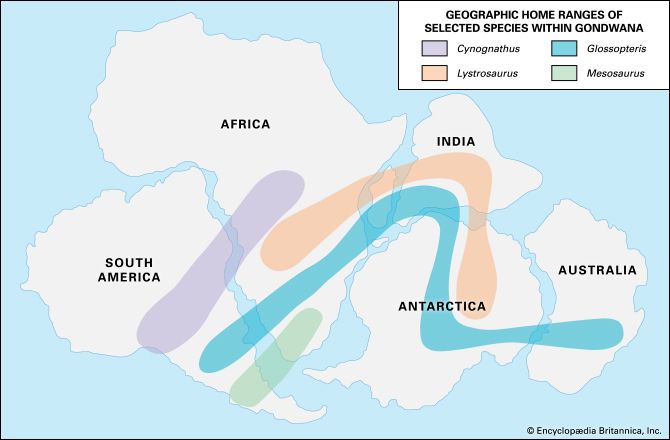
This scattered presence is explained by the breakup of the supercontinent Gondwana during the Cretaceous Period. As the landmasses drifted apart, populations of the ancestral Nothofagus were carried to their current, isolated locations.31
This explanation is favored because the fruits of the Southern beech are highly susceptible to damage by seawater. Consequently, it is biologically improbable that the plants could have crossed vast stretches of open ocean to reach these distant landmasses. The theory of continental drift provides a logical mechanism for their current distribution that does not rely on unlikely long-distance seed dispersal.31
What is the supercontinent Gondwana and why is it important to plant history?
Gondwana was an ancient supercontinent that incorporated the landmasses of present-day South America, Africa, Arabia, Madagascar, India, Australia, and Antarctica. Fully assembled by the late Precambrian, it served as the southern half of the larger supercontinent Pangea before beginning its gradual breakup during the Jurassic Period.415
Gondwana is of critical importance to plant history because it explains the distribution of flora across the Southern Hemisphere. Geologists and biologists have identified similar fossilized floras—most notably the seed fern Glossopteris—across these now-separated continents, providing key evidence for continental drift.4
Furthermore, the modern distribution of plants like the Southern beech (Nothofagus) is attributed to the fragmentation of Gondwana. Because these plants cannot easily disperse across vast oceans, their presence on isolated southern landmasses confirms that these regions were once connected, allowing ancestral species to migrate freely before the continents drifted apart.65
What are the main differences between evergreen and deciduous trees?
The primary difference between evergreen and deciduous trees lies in their leaf-retention strategies, which have evolved as adaptations to their specific environments.
Evergreen Trees
Evergreen plants retain their foliage throughout the year and into the following growing season.
- Adaptations: Their leaves are typically thicker, leathery, or needlelike, which helps them resist water loss and survive harsh conditions.7
- Environment: This strategy is advantageous in environments where photosynthesis is possible year-round or where moisture is limited, as it avoids the high energy cost of producing new leaves annually.8
- Examples: Many conifers (such as pines and firs) in cold-temperate regions and broad-leaved species in tropical rain forests.7
Deciduous Trees
Deciduous trees shed their leaves seasonally, typically in autumn or during a dry season.79
- Adaptations: These trees produce relatively delicate, thin leaves that are efficient for photosynthesis during the growing season but would be susceptible to damage from freezing temperatures or drought.8
- Environment: By shedding leaves, the tree enters a state of dormancy, conserving energy and protecting itself from the environmental stress of winter or dry periods.810
- Examples: Many broad-leaved trees like maples, oaks, and poplars.119
Sources
- Southern beech — Encyclopædia Britannica
- beech — Encyclopædia Britannica
- Fagales - Nothofagaceae — Encyclopædia Britannica
- Gondwana — Encyclopædia Britannica
- Gondwana — Merriam-Webster
- biogeographic region - The effects of geologic changes on biotic distributions — Encyclopædia Britannica
- Evergreen — Encyclopædia Britannica
- Temperate forest - Environment — Encyclopædia Britannica
- Tree - Popular classifications — Encyclopædia Britannica
- Leaf — Encyclopædia Britannica
- Deciduous forest: Top Questions — Encyclopædia Britannica
- deciduous — Merriam-Webster
Published on · 3 min read