Lemon
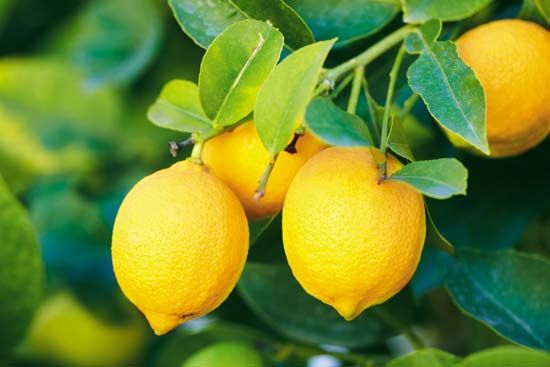
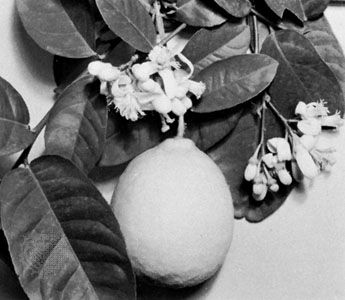
The lemon (Citrus ×limon) is an evergreen tree or spreading bush typically grown in tropical and subtropical regions.
How are lemons cultivated and what are the ideal growing conditions for lemon trees?
The lemon (Citrus ×limon) is an evergreen tree or spreading bush typically grown in tropical and subtropical regions.1
Cultivation Methods
Commercial lemon trees are primarily propagated through grafting or budding. Growers select a desired variety and attach it to the seedlings of other Citrus species—such as sweet orange, grapefruit, or sour orange—which serve as superior rootstocks due to their uniformity and resistance to crown- and foot-rot diseases. In orchards, trees are spaced 5–8 metres (16–26 feet) apart.1
Ideal Growing Conditions
Lemon trees thrive in relatively cool, equable climates, with coastal regions in Italy and California being particularly favorable. The trees bloom year-round, allowing for multiple harvests, and typically reach bearing age by their third year, with commercial production beginning around the fifth year. Careful handling is required post-harvest to prevent fungal diseases, as the fruit is often picked while green and cured in storage.1
How are lemons used in cooking and what are some popular culinary applications?
Lemons are highly valued in the culinary world for their distinctive, astringent flavor and high citric acid content, which provides a sharp, acidic profile to a wide variety of dishes.1
Popular Culinary Applications
- Pastries and Desserts: Lemon juice is a staple ingredient in many baked goods, including tarts and the classic American lemon meringue pie.1
- Savory Dishes: The fruit, whether used fresh or preserved, is frequently employed to enhance the flavor of poultry, fish, and various vegetable dishes.1
- Beverages: Lemons are essential for making lemonade—a blend of lemon, sugar, and water—and the juice is commonly added to tea for brightness.1
- Flavoring Extracts: Lemon oil, extracted from the rind, is used as a flavoring agent in various food products.1
It is important to distinguish the common lemon (Citrus ×limon) from lemon balm (Melissa officinalis), a different plant whose leaves are used to flavor salads, soups, sauces, and liqueurs.2
How do lemons compare to other citrus fruits in terms of acidity and vitamin C content?
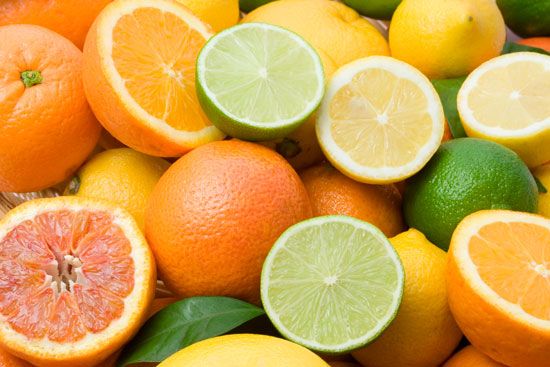
Lemons (Citrus ×limon) are well-regarded for their high acidity and vitamin C content, though they compare differently to other members of the Citrus genus.
Acidity
The pulp of a lemon is decidedly acidic, with citric acid often accounting for 5 percent or more of the juice’s weight. While lemons are famously tart, most lime varieties actually exceed lemons in both acid and sugar content. It is worth noting that some specific varieties of lime, known as sweet limes, are exceptions and contain significantly less citric acid.13
Vitamin C Content
Citrus fruits as a group are widely recognized for their vitamin C (ascorbic acid) levels, which are essential for promoting health and preventing diseases like scurvy. While specific values for lemons are not listed in the provided comparative table, oranges are noted to contain 53.2 mg of vitamin C per 100 g, and grapefruits contain 34.4 mg per 100 g. Lemons remain a rich source of this nutrient, alongside smaller amounts of B vitamins such as thiamin, riboflavin, and niacin.341
What is a lemon?
The lemon (Citrus ×limon) is an evergreen tree or spreading bush belonging to the rue family (Rutaceae). It is a distinct hybrid species known for its oval, acidic fruit, which features a yellow rind dotted with oil glands and a white, spongy mesocarp rich in pectin.1
Culinary uses for the fruit are extensive. Its juice, which contains 5 percent or more citric acid, is a staple in desserts like tarts and lemon meringue pie, as well as a flavoring for poultry, fish, and vegetable dishes. Additionally, the fruit is used to produce lemonade and is a common addition to tea. Nutritionally, lemons are a significant source of vitamin C and contain B vitamins such as thiamin, riboflavin, and niacin.1
Commercial cultivation thrives in cool, equable climates like those found in Italy and California, where trees are typically propagated by grafting.1
Sources
- Lemon — Encyclopædia Britannica
- lemon balm: Top Questions — Encyclopædia Britannica
- Lime — Encyclopædia Britannica
- Citrus — Encyclopædia Britannica
- fruit processing - Moisture content , acidity, and vitamin content — Encyclopædia Britannica
Published on · 3 min read