Lithops
Lithops is a genus of approximately 40 species of small, stemless succulent plants belonging to the carpetweed family (Aizoaceae). Native to the arid, rocky…
What is lithops?
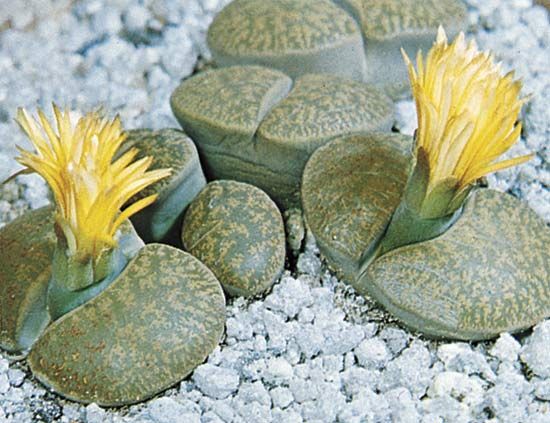
Lithops is a genus of approximately 40 species of small, stemless succulent plants belonging to the carpetweed family (Aizoaceae). Native to the arid, rocky regions of southern Africa, these plants are widely known as “living stones” due to their remarkable resemblance to pebbles and rocks, an adaptation believed to provide camouflage from herbivores.123
The plant’s body consists of a pair of thickened, fleshy leaves that are largely buried in the soil, with only their upper surfaces visible. These surfaces, which can range in color from gray and green to red and purple, feature a slit from which a single showy flower emerges. During each rainy season, a new pair of leaves replaces the old ones, which eventually shrivel away. Because of their unique appearance, they are popular globally as indoor plant curiosities1.123
How do Lithops use camouflage to survive in the wild?
Lithops utilize a specialized form of camouflage to survive in the arid, rocky regions of southern Africa. By evolving a physical structure that mimics the surrounding environment, these plants effectively hide from herbivores that might otherwise consume them.12
The primary mechanisms of this camouflage include:
- Stonelike Morphology: The plants are nearly stemless, with thickened, fleshy leaves that remain mostly buried in the soil. Only the upper surfaces are visible, which are shaped and textured to resemble local pebbles and rocks.132
- Coloration and Texture: Depending on the species, the leaf surfaces range in color from grays and greens to reds and purples. These hues, combined with textures that can appear smooth or pebbly, allow the plants to blend seamlessly into the rocky terrain where they grow.12
- Growth Habit: Because they spread sideways and remain low to the ground, a single plant can take on the appearance of a small cluster of stones, further enhancing their ability to remain inconspicuous in their natural habitat.1
What are some other examples of desert-adapted succulents?
Beyond Lithops, many other plants have evolved to thrive in arid environments by storing water in their fleshy tissues, a characteristic that defines them as succulents. These plants utilize various strategies, such as deep root systems or modified leaves, to survive prolonged moisture shortages.45
Common examples of desert-adapted succulents include:
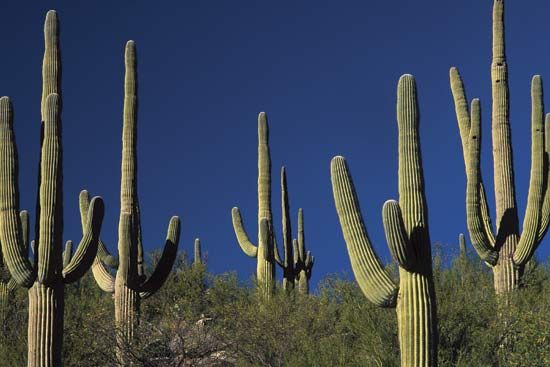
- Cacti: Native primarily to the Americas, these plants store water in their stems and often lack leaves or have very small ones to reduce water loss. Notable examples range from the tiny button cactus (Epithelantha) to the massive saguaro (Cereus giganteus).46
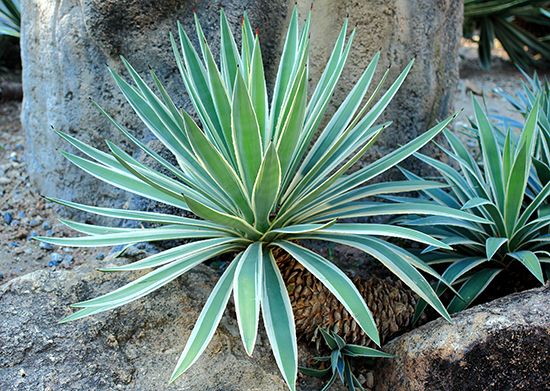
- Agaves: These plants store water primarily in their thick, fleshy leaves.4
- Euphorbia: Many species in this genus have evolved succulent, angled, or column-like stems that resemble cacti, making them a prominent feature in the deserts of southern and eastern Africa.76
- Aloe: A well-known leaf succulent often cultivated for its medicinal properties.46
- Crassula: Commonly known as the jade plant, this genus is a popular houseplant that stores water in its leaves.46
- Haworthia: Known for its rosettes of fleshy, often pearly-dotted leaves.6
Many of these plants also utilize crassulacean acid metabolism, a specialized form of photosynthesis where they keep their stomata closed during the hot day to minimize water loss, opening them only at night to take in carbon dioxide.4
How does the process of leaf replacement work in Lithops?
In the genus Lithops, the process of leaf replacement is a cyclical event tied to the plant’s growth phases. Each pair of thickened, succulent leaves forms a roundish structure that is slit across the top. During the plant’s life cycle, this existing pair of leaves is replaced by a new pair that emerges directly from the slit between the old leaves.1
As the new pair develops and pushes outward, the older leaves slowly shrivel away on either side, eventually drying up completely as they transfer their remaining resources to the emerging growth. This renewal process allows the plant to maintain its characteristic stonelike appearance while continuing to thrive in its arid, rocky environment.1
Sources
- lithops — Encyclopædia Britannica
- living stone — Merriam-Webster
- lithops — Merriam-Webster
- Succulent — Encyclopædia Britannica
- Desert - Flora — Encyclopædia Britannica
- Desert - Population and community development and structure — Encyclopædia Britannica
- houseplant - Succulents — Encyclopædia Britannica
- desert plant — Merriam-Webster
- Sahara: Top Questions — Encyclopædia Britannica
- Angiosperm - Leaf modifications — Encyclopædia Britannica
Published on · 3 min read