Spruce
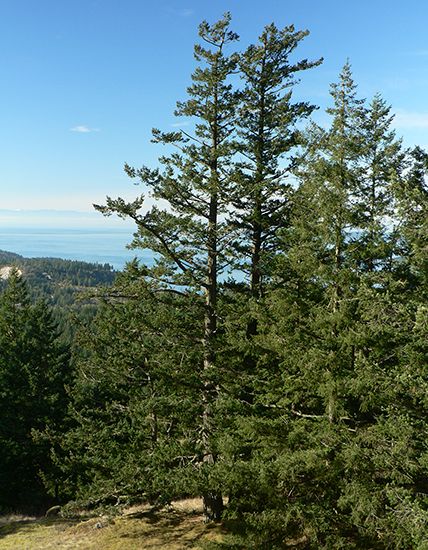
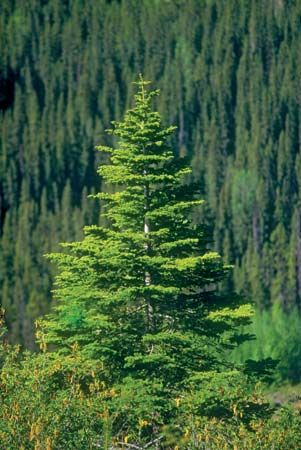
Spruce trees, belonging to the genus Picea within the Pinaceae family, are evergreen conifers native to temperate and cold regions of the Northern Hemisphere.
What are the defining characteristics of spruce trees?
Spruce trees, belonging to the genus Picea within the Pinaceae family, are evergreen conifers native to temperate and cold regions of the Northern Hemisphere.12
Key characteristics include:
- Growth Habit: They are typically pyramidal trees featuring whorled branches and thin, scaly bark.2
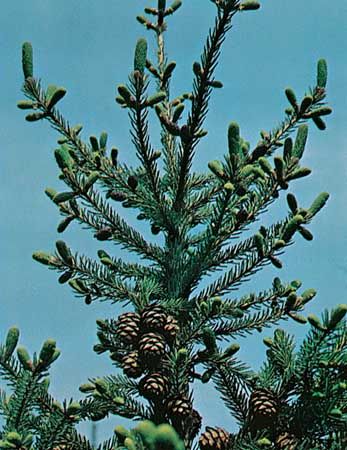
- Foliage: The trees possess linear, spirally arranged, needlelike leaves. A defining feature is that each needle is jointed near the stem on a separate woody base; when the leaf falls, this base remains as a distinct, peglike projection on the twig.2
- Cones: The cones are persistent-scaled and characteristically hang downward once fertilized.2
- Wood: They are known for their soft, light wood, which is highly valued for its resonance in musical instruments like pianos and violins, as well as for construction and paper pulp.23

What are the most common uses of spruce trees in industry and daily life?
Spruce trees are highly versatile, serving critical roles in both industrial manufacturing and daily life. Their primary applications include:
Industrial and Construction Uses
- Paper Industry: Spruce is a premier source of paper pulp. Its fibers are particularly well-suited for mechanical and sulfite pulping processes, making it a staple for producing various grades of paper.25
- Timber and Construction: As a major source of softwood, spruce timber is widely used in general construction, as well as in the manufacturing of boats, airplanes, and barrels.26
- Acoustic Applications: Due to its unique resonance properties, spruce wood is the preferred material for sounding boards in pianos and the bodies of violins.27
Daily Life and Landscaping
- Ornamental Use: Many species, such as the blue spruce, are cultivated for their aesthetic appeal in gardens, parks, and public landscapes.26
- Holiday Traditions: Several species are grown specifically for use as Christmas trees, bringing the scent and greenery of the forest into homes during winter.26
- Specialty Products: Certain species, such as the black spruce, are harvested for spruce gum.2
How do spruce trees differ from other coniferous trees like pine or fir?
While all belong to the Pinaceae family, spruce, pine, and fir trees can be distinguished by their unique physical characteristics, particularly their needles and cones.
Key Differences
Feature
Spruce (
Picea
)
Fir (
Abies
)
Pine (
Pinus
)
Needle Attachment
Needles are jointed on a woody, peglike base that remains on the twig after the leaf falls.
Needles grow directly from the branch; their bases are suction-cup-shaped and leave circular scars when they fall.
Needles are typically found in bundles.
Cone Orientation
Cones hang downward.
Cones are borne in an upright position.
Cones are generally woody and have spirally arranged scales.
Cone Persistence
Cones remain intact as they fall.
The cone axis remains on the branch after the mature cone falls apart.
Bracts often fuse to the scale and disappear as the cone matures.
These distinctions help botanists and foresters identify these trees in the wild. While they share many industrial uses, such as providing softwood for lumber and paper pulp, their specific biological structures define their unique roles in coniferous forests.91018
How can you tell a spruce tree apart from a pine or fir tree?
To distinguish a spruce tree from pine or fir trees, you can examine their needles and cones:
Needle Attachment
- Spruce: Each needle is jointed on a separate, woody, peglike base. When the needle falls, this peg remains on the twig, giving it a rough texture.1
- Fir: Needles grow directly from the branch and have suction-cup-shaped bases. When they fall, they leave behind conspicuous circular scars.11
- Pine: Needles are typically arranged in bundles rather than growing singly along the branch.2
Cone Characteristics
- Spruce: The cones are egg-shaped or cylindrical and characteristically hang downward once fertilized. They fall from the tree intact.1
- Fir: The cones are borne in an upright position. Unlike spruce, the cone axis remains on the branch after the mature cone scales fall apart.11
- Pine: Pine cones are generally woody with spirally arranged scales. In many species, the bracts become fused to the scales as the cones mature.28
Sources
- Pinaceae — Encyclopædia Britannica
- spruce — Encyclopædia Britannica
- spruce — Merriam-Webster
- fir — Encyclopædia Britannica
- paper pulp — Encyclopædia Britannica
- wood - Acoustic properties — Encyclopædia Britannica
- conifer - Economic importance — Encyclopædia Britannica
- pine — Encyclopædia Britannica
- gymnosperm - Pinophyta — Encyclopædia Britannica
- Tree - Tree height growth — Encyclopædia Britannica
- conifer - Strobili — Encyclopædia Britannica
Published on · 3 min read