Peyote
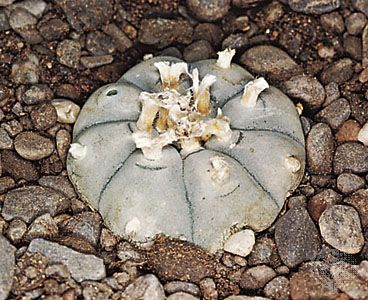
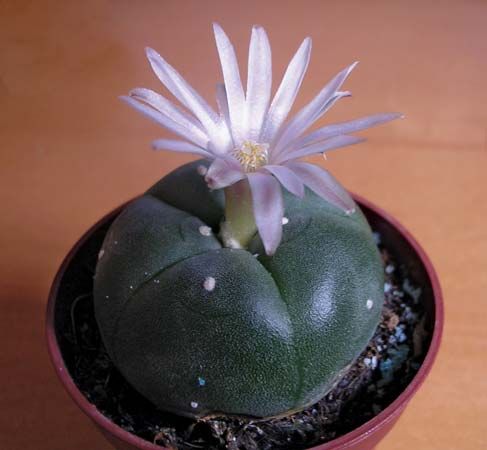
Peyote (Lophophora williamsii) is a small, spineless cactus native to the Chihuahuan Desert of southern Texas and northern Mexico. It is widely recognized…
What is Peyote?
Peyote (Lophophora williamsii) is a small, spineless cactus native to the Chihuahuan Desert of southern Texas and northern Mexico. It is widely recognized for its hallucinogenic properties, which are primarily attributed to the presence of the alkaloid mescaline.123
The plant has been used for centuries in traditional religious rituals to induce visions and for medicinal purposes. Today, it remains central to the Native American Church, where it is consumed in formal ceremonies to facilitate communion with the divine and promote spiritual guidance. While the possession and use of peyote are restricted by law in many jurisdictions, the American Indian Religious Freedom Act provides specific protections for its use in authorized religious rites within the United States.42
The effects of the cactus can vary significantly based on the individual and the setting, often including visual hallucinations, though side effects such as nausea and vomiting are common.13
What is the Native American Church?
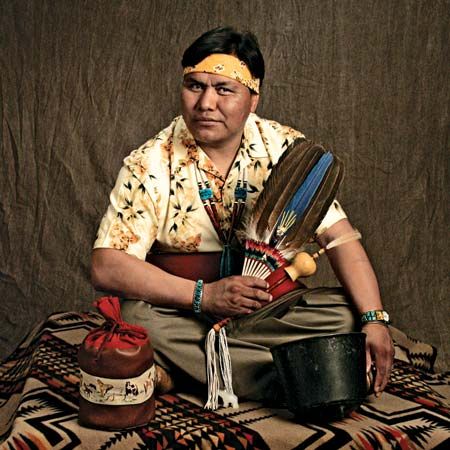
The Native American Church is the most widespread indigenous religious movement among North American Indians and a significant form of Pan-Indianism. It is an intertribal religious organization that adapts Christianity to native beliefs and practices, most notably through the sacramental use of peyote.45
Origins and Beliefs
The religion likely developed around 1885 among the Kiowa and Comanche in Oklahoma, drawing on pre-Columbian traditions of using peyote for medicinal purposes and to induce visions. The church was formally incorporated in Oklahoma in 1918.46
Peyotist doctrine generally centers on a belief in one supreme God (the Great Spirit), who interacts with humanity through various spirits. The religion is syncretistic, blending indigenous and Christian elements; for example, Jesus is often viewed as an intercessor, a guardian spirit, or an Indian culture hero. Adherents follow the “Peyote Road,” a way of life that emphasizes brotherly love, family responsibility, self-reliance, and the avoidance of alcohol.46
Ritual and Legal Status
Ceremonies typically take place in a tepee around a sacred fire and a crescent-shaped altar. The ritual involves prayer, singing, and the sacramental consumption of peyote, which allows individuals to commune with the divine.46
Despite historical persecution and government bans, members have steadfastly defended their right to worship. Their efforts, supported by the American Indian Religious Freedom Act, have secured legal protections for the use of peyote in authorized religious rites.467
How does mescaline affect the human brain?
Mescaline is a naturally occurring alkaloid that acts as a central nervous system stimulant, structurally resembling the hormones adrenaline and noradrenaline. By exciting the sympathetic nervous system and the brain, it induces a range of physiological and psychological effects.28
Physiologically, mescaline typically causes an elevation in systolic blood pressure, dilatation of the pupils, and facilitation of spinal reflexes. Psychologically, it is known for producing vivid visual hallucinations and altering the user’s sense of personal identity. Users often report experiences of depersonalization or dissociation, where the boundaries between the self and the environment seem to blur, and perceptions of time and space are significantly distorted.82
Because mescaline shares a common mode of action with other psychedelics like LSD and psilocybin, users develop cross-tolerance to these substances. While the drug is not considered physically toxic, its impact on the brain can lead to unpredictable mood shifts, ranging from ecstasy to intense terror, and in some cases, it may trigger psychotic reactions.8
What are other types of hallucinogenic plants?
Beyond the peyote cactus, several other plants are known for their hallucinogenic properties, often used historically in religious or ceremonial contexts. Notable examples include:
- Ayahuasca: A potent drink prepared by boiling the stems of the tropical liana Banisteriopsis caapi with leaves from plants such as Psychotria viridis. The vine provides alkaloids that allow the psychoactive substance DMT to remain active in the digestive system.10
- Psilocybin Mushrooms: Certain species, such as Psilocybe mexicana, contain the active compounds psilocybin and psilocin, which produce effects similar to LSD.1112
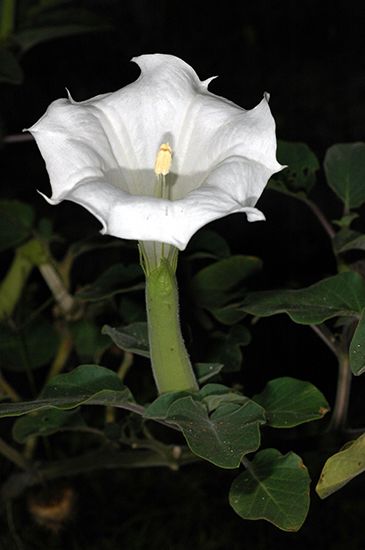
- Datura: A genus of poisonous plants in the nightshade family, including jimsonweed (Datura stramonium). These plants contain potent alkaloids like atropine and scopolamine and have been used in various folk rites, though they can be fatal if ingested.1314
- Morning Glory: The seeds of certain species, such as Ipomoea tricolor, contain amides of lysergic acid, which are chemically related to LSD and have been used ceremonially by indigenous peoples in Mexico.1215
- Fly Agaric: The mushroom Amanita muscaria is known for its hallucinogenic properties, though it is also highly toxic.1112
Sources
- 9 Mind-Altering Plants - Peyote ( Lophophora williamsii ) — Encyclopædia Britannica
- mescaline — Encyclopædia Britannica
- Peyote — Encyclopædia Britannica
- Native American Church — Encyclopædia Britannica
- Native American church — Merriam-Webster
- drug cult - History of drug use in religion — Encyclopædia Britannica
- Native American - Religious freedom — Encyclopædia Britannica
- mescaline — Merriam-Webster
- drug use - Physiological and psychological effects of hallucinogens — Encyclopædia Britannica
- ayahuasca — Encyclopædia Britannica
- drug cult - Hemp , mushrooms, cacti, and their derivatives — Encyclopædia Britannica
- datura — Encyclopædia Britannica
- datura — Merriam-Webster
- Investigating Therapeutic Uses for Hallucinogens — Encyclopædia Britannica
- drug use - Types of hallucinogens — Encyclopædia Britannica
- drug use - History of hallucinogens — Encyclopædia Britannica
- morning glory — Encyclopædia Britannica
Published on · 4 min read