Pereskia
Pereskia is a genus comprising 17 species of trees, shrubs, and vines belonging to the cactus family. Native to the West Indies and southeastern South…
What is Pereskia?
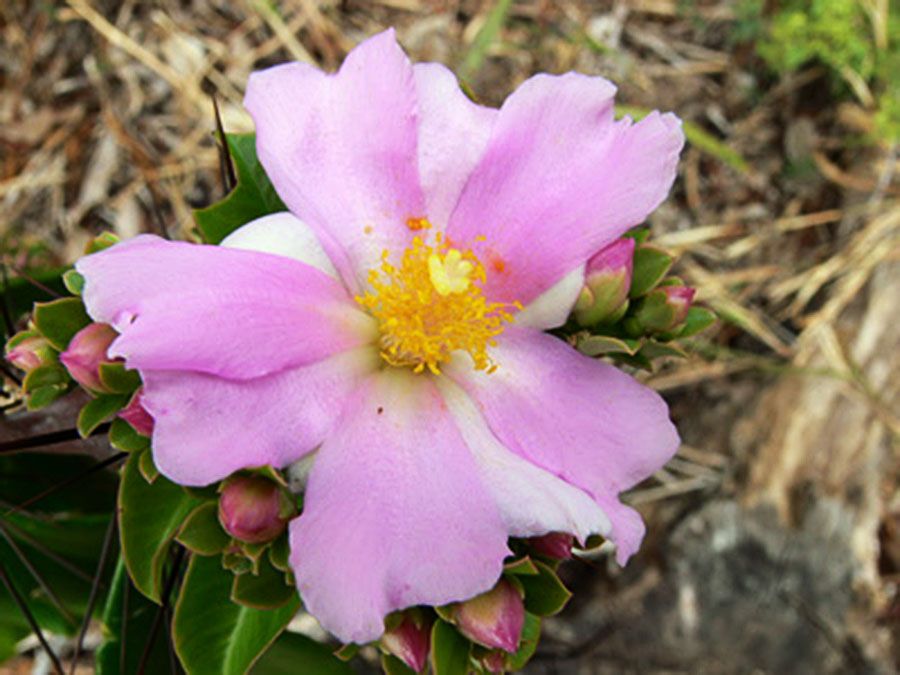
Pereskia is a genus comprising 17 species of trees, shrubs, and vines belonging to the cactus family. Native to the West Indies and southeastern South America, these plants are unique among cacti for possessing true leaves and thin, non-succulent stems.1
The plants typically feature showy, roselike flowers and are often armed with spines emerging from areoles. While some species are grown as ornamentals, others have practical uses:
- Leafy cactus (P. aculeata): Also known as Barbados gooseberry, it is cultivated for hedges and its edible orange fruit.1
- Medicinal use: Species such as P. bleo and P. grandifolia have been utilized in traditional medicine and are being researched for potential anticancer properties.1
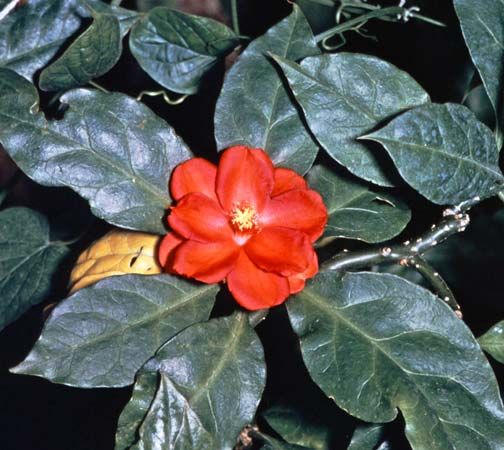
Why do most other cacti lack true leaves?
Most cacti lack true leaves primarily as an adaptation to survive in arid environments where water conservation is critical. Because leaves are the primary sites of transpiration—the process by which plants lose water to the atmosphere—having large or numerous leaves would lead to excessive water loss in hot, dry climates.234
By eliminating or greatly reducing leaves, cacti minimize the surface area available for evaporation. In most species, the stem has evolved to take over the plant’s photosynthetic functions, allowing the plant to manufacture and store food while conserving moisture. Many cacti also utilize crassulacean acid metabolism (CAM), a specialized photosynthetic pathway that allows them to keep their stomata closed during the heat of the day and open them only at night to take in carbon dioxide, further reducing water loss.235
In the rare instances where leaves are present, such as in the tropical genus Pereskia, they are typically functional and conventional-looking, reflecting a different set of environmental pressures compared to their desert-dwelling relatives.2
What are the defining characteristics of the Cactaceae family?
The Cactaceae family, comprising nearly 2,000 species, is defined by several unique morphological and physiological traits adapted for survival in arid environments.
Key Defining Characteristics
- Areoles: The most reliable way to distinguish cacti from all other succulent plants is the presence of areoles. These are small, cushionlike structures—modified branches—from which spines, flowers, and new branches grow6.6
- Stem Specialization: In most species, the stem has replaced the leaves as the primary site for photosynthesis and water storage. These stems are often thick and contain mucilaginous substances to prevent moisture loss.36
- Leaf Reduction: With the exception of primitive genera like Pereskia, cacti lack functional leaves. When present, leaves are typically vestigial, small, or modified into spines to minimize surface area and transpiration.36
- Floral Structure: Cacti typically produce large, solitary, and often colorful flowers. They feature a floral tube that invests the ovary, which is generally inferior.36
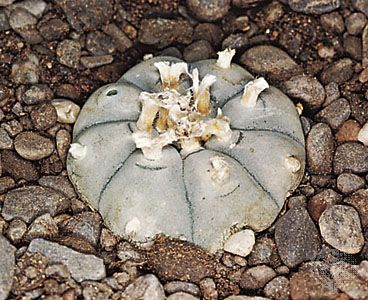
- Growth Forms: The family exhibits immense diversity, ranging from small, globose forms like peyote to massive, columnar saguaro and various epiphytic species that grow on other plants.36
How do succulent plants survive in dry environments?
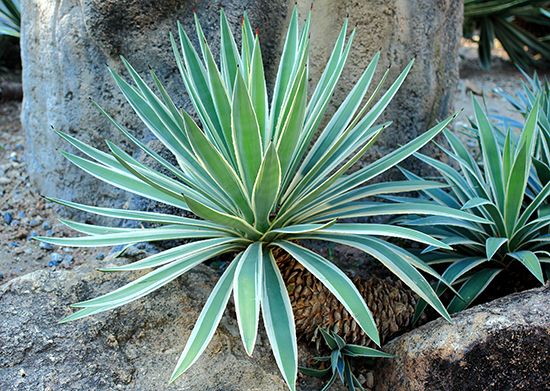
Succulent plants survive in arid environments through specialized adaptations that allow them to store water and minimize moisture loss. These plants, which include cacti and agaves, possess thick, fleshy tissues—either in their stems or leaves—that serve as internal reservoirs.27
To prevent transpiration, many succulents utilize a specialized photosynthetic pathway known as crassulacean acid metabolism (CAM). Unlike most plants, CAM species keep their stomata closed during the hot, dry daylight hours to prevent water loss. They open these pores at night, when the air is cooler and more humid, to take in carbon dioxide. This temporal separation allows them to fix carbon while significantly reducing water consumption.28
Additional xerophytic adaptations include:
Sources
- Pereskia — Encyclopædia Britannica
- succulent — Encyclopædia Britannica
- cactus — Encyclopædia Britannica
- Biosphere - Humidity — Encyclopædia Britannica
- transpiration — Encyclopædia Britannica
- Caryophyllales - Cactaceae — Encyclopædia Britannica
- photosynthesis - Carbon fixation via crassulacean acid metabolism (CAM) — Encyclopædia Britannica
- xerophyte — Encyclopædia Britannica
Published on · 3 min read