Louse Fly
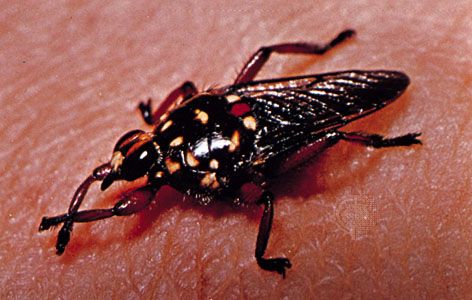
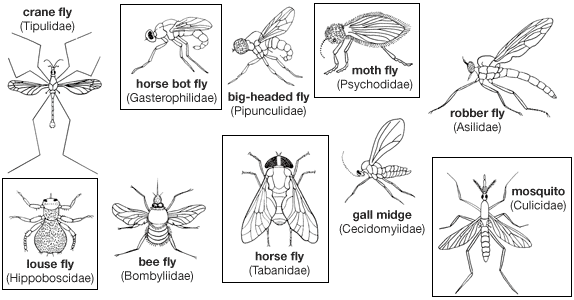
Louse flies, which belong to the family Hippoboscidae, possess a highly specialized reproductive strategy that differs significantly from most other flies.…
How do louse flies reproduce and what is unique about their life cycle?
Louse flies, which belong to the family Hippoboscidae, possess a highly specialized reproductive strategy that differs significantly from most other flies. Unlike insects that lay numerous eggs in the environment, louse flies are characterized by a form of development known as adenotrophic viviparity.12
The unique aspects of their life cycle include:
- Internal Development: A single egg is produced at a time and hatched internally within the mother. The larva is retained and nourished within a specialized womb-like organ until it reaches maturity.12
- No Independent Larval Stage: Because the larva is nourished by the mother until it is fully developed, there is no free-living larval stage. Once the mature larva is expelled, it immediately forms a pupa.1
- Adult-Focused Life: Since the pupal stage is immobile, the active life of the louse fly is spent entirely as an adult, feeding on the blood of mammals or birds.1
While some species are winged and can migrate to new hosts, others are wingless and remain on the host throughout their lives.13
What natural predators or control methods exist for louse flies?
While the provided search results discuss control methods for lice, they do not identify specific natural predators for louse flies (family Hippoboscidae). Regarding control methods, the primary approach for managing louse fly infestations—particularly for the sheep ked (Melophagus ovinus)—involves the use of insecticides.
It is important to note that while predatory mites are mentioned as a control method for sucking lice, these are distinct from louse flies. Louse flies are specialized parasites that spend their lives in close association with their hosts, often making them difficult to manage without targeted chemical interventions.
How do louse flies locate and attach to their host animals?
Louse flies (family Hippoboscidae) are specialized blood-feeding insects that have evolved to live in close association with their hosts, which include various mammals and birds.
While specific host-seeking behaviors for louse flies are less documented than those of other blood-feeding insects, they generally rely on sensory mechanisms common to similar parasites. Blood-feeding insects typically utilize chemoreception to detect host odors, such as carbon dioxide or specific skin chemicals, and thermoreception to sense the warmth of a host’s body. These sensory inputs guide the flies toward potential hosts.
Once a louse fly reaches its host, it uses specialized physical adaptations to attach and feed:
- Morphology: Many louse flies are flat in shape and leathery in appearance, allowing them to move easily through hair or feathers to remain close to the host’s skin.
- Attachment: They possess piercing mouthparts designed to suck blood. In some species, such as those found on deer, individuals may even attach to one another in chains to access the host.
- Mobility: While some species are winged and actively migrate to new hosts, others are wingless and remain permanently on the host, having adapted to a life of constant attachment.
What are the main host animals that louse flies parasitize?
Louse flies (family Hippoboscidae) are specialized parasites that feed on the blood of various warm-blooded animals, primarily mammals and birds.110
The specific host animals for these parasites include:
- Sheep: The sheep ked (Melophagus ovinus) is a well-known wingless species that lives exclusively on sheep, where it can cause significant economic damage by staining wool.10
- Deer: Certain species, such as Lipoptena depressa and Neolipoptena ferrisi, are commonly found on deer.10
- Birds: Many winged species of louse flies are parasitic on various bird species.110
- Other Mammals: Beyond sheep and deer, various other mammals serve as hosts for different species within the family.1
These insects are highly adapted to their hosts, often spending their entire adult lives in close association with them. In some cases, they are so specialized that they cannot survive for more than a few days if separated from their host.110
Sources
- Diptera - General features — Encyclopædia Britannica
- louse - Life cycle — Encyclopædia Britannica
- louse fly — Encyclopædia Britannica
- adenotrophic — Merriam-Webster
- louse - Ecology — Encyclopædia Britannica
- sucking louse — Encyclopædia Britannica
- louse - Form and function — Encyclopædia Britannica
- Chemoreception - Blood-feeding insects — Encyclopædia Britannica
- Thermoreception - Thermoreception in invertebrates — Encyclopædia Britannica
- insect - Medical significance — Encyclopædia Britannica
Published on · 3 min read