Lungless Salamander
Lungless salamanders (family Plethodontidae) rely heavily on chemical communication to interact with their environment and each other. Because they lack…
How do lungless salamanders communicate and interact with each other?
Lungless salamanders (family Plethodontidae) rely heavily on chemical communication to interact with their environment and each other. Because they lack lungs, they utilize a specialized sensory system involving nasolabial grooves—narrow channels extending from the upper lip to the nostrils—to facilitate this process.12
To gather information, these salamanders perform a behavior called “nose tapping,” where they touch their snouts to a surface. Through capillary action, odor particles are drawn up these grooves and into the vomeronasal organ (Jacobson’s organ) of the nose. This system is essential for several social and survival behaviors, including:12
- Courtship: Chemical cues are vital for identifying mates and navigating reproductive interactions.12
- Social Behavior: They use odors to communicate with other members of their species.1
- Survival: These salamanders rely on chemical alarm cues to detect danger and use scent to locate food sources.1
What adaptations do lungless salamanders have for their unique respiratory system?
Lungless salamanders (family Plethodontidae) have evolved specialized adaptations to survive without lungs, relying entirely on cutaneous respiration and other physiological modifications to meet their oxygen needs.15
Key Adaptations for Respiration
- Cutaneous Respiration: Because they lack lungs, these salamanders conduct all gas exchange through their skin and the mucous membranes of the mouth and throat. To facilitate this, their skin must remain moist at all times to effectively absorb oxygen.16
- Vascularization: Their skin is well supplied with blood vessels, which is essential for the efficient diffusion of gases. This reliance on the skin as a respiratory surface is a common feature among many amphibians, but in lungless salamanders, it is the exclusive method of gas exchange.675
- Circulatory Modifications: The circulatory system of lungless salamanders reflects their unique respiratory needs. Unlike many other amphibians, they lack an atrial septum in the heart. This structural difference is thought to be a secondary adaptation that provides flexibility in managing their gas-exchange mechanisms.6
- Environmental Management: To maintain the necessary moisture for respiration, these salamanders occupy various habitats, ranging from fully aquatic to terrestrial and arboreal environments.1
How many species of lungless salamanders exist and what are some examples?
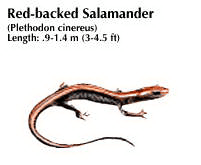
There are more than 470 known species of lungless salamanders (family Plethodontidae), which constitutes the largest group of salamanders in the world.18
These amphibians are primarily found in the Americas, ranging from southern Canada to the Amazon basin, with a few species occurring in parts of Europe and the Korean peninsula. They are divided into two subfamilies: the Desmognathinae and the Plethodontinae.18
Examples of lungless salamanders include:
- Mexican pygmy salamander (Thorius): A very small species, with adults measuring approximately 25 mm (1 inch) in head and body length.1
- Bell’s false brook salamander (Pseudoeurycea bellii): A much larger species that can reach up to 36 cm (14 inches) in length.1
- Red Hills salamander (Phaeognathus hubrichti): A terrestrial desmognathine species found in North America.1
- Black-bellied salamander (Desmognathus quadramaculatus): An aquatic desmognathine species.1
- Web-toed salamanders (Hydromantes): A group of plethodontines that prefer nonforested areas and often inhabit rock crevices.1
Where are lungless salamanders found and what habitats do they prefer?
Lungless salamanders (family Plethodontidae) are found predominantly in the Americas, ranging from southern Canada to the Amazon basin in Brazil. While the vast majority of species inhabit the Americas, a few populations occur in Sardinia, northern Italy, and the Korean peninsula.1
Their habitat preferences are remarkably diverse, spanning from fully aquatic to entirely terrestrial and arboreal (tree-dwelling) environments:1
- Terrestrial and Forested Areas: Most plethodontids are forest-dwelling, living on the floors of woodlands. Many species are found under surface objects, in rotting logs, or in underground burrows.15
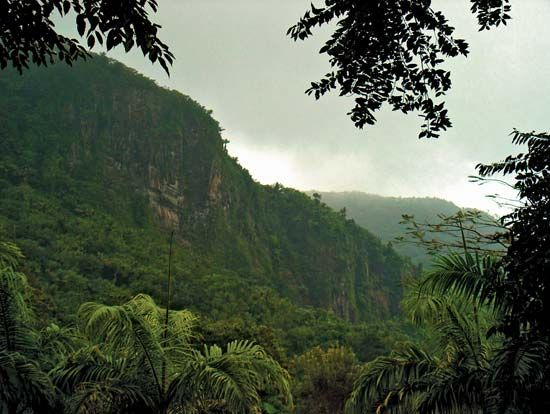
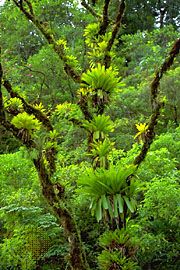
- Mountainous and Tropical Regions: In the New World tropics, many species are found in middle-elevation cloud forests. Some of these are arboreal, living within epiphytes or bromeliad plants that hold water, providing a necessary moist environment.15
- Nonforested and Rocky Environments: Some species, such as the web-toed salamanders (Hydromantes), prefer nonforested areas and inhabit rock crevices in desertlike environments.1
- Aquatic Habitats: While many are terrestrial, some species remain fully aquatic, inhabiting streams, springs, and other water bodies.15
Because they rely on cutaneous respiration, these salamanders must occupy environments that allow their skin to remain moist at all times to facilitate oxygen absorption.111
Sources
- lungless salamander — Encyclopædia Britannica
- Chemoreception - Terrestrial vertebrates — Encyclopædia Britannica
- salamander — Encyclopædia Britannica
- Chemoreception - Predator chemical cues and prey escape — Encyclopædia Britannica
- Respiratory system - Amphibians — Encyclopædia Britannica
- Circulatory system - Amphibians — Encyclopædia Britannica
- Respiratory system - The gills — Encyclopædia Britannica
- Plethodontidae — Merriam-Webster
- Caudata - Annotated classification — Encyclopædia Britannica
- ostariophysan - Annotated classification — Encyclopædia Britannica
- Caudata - Life cycle and reproduction — Encyclopædia Britannica
Published on · 3 min read