Newt
It is a common misconception that newts and salamanders are entirely distinct groups; in fact, all newts are salamanders, as they belong to the family…
What are the main differences between newts and salamanders?
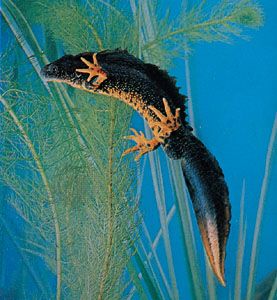
It is a common misconception that newts and salamanders are entirely distinct groups; in fact, all newts are salamanders, as they belong to the family Salamandridae.12
Within this family, the term “newt” is used informally to describe specific partially terrestrial species, while the remaining members are often referred to as “true salamanders.” Because there is little scientific distinction between these groups, they are often studied together.1
Key characteristics and distinctions include:
- Classification: All salamanders belong to the order Caudata. The family Salamandridae contains both newts and true salamanders, while other families include lungless salamanders, hellbenders, and mud puppies.12
- Physical Traits: Newts generally possess rougher skin compared to the often rugose (wrinkled) or smooth skin of other salamanders. While many salamanders are small, the order also includes giants like the Chinese giant salamander, which can reach lengths of two meters.12
- Toxicity: All members of the family Salamandridae are toxic and possess glands that secrete poison, often signaled by bright warning coloration.1
How do newts undergo metamorphosis throughout their life cycle?
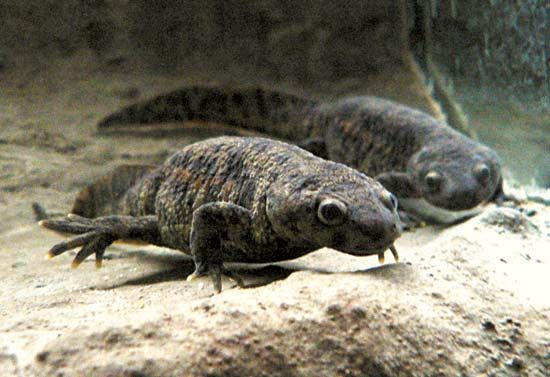
Newts, which belong to the family Salamandridae, undergo a complex life cycle that typically begins with an aquatic larval stage before transitioning into an adult form through metamorphosis.34
The Metamorphosis Process
Metamorphosis in salamanders is a hormonal process mediated by the thyroid and pituitary glands. While less dramatic than the transformation seen in frogs, it involves significant physiological and structural reorganization:31
- Respiration: Larval gills are resorbed, and gill slits close as lungs develop to support terrestrial or adult breathing.31
- Physical Changes: The skin thickens and develops dermal glands, the caudal fin is resorbed, and structures such as eyelids, a tongue pad, and a maxillary bone are formed.31
- Skeletal Reorganization: The skull and gill skeleton undergo modifications to support new feeding and respiratory mechanisms, including the ability to project and retract the tongue.31
Variations in Life History
The path to adulthood varies significantly among newt species:4
- Aquatic Lifecycle: In some genera, such as Cynops and Pleurodeles, larvae metamorphose in the water, and the individuals remain aquatic throughout their lives.4
- Terrestrial Transition: In others, like Triturus and Taricha, larvae metamorphose into terrestrial juveniles. These individuals remain on land for a period before adults return to the water for breeding.4
- The Eft Stage: Eastern North American newts (Notophthalmus) undergo a distinct terrestrial juvenile phase known as the eft stage. These efts spend two to four years on land before maturing sexually and returning to an aquatic habitat as adults.45
What are the key characteristics that distinguish newts from other amphibians?
Newts and salamanders (order Caudata) are distinguished from other amphibians primarily by their body structure and locomotion. Unlike frogs and toads, which are tailless and possess powerful hind limbs for leaping, newts and salamanders retain a long tail and have two pairs of limbs of roughly equal size. While some specialized aquatic species may lack limbs, the presence of a tail remains a defining characteristic that separates them from the tailless anurans and the limbless, burrowing caecilians.18
Key characteristics of newts and salamanders include:
- Generalized Morphology: They possess less-specialized body forms compared to other amphibians, typically moving with a standard diagonal-sequence gait.98
- Feeding Mechanism: Many species utilize a hyoid apparatus to project their tongues to capture prey, a process that does not require the specialized jaw adaptations seen in other groups.9
- Toxicity: All members of the family Salamandridae (which includes newts) are toxic, often possessing poisonous skin or glands that secrete toxins when threatened, frequently signaled by bright warning coloration.4
- Life History: While many undergo an aquatic larval stage before metamorphosing into adults, they exhibit diverse reproductive strategies, including live-bearing in some species.48
What role do newts play in their ecosystems?
Newts play a significant role in their ecosystems as both predators and prey, functioning as vital links in aquatic and terrestrial food webs. As members of the family Salamandridae, they occupy diverse niches across the Northern Hemisphere, often transitioning between water and land throughout their complex life cycles.1
Their ecological contributions include:
- Predatory Control: As larvae and adults, newts consume a variety of small invertebrates, helping to regulate populations of insects and other organisms within their habitats.1
- Trophic Interaction: Because all members of the family are toxic, they possess specialized defense mechanisms—such as poisonous skin secretions or glands—that deter many potential predators. This toxicity is often advertised through bright warning coloration, which serves as a signal to the surrounding ecosystem.1
- Habitat Connectivity: By moving between aquatic environments for breeding and terrestrial environments during juvenile or adult stages, newts facilitate the transfer of nutrients between these two distinct ecosystems.1
While the provided information highlights their biological defenses and life history, their specific roles in nutrient cycling or as indicators of environmental health are also critical aspects of their presence in nature.1
Sources
- newt — Encyclopædia Britannica
- salamander — Encyclopædia Britannica
- Caudata - Life cycle and reproduction — Encyclopædia Britannica
- amphibian — Encyclopædia Britannica
- eft — Merriam-Webster
- Animal development - Metamorphosis — Encyclopædia Britannica
- amphibian - Metamorphosis — Encyclopædia Britannica
- amphibian - Salamanders — Encyclopædia Britannica
- amphibian - Size range and diversity of structure — Encyclopædia Britannica
- Reproductive behaviour - Amphibians — Encyclopædia Britannica
Published on · 4 min read