Muhavura
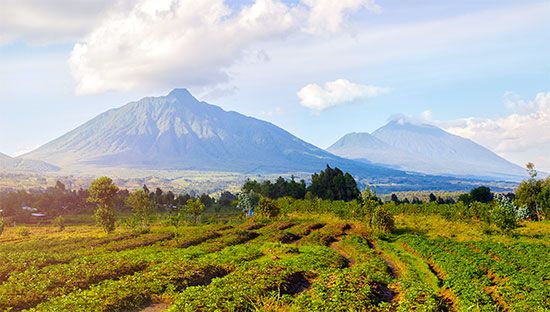
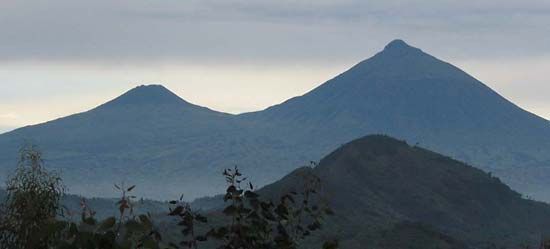
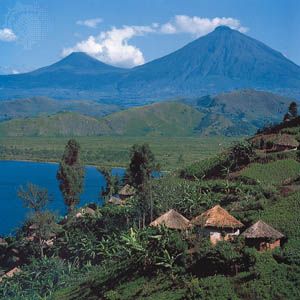
Muhavura is an extinct volcano located at the eastern end of the Virunga Mountains in east-central Africa. Situated on the border between Uganda and Rwanda…
What is Muhavura?
Muhavura is an extinct volcano located at the eastern end of the Virunga Mountains in east-central Africa. Situated on the border between Uganda and Rwanda, northeast of Lake Kivu, the peak rises to an elevation of over 13,500 feet and features a crater lake at its summit.1
The volcano is a significant part of the Virunga National Park, a protected area renowned as a habitat for the mountain gorilla1.
What are the Virunga Mountains?
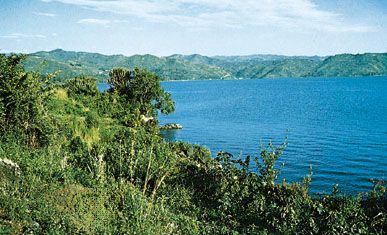
The Virunga Mountains are a volcanic range in east-central Africa, extending approximately 50 miles along the borders of the Democratic Republic of the Congo, Rwanda, and Uganda, situated north of Lake Kivu.2
The range consists of eight major volcanic peaks, with Karisimbi being the highest at 14,787 feet. While the central and eastern volcanoes are extinct, the western end of the chain features the active volcanoes Nyiragongo and Nyamulagira, which have experienced significant eruptions in recent history.2
The region is ecologically diverse, protected by several parks including Virunga National Park, and serves as a vital habitat for wildlife such as the mountain gorilla and the golden monkey. The mountains rise from densely populated plateaus, and their conservation is essential for preserving unique alpine vegetation and endangered species.23
Why are mountain gorillas endangered?
Mountain gorillas (Gorilla beringei beringei) are classified as a critically endangered subspecies due to several interconnected threats primarily driven by human activity.4
- Habitat Loss: Their population continues to decline as their forest homes are cleared for farming, grazing, and logging. Additionally, the influx of refugees into the region has led to significant habitat destruction.45
- Poaching: Illegal hunting remains a severe existential threat. Gorillas are often targeted by the bushmeat trade, which has expanded to support logging crews in the region.42
- Human Conflict and Settlement: The growth of permanent human settlements within and around protected areas has disrupted natural migration patterns and increased pressure on the land. Security issues, including regional conflicts, have further complicated conservation efforts and endangered both the wildlife and the rangers tasked with their protection.5
While these factors have pushed the mountain gorilla population to fewer than 1,000 individuals, ecotourism has emerged as a vital tool, providing both the funding and the incentive necessary to support ongoing conservation initiatives.4
How do crater lakes form in volcanoes?
Crater lakes form when water accumulates in depressions created by various volcanic processes. These basins can originate in several ways:
- Caldera Collapse: Large, bowl-shaped depressions called calderas often form when a volcanic cone collapses after its underlying magma reservoir is rapidly emptied by voluminous eruptions. Once the volcanic activity ceases, these immense holes can fill with water, as seen at Crater Lake in Oregon.67
- Explosion Craters: Some craters are created by powerful volcanic explosions that excavate material. When these occur in nonvolcanic material, they are often referred to as maars.6
- Lava Flow and Damming: Basins can also arise from the collapse of the interior of large lava flows. Additionally, volcanic activity can create lakes through damming, where lava flows interrupt and block existing drainage patterns.6
While some lakes occupy relatively unmodified volcanic cones, these are rare. Often, secondary volcanic cones may develop within a caldera after the initial collapse, further shaping the basin’s landscape.67
Sources
- Muhavura — Encyclopædia Britannica
- Virunga Mountains — Encyclopædia Britannica
- Virunga National Park — Encyclopædia Britannica
- gorilla — Encyclopædia Britannica
- poaching — Encyclopædia Britannica
- lake - Basins formed by tectonism , volcanism, and landslides — Encyclopædia Britannica
- caldera — Encyclopædia Britannica
- Crater — Encyclopædia Britannica
- volcano - Other volcanic structures and features — Encyclopædia Britannica
Published on · 3 min read