Markhor
The markhor (Capra falconeri) is a large wild goat native to the mountainous regions of Central and South Asia. Historically, its range extended from Kashmir…
Where is the markhor’s natural habitat, and what countries can it be found in?
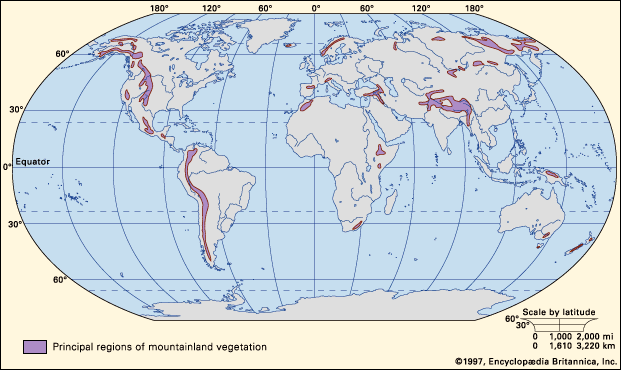
The markhor (Capra falconeri) is a large wild goat native to the mountainous regions of Central and South Asia. Historically, its range extended from Kashmir and Turkistan to Afghanistan, though its population and distribution have been significantly reduced) to Afghanistan, though its population and distribution have been significantly reduced.12
The species is currently found in the following countries, depending on the subspecies:
- Flare-horned markhor: Afghanistan, Pakistan, and India.1
- Straight-horned markhor: Afghanistan and Pakistan.1
- Bukharan markhor: Afghanistan, Tajikistan, Uzbekistan, and Turkmenistan.1
All subspecies are classified as endangered or critically endangered due to habitat loss, overhunting, and competition with livestockhunting, and competition with livestock. Protecting these animals is a vital conservation priority to ensure the survival of this unique species in its rugged mountain environment.1
What are the main threats to markhor populations in the wild?
The markhor (Capra falconeri) faces severe threats that have led to its status as an endangered to critically endangered species. The primary factors contributing to the decline of these wild goats include:
- Habitat Loss: The degradation and fragmentation of their mountainous environments have significantly restricted their natural range.1
- Overhunting: Markhors are frequently hunted for both their meat and their distinctive, long corkscrew-shaped horns, which are highly sought after as trophies.1
- Competition with Livestock: The expansion of domestic livestock grazing into markhor habitats creates direct competition for limited food resources, further stressing already vulnerable populations.1
It is essential to recognize that the survival of the markhor depends on addressing these human-driven pressures through effective conservation and habitat management.
What is the conservation status of the markhor, and how has it changed over time?
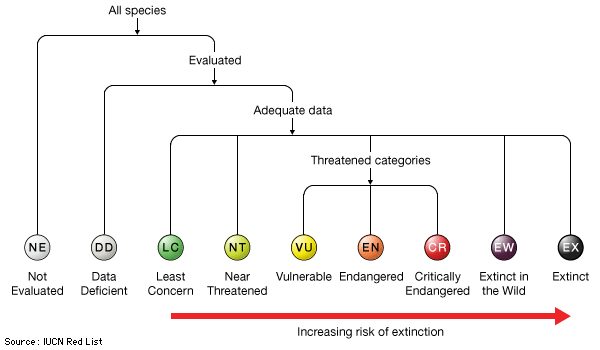
The markhor (Capra falconeri) is currently classified as endangered to critically endangered across its various subspecies.1
Historically, the markhor was found throughout the mountainous regions stretching from Kashmir and Turkistan to Afghanistan. Over time, however, the species has experienced a significant decline in both its total population and its geographical range. This reduction is primarily attributed to human-driven factors, including the loss of natural habitat, overhunting for meat and trophies, and increased competition for resources from domestic livestock.1
Because these animals are vital components of their mountain ecosystems, it is a moral imperative to support conservation efforts that mitigate these threats and allow the species to recover.
What are the physical differences between the markhor subspecies?
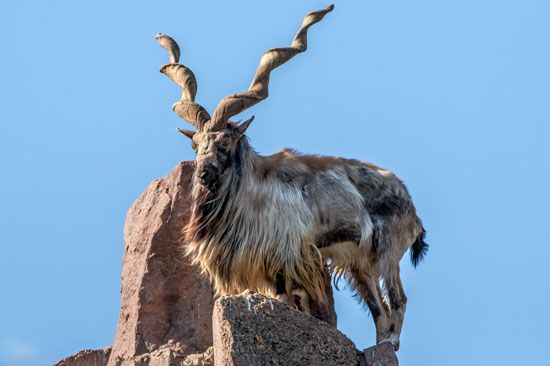
The primary physical differences between the markhor (Capra falconeri) subspecies are defined by the shape and orientation of their distinctive, corkscrew-shaped horns. While all markhor share a similar body size—standing approximately 95–102 cm (37–40 inches) at the shoulder—they are categorized into three main groups based on these horn variations:1
- Flare-horned markhor (C. f. falconeri): Distinguished by horns that exhibit a significant outward flare.1
- Straight-horned markhor (C. f. megaceros): Characterized by horns that grow in a more vertical, straight orientation compared to other subspecies.1
- Bukharan markhor (C. f. heptneri): Known for its specific horn morphology, which differs from the flare-horned and straight-horned varieties.1
Regardless of the subspecies, these animals possess a coat that transitions from reddish brown in the summer to a long, silky gray in the winter. Additionally, males of the species are identified by a long, heavy fringe of hair on the throat and chest.1
Sources
- markhor — Encyclopædia Britannica
- markhor — Merriam-Webster
Published on · 2 min read